If you’re a beginner, ab training can feel confusing. Do you need hundreds of crunches? Fancy equipment? Painful “burn” workouts every day?
The truth: you can build a strong, defined core with simple, effective exercises, done with good form and consistency, even at home with no equipment.
This guide walks you through the 10 best beginner ab exercises, how to do them safely, and how to plug them into an easy routine you can actually stick to.
Quick Answer: The Best Beginner Ab Exercises
If you just want the shortlist, here are 10 excellent beginner-friendly ab moves:
Dead Bug
Bent-Knee Plank
Heel-taps
Dead Bug March (Single-Leg Variation)
Side Plank (Knees)
Bird Dog
Reverse Crunch (Controlled)
Glute Bridge
Dead Hang Knee Raises (if you have a bar)
Standing Anti-Rotation Press (Pallof-style, with band or cable)
You don’t need to do all 10 in one workout. Start with 3–5 exercises, 2–3 times per week, focusing on slow, controlled reps and breathing, not speed.
Later in this guide, you’ll see sample 10–15 minute routines you can follow or recreate inside your ab app.
What Makes a Good Beginner Ab Exercise?
Before we dive into the moves, it helps to know what we’re looking for.
1. Safe for your lower back
Beginner ab exercises should:
Avoid excessive jerking or yanking on the neck
Avoid huge ranges of motion you can’t control
Teach you to stabilize your spine, not just fling your torso around
2. Easy to understand and progress
You should be able to:
Learn the basic form quickly
Make it easier or harder by changing time, reps, or lever length (e.g., knees vs toes)
3. Train the whole core, not just the six-pack
Your “core” includes:
Front (rectus abdominis – the six-pack muscle)
Sides (obliques)
Deep stabilizers (transverse abdominis, deep spinal muscles)
Glutes and hips supporting your pelvis
Good routines mix front, side, and anti-movement work (resisting twisting, bending, or arching).
Universal Form Checklist for Ab Exercises
Whatever movement you do, keep this simple checklist in mind:
Ribs down: Don’t flare your ribs up to the ceiling.
Lower back gently anchored: Light contact with the floor or neutral spine, not huge arching.
Neck relaxed: No yanking your head forward with your hands.
Slow and controlled: Feel the muscles working, not momentum.
Breathe: Exhale on effort, don’t hold your breath the whole set.
Discover the Best Ab Exercises for Beginners
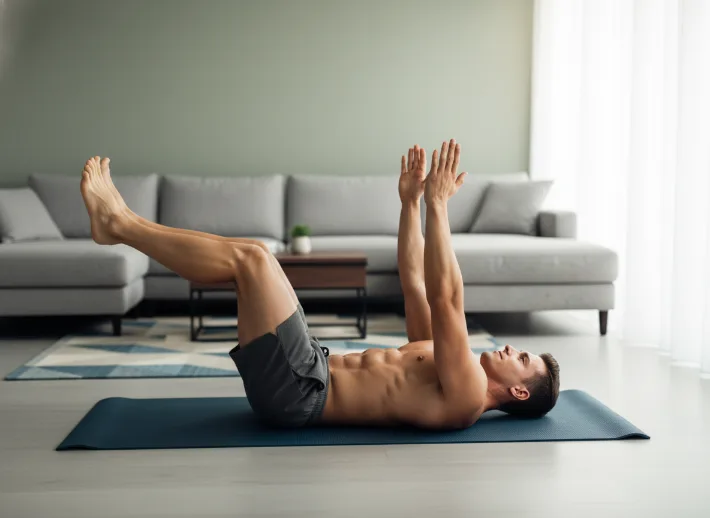
Exercise 1 – Dead Bug
Muscles: Deep core (transverse abdominis), six-pack muscle, hip flexors (light), stabilizers.
Why it’s great: Teaches you to keep your lower back controlled while your arms and legs move.
How to do it

- Lie on your back, arms reaching straight up toward the ceiling.
Bring your legs up so your hips and knees are both at 90 degrees (tabletop).
Gently press your lower back toward the floor so there’s no big arch.
Take a breath in.
As you exhale, slowly lower right arm and left leg toward the floor.
Stop before your lower back arches or pops off the floor.
Return to the start and repeat on the other side.
Reps: 6–10 slow reps per side.
Common mistakes
Letting your lower back arch as the leg lowers
Rushing the movement
Moving your arm/leg too low too soon
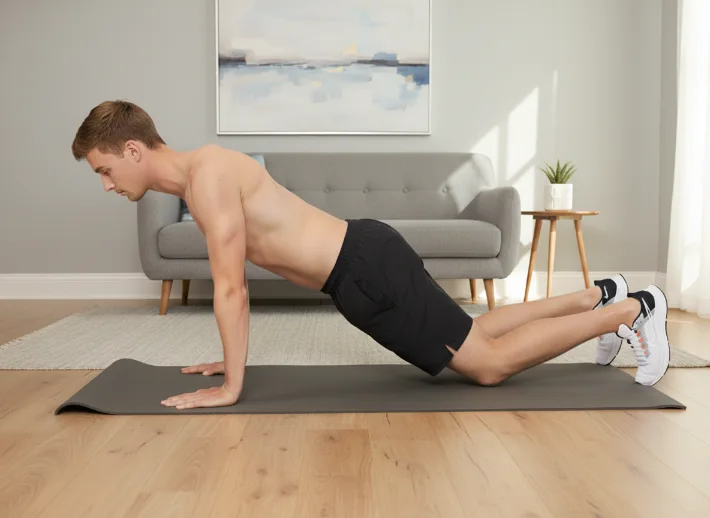
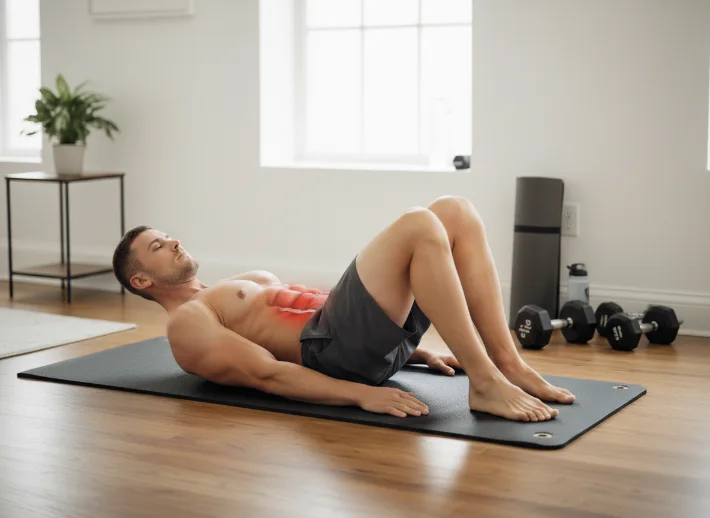
Exercise 2 – Bent-Knee Plank
Muscles: Front core, shoulders, glutes.
Why it’s great: Lets you learn plank position without full bodyweight on your toes.
How to do it

Start on your forearms and knees.
Position your arms straight on the floor
Walk your knees back a little so your body forms a straight line from head to knees.
Gently squeeze your glutes and keep your ribs down.
Hold while breathing slowly.
Time: Start with 15–20 seconds, work up to 30–40 seconds.
Common mistakes
Hips sagging toward the floor
Butt lifted too high
Holding breath instead of breathing
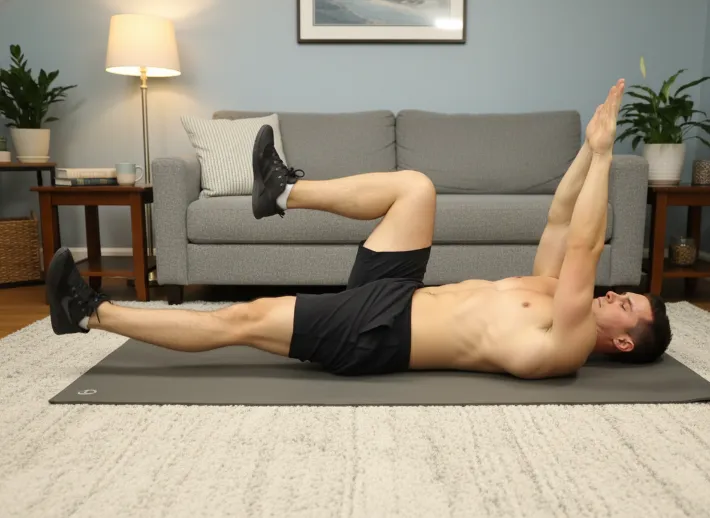
Exercise 3 – Heel Taps
Muscles: Front abs, hip flexors.
Why it’s great: Simple, controlled lower-ab work that teaches you to hold core tension while your legs move.
How to do it

- Lie on your back, knees raised, shins parallel to the floor (tabletop).
Lower back gently pressed into the floor.
Slowly lower one heel to lightly tap the floor.
Bring it back up and alternate sides.
Reps: 8–12 taps per leg.
Common mistakes
Letting the lower back arch
Dropping the leg too fast
Tapping heel too far away from your body
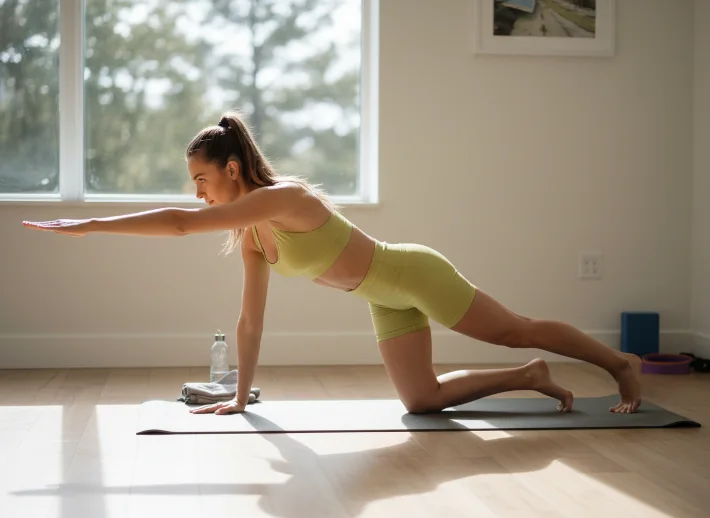
Exercise 4 – Dead Bug March (Single-Leg)
Muscles: Deep core, hip flexors, abs.
Why it’s great: A slightly simpler version of the Dead Bug that really focuses on pelvis and core stability.
How to do it

Lie on your back with knees bent, feet flat.
Press your lower back gently into the floor.
Lift one knee up to 90 degrees (above your hip).
Slowly lower that foot back down to the floor, keeping your core braced.
Alternate legs like you’re marching.
Reps: 8–12 reps per leg.
Common mistakes
Letting the lower back arch as the foot lowers
Moving too quickly
Lifting the knee too close to your chest (losing neutral spine)
Exercise 5 – Side Plank (Knees)
Muscles: Obliques, deep core, shoulder, hip.
Why it’s great: Trains your side core and teaches you to resist bending sideways.
How to do it
Lie on your side, knees bent, legs stacked.
Place your bottom elbow under your shoulder, forearm on the floor.
Lift your hips off the ground so your body forms a straight line from shoulders to knees.
Keep your top hand on your hip or pointed to the ceiling.
Hold while breathing.
Time: Start with 10–20 seconds each side.
Common mistakes
Hips dropping toward the floor
Shoulder shrugging up toward your ear
Rotating forward or backward instead of staying stacked
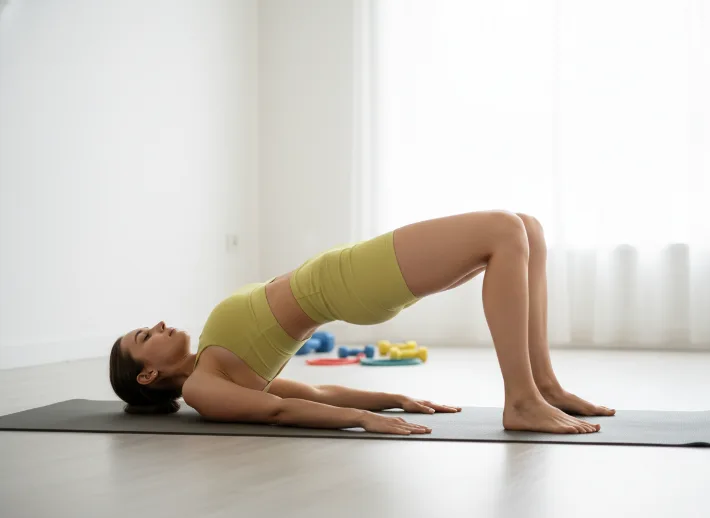
Exercise 6 – Bird Dog
Muscles: Back, glutes, deep core, shoulders.
Why it’s great: Trains anti-rotation and anti-arching while your arms and legs move.
How to do it

Start on hands and knees (tabletop).
Hands under shoulders, knees under hips.
Brace your core and keep your back flat.
Slowly reach right arm forward and left leg back until they’re in line with your body.
Pause for a second, then return and switch sides.
Reps: 6–10 reps per side.
Common mistakes
Arching your lower back as the leg lifts
Letting your hips twist
Rushing and swinging limbs
Exercise 7 – Reverse Crunch (Controlled)
Muscles: Lower abs (portion of rectus abdominis), hip flexors (light).
Why it’s great: Focuses on posterior pelvic tilt—curling your hips toward your ribs, not yanking your neck.
How to do it
Lie on your back, hands by your sides or lightly holding something stable.
Bring knees above your hips, feet off the floor.
Gently press your lower back into the ground.
Use your abs to curl your hips up, bringing your knees toward your chest a little.
Lower back down slowly, vertebra by vertebra.
Reps: 8–12 slow reps.
Common mistakes
Swinging legs with momentum
Throwing the lower back off the floor aggressively
Pulling on the neck or head
Exercise 8 – Glute Bridge
Muscles: Glutes, hamstrings, lower back, core.
Why it’s great: Strengthens the muscles that support your pelvis and lower back, essential for a healthy core.
How to do it

Lie on your back, knees bent, feet flat, hip-width apart.
Feet about a hand’s length away from your glutes.
Brace your core gently.
Push through your heels and lift your hips until your body forms a straight line from shoulders to knees.
Squeeze your glutes at the top for 1–2 seconds.
Lower back down with control.
Reps: 10–15 controlled reps.
Common mistakes
Pushing too high and arching your lower back
Rushing and bouncing the hips
Letting knees cave inward
Exercise 9 – Dead Hang Knee Raises (If You Have a Bar)
Muscles: Hip flexors, abs, grip, lats.
Why it’s great: Introduces hanging core work, great for overall torso strength.
(If you don’t have a bar at home, you can skip this one.)
How to do it
Grab a pull-up bar with an overhand grip and hang with arms straight.
Keep your ribs down and avoid swinging.
Slowly bring your knees up toward your chest, curling your pelvis slightly.
Lower down with control.
Reps: 5–10 reps.
Common mistakes
Big swinging motions
Using momentum instead of muscle
Arching back and flaring ribs
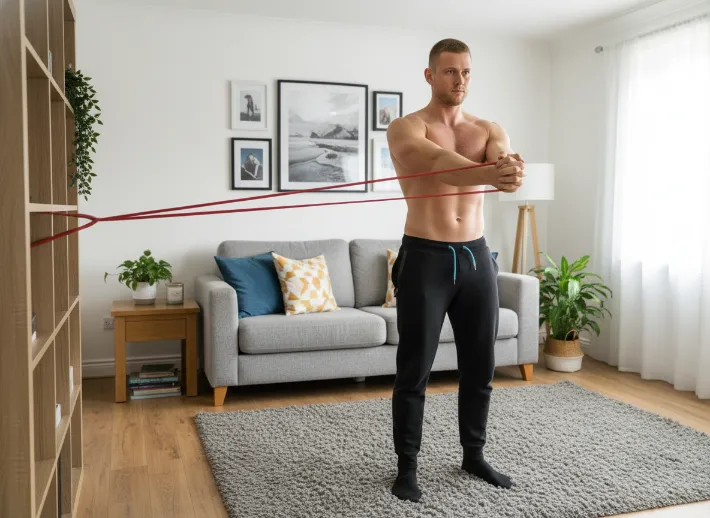
Exercise 10 – Standing Anti-Rotation Press (Band or Cable)
Muscles: Obliques, deep core, shoulders.
Why it’s great: Trains your core to resist twisting, very functional for real life.
How to do it

Attach a resistance band or set a cable at chest height.
Stand side-on to the anchor point, feet shoulder-width apart.
Hold the handle with both hands at your chest.
Step out to create tension in the band.
Brace your core and press your hands straight out in front of you.
Pause, then bring them back to your chest.
Reps: 8–12 presses per side.

Common mistakes
Letting your torso rotate toward the band
Leaning backward
Not bracing before pressing
How to Build a Beginner Ab Workout (10–15 Minutes)
You don’t need a crazy routine. Start with 3–5 exercises, work them 2–3 times per week, and focus on quality.
Sample Routine A (No Equipment)
Dead Bug – 8 reps per side
Bent-Knee Plank – 20–30 seconds
Glute Bridge – 10–15 reps
Side Plank (Knees) – 15 seconds per side
Do 2–3 rounds, resting 30–60 seconds between rounds.
Sample Routine B (Floor-Based Core)
Dead Bug March – 10 reps per leg
Heel Taps – 10 reps per leg
Bird Dog – 8 reps per side
Reverse Crunch – 8–10 reps
Do 2–3 rounds, resting as needed.
Progression tips
When it starts to feel easier:
Add more time (planks, side planks)
Add more reps (bird dog, glute bridge, dead bug)
Move toward harder versions (e.g., from knees plank → full plank)
Beginner Weekly Core Plan
Here’s how to fit this into your week:
2–3 core sessions per week
Separate by at least one rest day for the same muscles
Example:
Monday: Routine A
Wednesday: Routine B
Friday: Routine A (or a mix of your favorites)
Each session: 10–15 minutes, ideally paired with your main workout (full-body, strength, or cardio).
How Ab Exercises Fit Into Fat Loss and Visible Abs
Important reality check:
Ab exercises build and strengthen your muscles
Fat loss (from nutrition + overall activity) reveals those muscles
If your goal is a visible six-pack, combine this beginner ab routine with:
A small, consistent calorie deficit
Enough protein to maintain muscle
Mostly whole, minimally processed foods
For more detail on the fat-loss and nutrition side, make sure you also read your:
Six-pack abs beginner guide (for the overall roadmap)
Belly fat guide (for what actually works for fat loss)
Nutrition for abs guide (for how to eat so your abs show)
Final Checklist: Beginner Abs Training Done Right
I picked 3–5 beginner-friendly exercises
I’m training my core 2–3 times per week
I focus on slow, controlled reps, not just speed
I’m keeping my lower back and neck safe
I’m progressing gradually (more time/reps or harder variations)
I understand that nutrition + overall training are key for visible abs
Stick with these basics, and you’ll feel your core getting stronger, more stable, and more responsive in every workout. From there, you can move into more advanced variations as your strength and confidence grow.