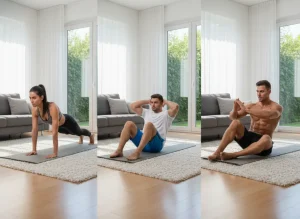
Quick Answer (Read This First)
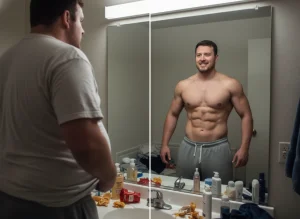
Getting six-pack abs isn’t just about exercises; it’s about achieving the right diet and overall fat loss. To get six-pack abs, you need to lose fat through a calorie deficit while training your core 2–4 times per week using progressive, compound + ab-focused workouts. Visible abs usually appear around 10–12% body fat for men and 18–22% for women, but genetics and muscle size matter too. Expect a realistic timeline of 8–16+ weeks for noticeable definition if you’re consistent.
Focus on losing fat while training for six-pack abs to achieve visible results.
Why You Don’t See Abs Yet (Even If You Train)
Most beginners think abs = ab exercises.
Reality:
Abs are already there, they’re just covered by body fat.
You can do thousands of sit-ups and still not see a six-pack if your nutrition isn’t right.
You need:
- A visible body fat level
- Strong, developed abs
- Time + consistency
Most beginners think abs = ab exercises.
Reality:
Abs are already there — they’re just covered by body fat.
You can do thousands of sit-ups and still not see a six-pack if your nutrition isn’t right.
You need:
- A visible body fat level
- Strong, developed abs
- Time + consistency
For visible six-pack abs, maintain a low body fat percentage through proper nutrition.
The Step-by-Step Plan Overview
Follow this step-by-step guide to achieving six-pack abs.
Here’s the full system in order:
Step 1: Measure where you’re starting
Step 2: Eat for fat loss (calorie deficit + protein)
Step 3: Train abs 2–4x/week with progression
Step 4: Lift/train full body 3–4x/week
Step 5: Add cardio (not too much, not zero)
Step 6: Sleep + recovery + stress control
Step 7: Track weekly and adjust
Each step in the process will bring you closer to six-pack abs. We’ll break each step down clearly.
Step 1: Set a Realistic Starting Point
Before anything, you need clarity.
Do this today:
- Take 3 photos (front, side, back)
- Weigh yourself in the morning
- Measure waist at belly button
- Optional: estimate body fat with a smart scale or online chart
Why this matters:
- It shows progress even when scale changes slowly.
- Waist measurement is the best fat-loss indicator for abs.
- Achieving six-pack abs requires dedication and a clear plan.
Step 2: Create a Calorie Deficit (Diet for Abs)
 You don’t need a perfect diet.
You need a consistent calorie deficit.
The simple abs-diet rule:
Eat 300–500 calories below maintenance daily.
That usually equals:
- 0.5–1 lb (0.25–0.5 kg) fat loss per week
- Sustainable, not miserable
How to do it (beginner method):
- Track food for 3 days in any app
- Look at your average intake
- Reduce by 300–500 calories
- Keep protein high
Protein target:
- 0.7–1.0g per lb bodyweight
- or 1.6–2.2g per kg
Protein helps:
- preserve muscle during fat loss
- reduce hunger
- improve body composition
Plate method (if you hate tracking):
Every meal:
- ½ plate vegetables
- ¼ plate protein
- ¼ plate carbs
- add a thumb of healthy fat
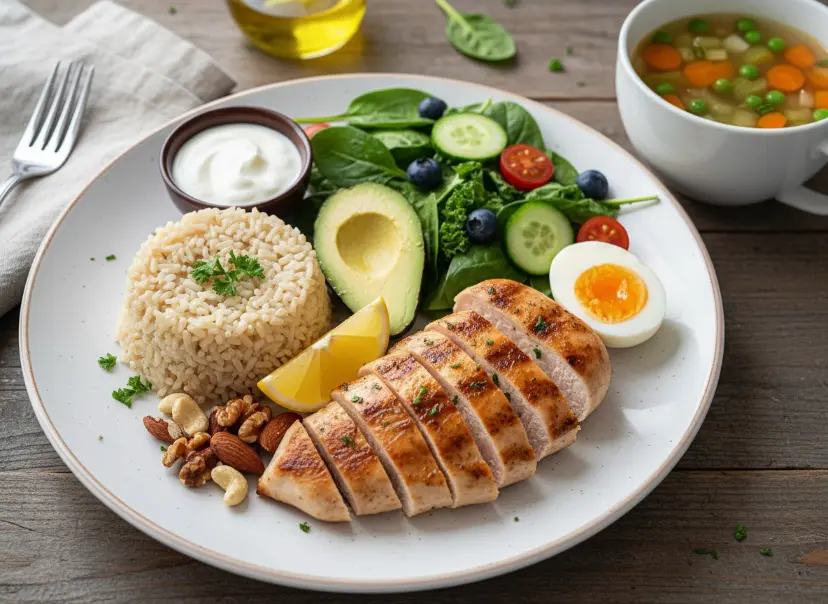
Foods that help abs show faster:
Protein: chicken, eggs, fish, tofu, Greek yogurt
Carbs: oats, rice, potatoes, fruit
Fats: olive oil, nuts, avocado
Volume foods: soups, salads, berries, veggies
What to limit (not ban):
- sugary drinks
- fried snacks
- alcohol (biggest abs killer)
- mindless late-night eating
You can still eat what you like, just within your deficit.
Step 3: Train Your Abs the Right Way
Abs are muscles.
Muscles grow with progressive overload, not endless reps.
Beginner frequency:
2–4 ab sessions per week
- Never daily for beginners
- Abs need recovery like any muscle
What a good ab session includes:
- Anti-extension (planks / rollouts)
- Flexion (crunch patterns)
- Rotation / anti-rotation (obliques + stability)
- Optional: lower-ab / hip-flexion work
Best beginner ab exercises
Pick 4–5 per session:
Core stability
Flexion / building the “six-pack”
- Cable crunch (best if available)
- Decline crunch
- Reverse crunch
Lower abs
- Hanging knee raises
- Lying leg raises
- Flutter kicks
Obliques / waist
- Russian twists (controlled)
- Pallof press
- Side plank dips
Progression rule:
Every week, add one of these:
- +1–2 reps
- +5–10 seconds
- slightly harder variation
- more control / slower tempo
Incorporate exercises that target six-pack abs for maximum effectiveness.
If it doesn’t get harder, abs don’t grow.
Step 4: Train Your Whole Body (Fat Loss Accelerator)
Focus on full-body training to support your journey to six-pack abs. Ab workouts alone burn tiny calories.
Full-body training burns more and builds muscle that boosts metabolism.
Beginner full-body plan:
3–4 sessions per week
Focus on big compound moves:
- Squats / lunges
- Push-ups / bench
- Rows / pull-downs
- Deadlifts / hip hinges
- Overhead press
Why this matters for abs:
- More muscle = easier fat loss
- Strong body = better posture
- Core gets trained indirectly
Step 5: Add Smart Cardio
Cardio is a tool, not the whole plan.
Cardio plays a vital role in achieving six-pack abs by burning excess fat.
Beginner cardio target:
2–3 sessions/week
Best beginner choices:
- brisk incline walking
- cycling
- rowing
- steady jogging
HIIT (optional):
1–2x/week max
Example:
- 20 sec sprint
- 1 min walk
Repeat 6–8 rounds
Don’t overdo HIIT.
Too much can cause burnout and hunger spikes.
Step 6: Recovery & Lifestyle
This is where most people leak results.
Sleep
Aim for 7–9 hours.
Poor sleep:
- increases cravings
- slows recovery
- makes fat loss harder
- hurts muscle growth
Stress
High stress = higher appetite + water retention.
Do something simple daily:
- 10-min walk
- stretching
- breathing
- music downtime
Hydration
Drink enough water that urine is pale yellow.
Timeline: How Long It Takes to Get Abs
Understanding your timeline is essential for achieving six-pack abs.
This depends on your starting body fat.
Rough realistic timeline:
- Already lean, just no ab muscle: 4–8 weeks
- Average beginner: 8–16+ weeks
- Higher body fat: 4–8+ months
Progress feels slow… until suddenly it shows.
Look for these milestones:
Week 2–4:
- waist slightly smaller
- core feels stronger
- posture improves
Week 6–10:
- top abs start to show in good light
- obliques define
Week 12+:
- full midsection definition for many beginners
Genetics & Biggest Myths
Don’t let myths deter you from your goal of six-pack abs.
Genetics truth:
- Some people store more fat in the belly.
- Some have naturally deeper ab separations.
- You can still get visible abs — your timeline may just differ.
Myth #1: “You can spot reduce belly fat”
Nope.
Fat loss is full-body.
Myth #2: “Train abs every day”
Abs need recovery.
Quality beats quantity.
Myth #3: “Crunches are enough”
Crunches help muscle.
Diet reveals it.
Myth #4: “You need a special detox or fat burner”
You don’t.
Calorie deficit + training works.
Beginner Weekly Plan for Six-Pack Abs
Here’s a clean week you can follow:
Mon – Full Body + Abs
- Full body workout
- 10–12 min abs
Tue – Cardio + light core
- 25–30 min brisk walk
- Optional plank work
Wed – Full Body + Abs
- Full body workout
- 10–12 min abs
Thu – Rest or easy cardio
Fri – Full Body + Abs
- Full body workout
- 10–12 min abs
Sat – Cardio (steady or HIIT)
Sun – Rest
Follow this workout schedule to build your six-pack abs. This is enough to get abs if nutrition is right.
Final Checklist (Use This Weekly)
Every week ask:
- Am I in a calorie deficit?
- Did I hit protein daily?
- Did I train abs 2–4 times?
- Did I do full-body training 3x+?
- Did I walk/cardio 2–3x?
- Did my waist go down or photos improve?
If “no” to any, adjust that first.
Your Next Step
If you want this process done for you, your app can guide:
- ab workouts by level
- fat-loss routines
- progress tracking
- weekly structure
Check your progress regularly to stay on track for six-pack abs.
Download Abs Pro and follow a plan built for beginners, no guesswork, just results.
FAQs



 You don’t need a perfect diet.
 Foods that help abs show faster:
 Abs are muscles.

 Cardio is a tool, not the whole plan.
  This depends on your starting body fat.