
Tuck To Hollow Tutorial
Tuck to hollow is a controlled core exercise that moves between a hollow body hold and a tucked crunch position. It trains your abs to stay tight while your legs and upper body move, which is key for building strong, stable core control.
This bodyweight move is great for people learning how to brace their core, as well as athletes who want better control for gymnastics, calisthenics, or general fitness. Focus on slow tempo, lower back contact with the floor, and smooth transitions.
Benefits
- Builds strong abdominal control
- Improves hollow body position awareness
- Trains core under movement
- Protects the lower back through bracing
- Enhances coordination between upper and lower body
- Transfers well to calisthenics and sports
Setup & Starting Position
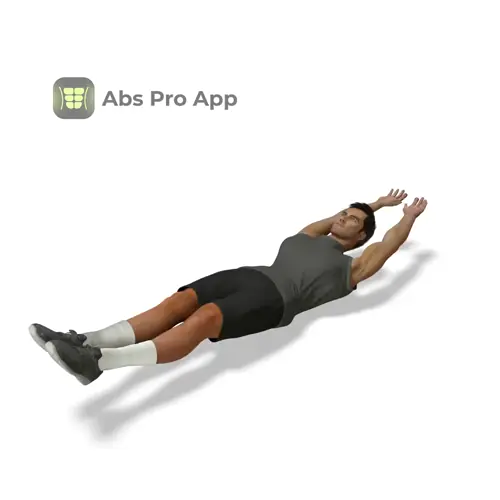
Lie flat on your back on a mat or soft floor. Extend your legs straight and bring your arms overhead with biceps close to your ears. From here, gently press your lower back into the floor by tightening your abs and slightly tucking your pelvis.
Lift your legs a few inches off the ground while keeping them straight. At the same time, raise your shoulders and upper back so your shoulder blades hover off the floor. Your arms stay overhead and off the ground. This is your hollow hold position.
Keep your chin slightly tucked, eyes looking up, and neck relaxed. Your body should form a shallow curve, with only your lower back touching the floor.
Setup tip: If your lower back arches, bend your knees slightly or raise your legs higher before starting the first rep.
How To Do Tuck to hollow (Step-by-step)
- Lie on your back and set a strong hollow hold position.
- Engage your abs and keep your lower back pressed into the floor.
- Begin the movement by bending your knees toward your chest.
- As knees tuck in, curl your upper body slightly higher off the floor.
- Keep arms off the ground and core tight.
- Pause briefly in the tucked position with full control.
- Slowly extend your legs back out.
- Lower your upper body slightly to return to hollow hold.
- Maintain tension, do not relax on the floor.
- Repeat for smooth, controlled reps.
Form Cues
- Lower back glued to the floor
- Move slow and controlled
- Keep ribs down
- Neck relaxed, no pulling
- Abs tight the whole time
- No swinging or jerking
Breathing & Bracing
Start each set by taking a calm breath in through your nose while lying flat. As you lift into the hollow hold, gently exhale through your mouth and tighten your abs as if preparing for a cough.
During the tuck phase, continue to breathe out slowly. Think about pulling your ribs toward your hips without crushing the breath. This helps maintain core tension without holding your breath.
As you extend back to the hollow position, take a small controlled inhale through the nose, keeping your abs engaged and lower back pressed down.
A simple rhythm is inhale to prepare, exhale as you tuck, inhale slightly as you extend, then repeat. You should be able to breathe quietly while staying tight. If you feel yourself holding your breath, slow the movement down.
Common Mistakes
- Lower back arching off the floor, fix by raising legs or reducing range.
- Pulling on the neck, fix by keeping hands overhead and chin relaxed.
- Moving too fast, fix by slowing each rep to full control.
- Letting feet touch the floor, fix by maintaining constant tension.
- Holding breath, fix by practicing steady exhales.
- Using momentum, fix by pausing briefly in each position.
How It Should Feel
Quick Self-Check:
Good signs: strong tension across the abs, light shaking in the core, steady breathing, and control during both the tuck and hollow phases. You should feel your abs doing most of the work, not your neck or hip flexors.
Warning signs: sharp pain in the lower back, pinching in the hips, or neck strain. Stop if you feel sharp pain.
If you feel it mostly in your neck, relax your head and focus on curling the ribs, not the chin. If your lower back feels uncomfortable, shorten the lever by bending the knees or lifting the legs higher. The goal is controlled abdominal tension, not maximum range.
Alternative Names
Hollow to tuck, Tuck to hollow hold
Variations
Easier
- Bent-knee tuck to hollow: Keep knees slightly bent when extending back.
- Hollow hold only: Hold the hollow position without tucking.
- Single rep resets: Relax briefly between each rep.
Harder
- Slow tempo tuck to hollow: Use 5 seconds in each direction.
- Weighted hollow tuck: Hold a light object overhead for more tension.
- Extended pause tuck: Pause 3 to 5 seconds in tuck position.
Sample Workout
Core Control Workout
- Tuck to hollow 3 x 8 to 12 reps
- Dead bug 3 x 10 per side
- Bodyweight crunch 2 x 15
- High plank 3 x 30 to 45 seconds
Rest 45 to 60 seconds between sets. Focus on quality reps and breathing control.
Progression Plan
Week 1: Practice body awareness. Perform 3 sets of 6 to 8 reps with slow tempo. Rest as needed and focus on keeping your lower back flat. If form breaks, reduce range or pause between reps.
Week 2: Increase to 8 to 10 reps per set. Remove pauses between reps and keep continuous tension. Try to slow the extension phase to 3 seconds.
Week 3: Progress to 10 to 12 reps or add a 2 second pause in the tuck position. Shorten rest times slightly.
Move to advanced variations once you can keep perfect control, steady breathing, and no lower back arching for all sets. Repeat a week if form quality drops.
FAQ
How to do tuck to hollow correctly?
Start in a hollow hold, keep your lower back pressed down, tuck knees toward chest while lifting your upper body, then extend back slowly.
Is tuck to hollow good for beginners?
It is best for early intermediate levels, but beginners can modify by bending knees or holding hollow only.
How many reps should I do?
Aim for 8 to 12 controlled reps or 20 to 40 seconds of total tension.
Why does my lower back arch?
This usually means the lever is too long. Bend your knees or lift legs higher.
Summary
Tuck to hollow is a powerful core control exercise that teaches you how to move while staying braced. By focusing on slow transitions, proper breathing, and consistent tension, you build abs that are strong and resilient.
Use this movement as part of your core training or as a foundation for harder hollow body exercises. Stay patient, prioritize form, and your core strength will steadily improve.
Get Defined Abs in 30 Days
This exercise is part of our complete 30-day ab program. Download the app for structured daily workouts and track your progress.