
Sweep Pulses Tutorial
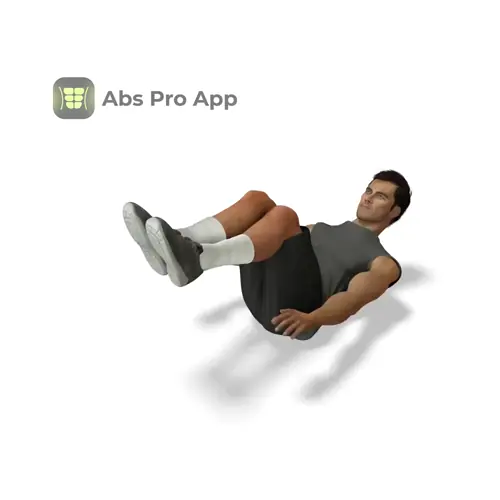
Sweep pulses are a bodyweight abs exercise performed on your back with your legs held in a tabletop position and your shoulders lifted. While the lower body stays still, the arms pulse up and down in short, controlled movements.
This exercise is great for beginners who want to learn how to engage the core and build endurance in the abs without equipment. It teaches control, breathing, and steady tension, which makes it a useful foundation move in many abs workouts and Pilates-style routines.
Benefits
- Builds core endurance without equipment
- Improves mind muscle connection in the abs
- Teaches controlled breathing under tension
- Strengthens deep stabilizing muscles
- Low impact on joints
- Easy to scale up or down
Setup & Starting Position
Lie flat on your back on a mat or comfortable floor surface. Bend your knees and lift your legs so your thighs are vertical and your shins are parallel to the floor, with your feet together and fully off the ground.
Extend your arms long by your sides with your palms facing down. Gently lift your head, neck, and shoulders off the floor, bringing your ribcage slightly toward your hips. Your lower back should stay lightly pressed into the floor.
Before starting the pulses, brace your core by tightening your abs as if preparing for a cough. Keep your legs completely still and relaxed through the hips.
Setup tip: If your neck feels tense, imagine holding a small apple under your chin to keep the neck long.
How To Do Sweep pulses (Step-by-step)
- Lie on your back with arms by your sides and legs in tabletop.
- Lift your head, neck, and shoulders off the floor.
- Brace your core and press your lower back gently down.
- Extend arms straight and hover them slightly above the floor.
- Pulse your arms up and down in small, quick movements.
- Keep legs fixed and feet together.
- Breathe steadily as you continue pulsing.
- Maintain tension through the abs without relaxing.
- Stop when form starts to break or after the planned time.
Form Cues
- Ribs down, abs tight
- Small, controlled arm pulses
- Legs stay completely still
- Neck long and relaxed
- Lower back gently pressed down
Breathing & Bracing
Breathing is a key part of sweep pulses and helps you maintain control rather than rushing through the movement. Start by taking a calm inhale before lifting your shoulders off the floor.
As you begin pulsing your arms, use a steady breathing rhythm such as inhaling for two or three pulses and exhaling for two or three pulses. Focus on breathing into your ribs rather than your belly.
Brace your core by gently tightening your abs, as if zipping up tight jeans. Avoid holding your breath. Your ribs should stay pulled down toward your hips, and your pelvis should not tilt or rock.
A simple rhythm to repeat is inhale for three pulses, exhale for three pulses, keeping the breath smooth and controlled.
Common Mistakes
- Pulling on the neck, fix by relaxing the shoulders and keeping the chin neutral.
- Letting the lower back arch, fix by tightening the abs and pressing it down gently.
- Making large arm swings, fix by shortening the pulse range.
- Letting the legs move, fix by focusing on keeping thighs vertical.
- Holding the breath, fix by counting pulses with your breathing.
How It Should Feel
Quick self check: You should feel steady tension in the front of your abs and a light burn building over time. Your core should feel switched on, not strained.
Good signs: Your lower back stays in contact with the floor, your breathing remains controlled, and the legs feel stable and quiet.
Warning signs: Sharp pain in the neck, lower back discomfort, or hip flexors taking over. Stop immediately if you feel sharp pain.
If you feel it mostly in your neck, lower your shoulders slightly or rest your head briefly. If you feel it in your lower back, tighten your abs more and reduce how high you lift your shoulders.
Alternative Names
arm pulses, Pilates arm pulses, hundred prep
Variations
Easier
- Feet on floor sweep pulses, keep feet planted and legs bent while pulsing the arms.
- Head down sweep pulses, keep head on the floor and focus on arm movement only.
Harder
- Extended leg sweep pulses, straighten legs at a 45 degree angle while keeping them still.
- Slow tempo sweep pulses, slow each pulse and increase time under tension.
- Pause at top sweep pulses, add a short pause at the top of each pulse for more challenge.
Sample Workout
Beginner core workout:
- Sweep pulses, 30 seconds
- Dead bug, 8 reps per side
- Glute bridge hold, 30 seconds
- Rest 45 seconds
Repeat the circuit 2 to 3 times. Focus on clean technique and steady breathing rather than rushing through the movements.
Progression Plan
Week 1: Perform sweep pulses for 20 to 30 seconds per set, 2 to 3 sets total. Focus on learning the correct setup, breathing rhythm, and keeping the legs completely still. Rest 45 to 60 seconds between sets.
Week 2: Increase time to 40 to 45 seconds per set and reduce rest to about 30 to 45 seconds. Aim for smoother, more controlled arm pulses.
Week 3: Slow the pulse tempo slightly to increase tension, or add a brief pause at the top of each pulse. Keep the same time range.
Move to advanced variations when you can maintain perfect control for 45 seconds without neck or lower back strain. Repeat a week if form starts to break down.
FAQ
How long should I do sweep pulses?
Most beginners start with 20 to 40 seconds and build up gradually.
Should my arms touch the floor?
They can lightly brush the floor, but avoid resting them fully between pulses.
Why do my hip flexors feel tight?
This often means the abs are not bracing enough, try pulling the ribs down more.
Can I do sweep pulses every day?
Yes, as long as there is no soreness or pain and your form stays solid.
Summary
Sweep pulses are a simple but effective way to train your abs with control and focus. By keeping the legs still and moving the arms with purpose, you build endurance and improve how your core works as a unit.
Mastering this exercise sets the foundation for harder abs movements and helps you understand proper bracing and breathing. Start slow, stay consistent, and let quality reps do the work.
Get Defined Abs in 30 Days
This exercise is part of our complete 30-day ab program. Download the app for structured daily workouts and track your progress.