
Straight Legs Arm Pulses Tutorial
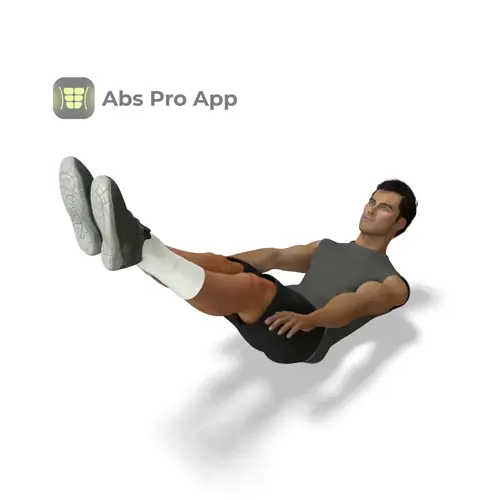
Straight legs arm pulses is a low impact, no equipment abs exercise inspired by Pilates-style core work. You lie on your back with your shoulders lifted, legs straight at about a 45 degree angle, and arms pumping in small controlled pulses.
This move helps build deep core endurance, improves body awareness, and teaches you how to keep your abs tight while the arms move. It is great for beginners who want a clear tutorial and instructions on proper core control, as well as anyone looking to improve core stability without crunching the spine.
Focus on slow control, steady breathing, and keeping your body position unchanged.
Benefits
- Builds deep abdominal endurance
- Improves core control and stability
- Teaches proper bracing and breathing
- Low impact and joint friendly
- Improves mind muscle connection
- Supports better posture awareness
- Easy to add to any ab workout
Setup & Starting Position
Lie flat on your back on a mat or comfortable floor surface. Extend both legs straight and together, then raise them so they hover at roughly a 45 degree angle from the floor. Lift your shoulders and upper back slightly off the ground so your shoulder blades are no longer resting on the floor.
Extend your arms straight along your sides, hovering just above the floor, palms facing down. Your head stays lifted with your chin gently tucked, eyes looking toward your thighs rather than the ceiling.
Before starting the arm pulses, tighten your abs by gently pulling your belly button toward your spine and pressing your lower back lightly into the floor. Your legs, torso, and head should already be stable before any movement begins.
Setup tip: If your lower back arches, raise your legs slightly higher until you can keep contact with the floor.
How To Do Straight legs arm pulses (Step-by-step)
- Lie on your back and lift your shoulders off the floor
- Raise both straight legs to about a 45 degree angle
- Extend arms along your sides, palms facing down
- Brace your core and press your lower back gently into the floor
- Begin pulsing your arms up and down a few inches
- Keep the pulses small, controlled, and steady
- Do not let your legs, torso, or head move
- Breathe steadily as you continue pulsing
- Maintain tension in your abs for the full set
- Stop when form breaks, then carefully lower down
Form Cues
- Small and controlled arm pulses
- Lower back stays pressed down
- Legs remain straight and still
- Neck long, chin slightly tucked
- Abs tight before arms move
- No swinging or bouncing
Breathing & Bracing
Breathing is key for this exercise because it helps you maintain core control without unnecessary tension. Start by taking a calm inhale before beginning the arm pulses. As you pulse your arms, breathe in through your nose and out through your mouth in a steady rhythm.
Focus on tightening your core by gently drawing your ribs down toward your hips, rather than sucking in your stomach. This creates a strong brace that supports your lower back while keeping your breathing relaxed.
A simple breathing pattern is to inhale for three to four arm pulses and exhale for three to four pulses. Keep your breathing smooth and continuous. Avoid holding your breath, especially as fatigue builds.
If you feel your lower back lifting or your neck tightening, slow your breathing, reset your brace, and reduce the intensity by raising the legs slightly.
Common Mistakes
- Arching the lower back, fix by raising the legs slightly higher
- Pulsing arms too big, fix by reducing the range of motion
- Holding the breath, fix by using a steady pulse based breathing rhythm
- Pulling on the neck, fix by keeping hands low and chin relaxed
- Letting legs drift or bend, fix by re bracing the abs before continuing
- Rushing the movement, fix by slowing the arm pulses
How It Should Feel
Quick self check: You should feel a steady burn in the front of your abs that builds gradually. Your core should feel tight and supportive, not shaky or out of control. The shoulders and arms will feel lightly active from the pulsing, but not strained.
Good signs:
- Lower back stays gently pressed into the floor
- Abs stay engaged from start to finish
- Breathing remains controlled
Warning signs:
- Sharp pain in the lower back or neck, stop immediately
- Excessive neck strain or headache
If you feel it mostly in your neck, lower your head to the floor and continue pulsing the arms. If you feel it in your lower back, raise your legs higher or bend the knees slightly.
Variations
Easier
- Bent knee arm pulses: Keep knees bent in a tabletop position to reduce core load
- Head down arm pulses: Rest head on the floor while keeping legs straight
- Higher leg arm pulses: Raise legs closer to vertical for more support
Harder
- Lower leg arm pulses: Lower straight legs closer to the floor while maintaining back contact
- Slow tempo arm pulses: Pulse arms slower to increase time under tension
- Isometric hold with pulses: Hold arms still for 10 seconds, then pulse again
Sample Workout
Core Endurance Workout:
- Straight legs arm pulses, 30 to 45 seconds
- Dead bug, 8 reps per side
- Glute bridge hold, 30 seconds
- Forearm plank, 20 to 40 seconds
Rest 45 to 60 seconds between rounds. Complete 2 to 3 total rounds. Use straight legs arm pulses early in the workout when your core is fresh.
Progression Plan
Week 1: Perform straight legs arm pulses for 20 to 30 seconds per set. Focus on learning the correct setup, breathing, and keeping your body still. Do 2 to 3 sets with 45 to 60 seconds of rest. If needed, use a beginner variation like bent knees.
Week 2: Increase each set to 30 to 45 seconds. Keep the same number of sets but aim for smoother breathing and tighter core control. Only progress if your lower back stays pressed down.
Week 3: Move to 45 to 60 second sets or try the slow tempo arm pulses variation. Reduce rest slightly and focus on consistent tension.
If form breaks at any point, repeat the previous week. Progress to advanced variations only when you can hold perfect position for at least 45 seconds.
FAQ
How long should I pulse my arms?
Most beginners start with 20 to 30 seconds and gradually build up to 60 seconds with good control.
Should my legs touch each other?
Yes, keeping the legs together helps maintain even core tension and better control.
Is this safe for sensitive lower backs?
Yes, if you keep your lower back pressed down and raise your legs when needed.
Can I include this in a daily ab routine?
Yes, it is low impact and suitable for frequent core training when done with good form.
Summary
Straight legs arm pulses is a simple but effective way to strengthen your abs and improve core endurance without any equipment. When done with control, proper breathing, and good bracing, it teaches valuable skills that carry over to many other exercises.
Start slow, focus on quality over duration, and use the variations to match your current level. With consistency, this exercise can become a reliable part of your core training routine.
Get Defined Abs in 30 Days
This exercise is part of our complete 30-day ab program. Download the app for structured daily workouts and track your progress.