
Spider Plank On Knees Tutorial
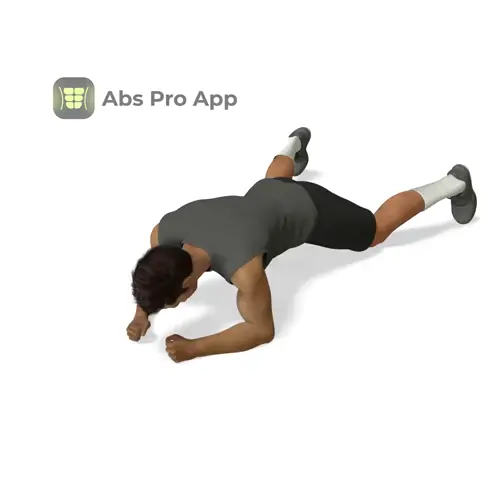
The Spider plank on knees is a core-focused plank variation that moves between a wide high plank on knees and a low plank on forearms. It challenges your abs, shoulders, and arms while keeping knee support on the floor, which reduces load compared to a full plank. This exercise is great for people who want a stronger core and shoulder stability but are not yet ready for full plank up-downs on toes. Focus on slow, controlled arm changes, steady breathing, and keeping your hips level throughout the movement.
Benefits
- Builds core strength without full toe plank load
- Improves shoulder and arm stability
- Teaches plank control and balance
- Strengthens anti-rotation core muscles
- Prepares you for full plank up-downs
- Low equipment, joint-friendly option
Setup & Starting Position
Begin on the floor in a wide high plank on your knees. Your knees are on the ground and set slightly wider than hip-width for stability. Your hands are also placed wider than shoulders and slightly angled diagonally outward, matching the spider-style base described in the voice guide.
Stack your shoulders directly over your hands. Your arms are straight, elbows softly locked, and fingers spread wide for grip. Your knees, hips, shoulders, and head form a straight line from knees to crown of the head. Avoid sitting your hips back or pushing them too far forward.
Before starting the first rep, lightly tuck your pelvis and tighten your abs as if preparing for a gentle cough. Keep your neck long and eyes looking slightly ahead on the floor.
Setup tip: Press your hands into the floor before you move, this helps keep your shoulders stable when lowering to your forearms.
How To Do Spider plank on knees (Step-by-step)
- Start in a wide high plank on knees with arms straight.
- Brace your core and keep your hips level.
- Lower one arm down to the forearm with control.
- Lower the other arm to reach a low plank on forearms.
- Pause briefly while maintaining a straight line from knees to head.
- Press one hand back up to the floor.
- Press the other hand up to return to a wide high plank on knees.
- That completes one rep, switch leading arms on the next rep.
Form Cues
- Hips stay square to the floor
- Move one arm at a time
- Press the floor away
- Core tight before each arm change
- Neck long and relaxed
- No rushing the transitions
Breathing & Bracing
Proper breathing makes this exercise feel controlled instead of shaky. Before each rep, take a calm inhale through your nose while in the high plank on knees. As you lower your first arm to the forearm, slowly exhale through your mouth.
Continue breathing steadily as you lower the second arm. Once you are in the low plank, take a small inhale to reset. As you press back up to the high plank, exhale again, especially during the hardest part of pushing the floor away.
For bracing, gently tighten your abs as if zipping up snug pants. Your ribs should stay down and your hips should not sway side to side. Avoid holding your breath. A simple rhythm is inhale at the top, exhale during each arm movement. This breathing pattern helps keep your core active without creating unnecessary tension.
Common Mistakes
- Hips rocking side to side, fix by widening the knees and slowing down.
- Dropping the head, fix by keeping eyes slightly forward.
- Bending at the hips, fix by tightening the abs before moving.
- Rushing the arm changes, fix by counting each step.
- Hands too narrow, fix by resetting to a wide hand position.
- Elbows flaring out, fix by keeping forearms parallel.
How It Should Feel
Quick Self-Check:
You should feel steady tension in your abs and shoulders throughout the set. Your arms should feel active, especially when pressing back up from the floor. A mild burn in the core and shoulders is a good sign.
Good signs:
- Core feels engaged without holding breath
- Hips stay mostly level
- Shoulders feel worked but stable
Warning signs:
- Sharp pain in shoulders, wrists, or lower back, stop the exercise
- Lower back sagging or pinching
If you feel it mainly in your neck, relax your head and push the floor away with your hands. If you feel strain in the lower back, slow down and tighten your abs before each arm movement.
Alternative Names
Knee plank up-down
Variations
Easier
- Knee low plank hold, stay on forearms with knees down and hold for time.
- Assisted plank up-down on knees, limit the range by lowering only one arm then resetting.
Harder
- Spider plank up-down on toes, perform the same movement but with legs fully extended.
- Slow tempo spider plank on knees, take 3 to 4 seconds for each arm transition.
Sample Workout
Core Stability Workout
- Spider plank on knees, 3 sets of 6 to 10 reps
- Dead bug, 3 sets of 8 reps per side
- Glute bridge hold, 3 sets of 30 seconds
- Side plank on knees, 2 sets of 20 seconds per side
Rest 45 to 60 seconds between sets. Focus on slow, controlled reps rather than speed.
Progression Plan
Week 1: Perform 3 sets of 5 to 6 controlled reps. Focus on perfect form, slow arm changes, and minimal hip movement. Rest 60 seconds between sets.
Week 2: Increase to 3 sets of 8 to 10 reps. Start lowering and pressing with more control, aiming for equal strength on both arms. Reduce rest to 45 seconds if form stays solid.
Week 3: Add a brief 1 second pause in the low plank position to increase core demand. Keep reps at 8 per set.
When to progress: Move to the advanced toe version once you can complete all reps with level hips and no shoulder discomfort. Repeat a week if your hips sway or breathing becomes uncontrolled.
FAQ
How many reps should I do?
Most people start with 6 to 10 reps, where one rep includes lowering to forearms and pressing back up.
Should I switch leading arms?
Yes, alternate which arm lowers first on each rep to keep strength balanced.
Can I do this every day?
It can be done frequently, but allow rest if shoulders feel sore.
Why is my plank wide?
The wide base increases stability and matches the spider plank setup described in the instructions.
Summary
The Spider plank on knees is an effective way to build core and shoulder strength with more control than full plank variations. By moving slowly between high and low plank positions, you train stability, coordination, and endurance at the same time.
Stay focused on wide hand placement, steady hips, and smooth breathing. Use the easier versions when needed and progress only when your form feels strong and confident. With consistent practice, this exercise can be a solid step toward more advanced plank and core movements.
Get Defined Abs in 30 Days
This exercise is part of our complete 30-day ab program. Download the app for structured daily workouts and track your progress.