
Sit-up With Straight Legs Tutorial
Sit-up with straight legs is a classic bodyweight abs exercise that increases the challenge of a traditional sit-up by keeping the legs long and extended. This reduces help from the hip flexors and demands more control from the core.
It is ideal for intermediate to advanced trainees who already have good trunk strength and body awareness. The focus is on slow spinal rolling, wide elbows, and keeping the legs as straight as possible throughout the movement.
If you are looking for a clear how to guide, technique tips, and progression ideas for straight-leg sit-ups, this tutorial covers setup, form, breathing, and smart ways to build strength safely.
Benefits
- Builds strong, visible abdominal muscles
- Improves spinal flexion control
- Challenges core strength without equipment
- Highlights left to right core balance
- Enhances mind to muscle connection
- Transfers well to other abs exercises
- Easy to add tempo or pauses for progression
Setup & Starting Position
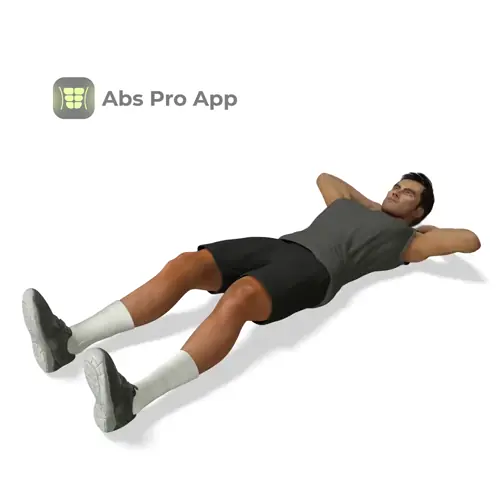
Lie flat on your back on a mat or firm surface. Extend both legs fully so your knees are straight and your heels rest lightly on the floor. Keep your legs together or hip-width apart, but do not bend the knees.
Bring your hands up so your fingers lightly touch the back of your head. Do not interlock the fingers. Open your elbows wide to the sides and keep them there, this helps prevent pulling on the neck.
Set your head, shoulders, and upper back relaxed against the floor. Before starting the first rep, gently tighten your abs as if preparing for a cough. Your lower back can be neutral or lightly pressed into the floor.
Quick setup tip: Think about lengthening your body from heels to crown before you move, this makes it easier to keep the legs straight and controlled.
How To Do Sit-up with straight legs (Step-by-step)
- Lie on your back with legs straight and fingers touching the back of your head.
- Open your elbows wide and keep your chin slightly tucked.
- Inhale to prepare and brace your abs.
- Start the movement by curling your head and shoulders off the floor.
- Slowly roll your spine up, vertebra by vertebra.
- Keep your legs as straight and relaxed as possible.
- Continue until your torso is upright or near upright.
- Pause briefly while staying tall through the spine.
- Exhale and begin lowering with control.
- Roll down slowly until your shoulders and head return to the floor.
- Fully reset your brace before the next rep.
Form Cues
- Elbows wide, do not pull the head
- Move slowly, no jerking
- Keep legs long and quiet
- Exhale as you roll up
- Control the way down
- Neck stays neutral
Breathing & Bracing
Good breathing makes straight-leg sit-ups safer and more effective. Before each rep, take a calm inhale through your nose and gently tighten your abs. Think of wrapping your core around your waist rather than sucking the stomach in.
As you roll up, slowly exhale through the mouth. This helps you maintain tension in the abs and prevents holding your breath. The exhale should last through most of the upward movement.
At the top, take a short, relaxed breath if needed while staying braced. When lowering, inhale softly or keep a light exhale, but stay in control. Your ribs should stay down and your hips should not tilt excessively.
A simple rhythm to repeat is: inhale and brace at the bottom, long exhale while rolling up, brief breath at the top, controlled breath as you roll down.
Common Mistakes
- Pulling on the head with the hands, fix by keeping fingers light and elbows wide.
- Bending the knees to cheat, fix by slowing down and reducing reps.
- Using momentum to sit up, fix by rolling the spine slowly.
- Elbows collapsing forward, fix by actively opening the chest.
- Lower back arching excessively, fix by bracing the abs before moving.
- Rushing the lowering phase, fix by counting three seconds down.
How It Should Feel
Quick self-check: During well-performed straight-leg sit-ups, you should feel a strong, deep contraction in the front of your abs. The effort should build gradually as you roll up and remain controlled on the way down.
Good signs: steady tension in the abs, minimal movement in the legs, no strain in the neck, and smooth control through the full range.
Warning signs: sharp pain in the lower back, neck discomfort, or feeling like you have to yank yourself up. Stop if you feel sharp pain.
If you feel it mostly in your neck, lighten the hand contact and tuck your chin slightly. If your lower back feels overloaded, reduce range of motion or switch to an easier variation until your strength improves.
Alternative Names
Straight-leg sit-up, Long-leg sit-up
Variations
Easier
- Bent-Knee Sit-Up: Perform the same movement but bend the knees to reduce leverage.
- Partial Straight-Leg Sit-Up: Roll up only halfway, then return down with control.
- Arms Crossed on Chest Sit-Up: Remove hands from behind the head to reduce neck strain.
Harder
- Slow Tempo Straight-Leg Sit-Up: Take 5 seconds up and 5 seconds down to increase time under tension.
- Pause-at-Midpoint Sit-Up: Pause for 2 to 3 seconds halfway up where tension is highest.
Sample Workout
Core Strength Focus Workout
- Straight-leg sit-up, 4 sets of 8 to 12 reps
- High plank, 3 sets of 30 to 45 seconds
- Dead bug, 3 sets of 10 reps per side
- Glute bridge hold, 3 sets of 30 seconds
Rest 60 to 90 seconds between sets. Perform the straight-leg sit-ups early in the workout while fresh to maintain good technique.
Progression Plan
Week 1: Start with 3 to 4 sets of 6 to 8 controlled reps. Focus on perfect form, wide elbows, and slow rolling. Rest at least 90 seconds between sets.
Week 2: Increase to 8 to 10 reps per set or add a 2-second pause halfway up where tension is highest. Keep the legs straight and movement smooth.
Week 3: Maintain reps and slow the tempo to 4 seconds up and 4 seconds down. Only progress if you can keep control without momentum.
Week 4: Move to an advanced variation like the slow tempo or midpoint pause sit-up. If form breaks down, repeat the previous week instead of pushing reps.
Progress when you can complete all sets with steady breathing, no neck strain, and consistent control.
FAQ
Should my lower back stay pressed into the floor?
A light contact or neutral position is fine. Focus on bracing the abs rather than forcing the back flat.
How straight do my legs need to be?
Aim for fully straight knees, but a tiny natural softness is acceptable if you cannot lock them comfortably.
Can I anchor my feet?
No, anchoring the feet changes the exercise and increases hip flexor dominance.
Why are my elbows drifting forward?
This often means fatigue. Reduce reps and actively think about opening the chest.
How many reps should I do?
Quality matters more than quantity, usually 8 to 12 controlled reps per set.
Summary
Sit-ups with straight legs are a demanding but rewarding abs exercise when done with control and focus. By keeping the legs long, elbows wide, and movement slow, you place the work where it belongs, on the core.
Use the instructions, form cues, and progression plan to build strength gradually. Respect fatigue, prioritize technique, and choose easier or harder variations as needed. With consistency, this exercise can become a powerful tool in your bodyweight core training routine.
Get Defined Abs in 30 Days
This exercise is part of our complete 30-day ab program. Download the app for structured daily workouts and track your progress.