
Side Seated Leg Raises Tutorial
Side seated leg raises are a bodyweight core exercise that targets your obliques and hip flexors while also challenging balance and coordination.
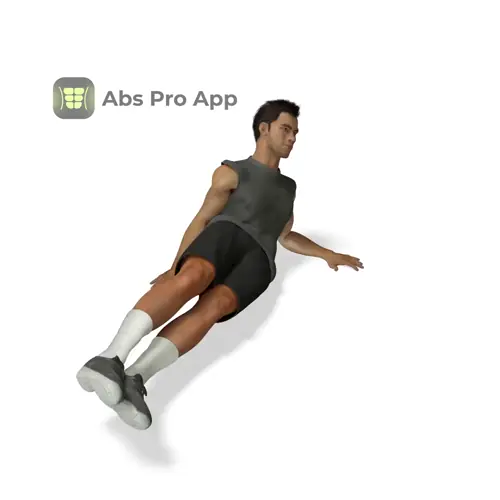
You perform this move sitting on one hip, supported by your lower forearm, with both legs extended and lifted as they swing diagonally forward and back. It is a solid intermediate-level exercise that fits well into abs workouts, core finishers, or Pilates-inspired routines.
Focus on slow, controlled movement, keeping your legs straight and your torso steady. This guide explains how to do side seated leg raises with proper technique, breathing, and progression tips.
Benefits
- Strengthens side abs without equipment
- Improves hip flexor control and endurance
- Builds core stability in a seated position
- Challenges balance and coordination
- Helps correct left to right core imbalances
- Fits easily into home ab workouts
Setup & Starting Position
Sit on the floor on your right or left hip, with your body angled slightly sideways rather than facing straight forward. Place your lower arm on the floor with the forearm down, elbow under or slightly in front of the shoulder. Your hand can rest flat for light support.
Extend both legs straight out in front of you at a slight diagonal, stacking one leg on top of the other. Lift both legs a few inches off the floor so they are hovering. Your feet stay together, toes relaxed, and knees straight.
Keep your torso tall with your chest open and shoulders relaxed away from your ears. Engage your core by gently pulling your ribs down toward your hips.
Setup tip: Before starting, test the movement range slowly to find a diagonal path that lets you stay balanced without leaning back.
How To Do Side seated leg raises (Step-by-step)
- Start seated on one hip with your forearm supporting you.
- Extend both legs straight and lift them slightly off the floor.
- Brace your core and keep your chest upright.
- Swing both legs diagonally forward in a smooth motion.
- Stop before your torso leans back or collapses.
- Reverse the motion and bring the legs back to the start.
- Move slowly and with control, no swinging.
- Complete all reps, then switch sides.
Form Cues
- Chest tall, shoulders relaxed
- Legs straight and together
- Move from the hips, not momentum
- Core tight the whole time
- Forearm supports, does not push
Breathing & Bracing
Proper breathing helps you stay stable and get the most from side seated leg raises. Begin by taking a calm inhale through your nose before starting the first repetition.
As you swing your legs diagonally forward, exhale slowly and gently tighten your core. Think about wrapping your abdominal muscles around your waist rather than sucking your stomach in. This helps keep your ribs stacked over your hips.
Inhale again as your legs return to the starting position, maintaining tension through your midsection. Avoid holding your breath, even when the movement feels challenging.
A simple rhythm to repeat is: inhale at the start, exhale as the legs move forward, inhale as they return. Keep your breathing smooth and controlled to support balance and posture.
Common Mistakes
- Using momentum instead of control, slow down the swing.
- Bending the knees, keep legs fully extended.
- Leaning backward, sit taller and reduce range.
- Pressing hard into the forearm, rely more on your core.
- Rushing reps, use a steady tempo.
How It Should Feel
Quick Self-Check: You should feel a strong, steady burn along the side of your waist and the front of your hips. Your core should stay engaged without shaking out of control.
Good signs:
- Controlled leg movement with no swinging
- Stable torso that stays mostly upright
- Even effort on both sides
Warning signs:
- Sharp pain in the hip or lower back, stop immediately
- Neck or shoulder strain from pushing into the arm
If you feel this mostly in your lower back, reduce the range and focus on bracing your abs. If your neck feels tense, relax your shoulder and lighten the arm support.
Alternative Names
Seated side leg raises, Side seated leg lifts
Variations
Easier
- Bent-knee side seated leg raises, keep knees slightly bent to reduce leverage.
- Heel-tap side swings, lightly tap heels on the floor between reps.
Harder
- Slow tempo side seated leg raises, take 3 to 4 seconds each direction.
- Pause-forward side leg raises, hold the forward position for 2 seconds.
Sample Workout
Core Focused Workout
- High plank shoulder taps, 30 seconds
- Side seated leg raises, 10 to 15 reps per side
- Dead bug, 10 reps per side
- Glute bridge hold, 30 seconds
Rest 60 seconds and repeat for 2 to 3 rounds. Use side seated leg raises as a main oblique movement in the middle of the workout.
Progression Plan
Week 1: Perform 2 sets of 8 to 10 reps per side. Focus on learning the movement path and staying balanced. Rest 60 to 90 seconds between sets.
Week 2: Increase to 3 sets of 12 to 15 reps per side. Slow the movement slightly and reduce rest to about 60 seconds.
Week 3: Add a 2-second pause when the legs swing forward. Keep reps at 10 to 12 per side and maintain perfect control.
Week 4: Try the slow tempo advanced variation or add one extra set. Progress only if you can complete all reps without leaning back.
If form breaks down, repeat the previous week until control improves.
FAQ
How many reps should I do?
Most people do 10 to 15 controlled reps per side, where one rep is a forward swing and return.
Should my legs touch the floor?
No, keep them hovering to maintain constant tension.
Is this more for abs or hips?
It works both, but you should feel a strong oblique engagement if done correctly.
Can I do this every day?
You can include it often, but allow rest if your hips feel overly fatigued.
Summary
Side seated leg raises are a powerful way to challenge your obliques and hip flexors using only your bodyweight. When done with control and proper breathing, they build core strength that carries over to daily movement and other exercises.
Stay focused on posture, move slowly, and progress gradually. With consistent practice, this exercise can become a reliable part of your abs and core training routine.
Get Defined Abs in 30 Days
This exercise is part of our complete 30-day ab program. Download the app for structured daily workouts and track your progress.