
Scissor Leg Raises Tutorial
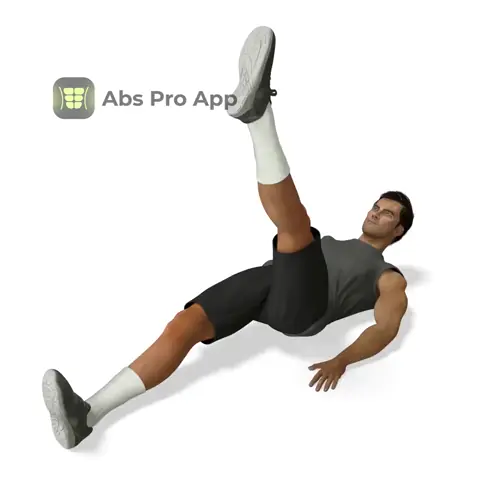
Scissor leg raises are a bodyweight abs exercise where you lie on your back, lift your upper body slightly, and move straight legs in a controlled scissoring motion. This exercise targets the lower abs while also challenging the upper abs and hip flexors. It is a popular choice in many how to train abs routines because it requires no equipment and very little space.
This movement is best for beginners to early intermediate levels who want to improve core strength, control, and endurance. Focus on slow, deliberate leg movement, keeping your lower back pressed into the floor and your core braced throughout the set.
Benefits
- Strengthens lower abdominal muscles
- Improves core control and stability
- Builds coordination between upper and lower body
- Requires no equipment or space
- Enhances mind muscle connection in the abs
- Can be easily adjusted for intensity
Setup & Starting Position
Start by lying flat on your back on an exercise mat or comfortable floor. Extend your legs straight out in front of you with heels resting lightly on the ground. Place your arms by your sides or slide your hands under your glutes for extra lower back support, depending on comfort.
Engage your core by gently pulling your belly button toward your spine. Press your lower back into the floor so there is no gap underneath it. From here, lift your head, neck, and upper back slightly off the ground, similar to the top position of a small crunch. Keep your chin slightly tucked and your gaze toward your thighs.
Lift both legs a few inches off the floor with knees straight and toes pointed up. This is your starting position. Setup tip: If your lower back arches, raise your legs a bit higher or use hands under glutes for support.
How To Do Scissor leg raises (Step-by-step)
- Lie on your back and brace your core
- Lift head, neck, and upper back slightly off the floor
- Extend both legs straight and hover them above the ground
- Raise one leg upward while the other lowers toward the floor
- Switch legs in a smooth scissoring motion
- Keep legs straight and movement controlled
- Maintain lower back contact with the floor
- Continue alternating for the desired reps or time
- Finish by lowering legs and upper back with control
Form Cues
- Lower back pressed into the floor
- Legs stay straight
- Slow and controlled switches
- Neck relaxed, chin tucked
- Core tight the whole time
Breathing & Bracing
Proper breathing helps you keep control and protect your lower back during scissor leg raises. Before starting, take a calm inhale through your nose as you set your position and brace your core. Think about tightening your abs as if preparing for a light cough.
As you begin the scissoring motion, exhale slowly through your mouth during each leg switch or every two switches. This steady exhale helps keep your ribs down and your core engaged. Avoid holding your breath, as this can increase tension in your neck and reduce control.
A simple rhythm is to inhale briefly as one leg lifts, then exhale as you switch legs. Keep breathing smooth and continuous. If your breathing becomes rushed, slow down the leg movement until you regain control.
Common Mistakes
- Arching the lower back, fix by lifting legs higher or bracing harder
- Bending the knees, fix by focusing on straight legs and slower tempo
- Pulling on the neck, fix by relaxing shoulders and tucking chin
- Moving legs too fast, fix by slowing down each switch
- Holding breath, fix by using a steady inhale and exhale rhythm
How It Should Feel
Quick Self Check: You should feel a strong, steady burn in your lower abs and across the front of your core. Your abs should stay tight the entire set, and your movement should feel controlled rather than rushed.
Good signs: tension in the lower abs, steady breathing, and a stable lower back pressed into the floor. You may also feel light work in the hip flexors, which is normal.
Warning signs: sharp pain in the lower back, excessive neck strain, or loss of control. Stop immediately if you feel sharp pain.
If you feel it mostly in your neck, lower your upper back slightly and relax your shoulders. If you feel lower back discomfort, raise your legs higher or place hands under your glutes for support.
Alternative Names
Scissor kicks, Flutter scissor raises
Variations
Easier
- Bent Knee Scissor Raises, bend knees slightly to reduce lower back strain
- Hands Under Glutes Scissor Raises, place hands under hips for extra support
Harder
- Low Hover Scissor Raises, keep legs closer to the floor for more tension
- Slow Tempo Scissor Raises, pause briefly between each switch
Sample Workout
Core Focused Bodyweight Workout
- Scissor Leg Raises, 3 sets of 20 to 30 seconds
- Dead Bug, 3 sets of 10 reps per side
- High Plank, 3 sets of 20 to 40 seconds
- Crunches, 3 sets of 12 to 15 reps
Rest 30 to 45 seconds between exercises. Focus on slow, controlled reps rather than speed.
Progression Plan
Week 1: Perform scissor leg raises for 3 sets of 15 to 20 seconds. Focus on proper setup, slow leg switches, and keeping your lower back pressed into the floor. Rest 45 seconds between sets.
Week 2: Increase to 3 sets of 25 to 30 seconds. Slow down the tempo slightly and aim for smoother transitions between legs. Reduce rest to 30 seconds if form stays solid.
Week 3: Add a brief pause between each leg switch or lower the legs closer to the floor. Keep reps controlled. If your lower back arches, repeat Week 2 instead.
Progress when you can complete all sets without losing lower back contact or neck comfort. If form breaks down, repeat the previous week.
FAQ
How to do scissor leg raises without hurting my back?
Press your lower back into the floor and lift your legs higher if needed.
Are scissor leg raises good for beginners?
Yes, this is a beginner friendly abs exercise when performed with control.
How many reps should I do?
Start with 20 to 30 seconds or 10 to 15 switches per side.
Should my legs touch the floor?
No, keep them hovering to maintain tension in the abs.
Summary
Scissor leg raises are a simple yet effective way to build core strength using only your bodyweight. By focusing on controlled leg movement, proper breathing, and a stable lower back, you can get excellent results without stressing your joints.
Add this exercise to your abs routine as a finisher or main core movement, and progress gradually. Consistency and good technique matter more than speed. Keep practicing, stay mindful of your form, and your core strength will steadily improve.
Get Defined Abs in 30 Days
This exercise is part of our complete 30-day ab program. Download the app for structured daily workouts and track your progress.