
Russian Twists Tutorial
Russian twists are a classic bodyweight core exercise where you balance on your sit-bones and rotate your upper body side to side. They are popular for building rotational core strength, improving control through the midsection, and training the muscles that help you twist, stabilize, and resist movement.
This exercise is suitable for most people with basic core control and is often used in abs workouts, sports training, and home routines. The main focus is keeping your hips and legs still while the torso does the work. Think slow, controlled rotation rather than speed.
Benefits
- Builds rotational core strength
- Improves control and balance
- Trains obliques effectively
- Enhances coordination between upper and lower body
- Supports sports that involve twisting
- Can be done anywhere with no equipment
Setup & Starting Position
Start by sitting on the floor with your knees bent and feet lightly on the ground. Place your hands together in front of your chest, elbows relaxed. From here, gently lean your torso back until you feel your abs engage.
Lift your feet off the floor and balance on your sit-bones, the bony points under your pelvis. Your shins can be roughly parallel to the floor, but the key is that your legs stay still throughout the exercise. Keep your spine long, chest open, and shoulders down away from your ears.
Your head stays in line with your torso, and your gaze follows your hands as you rotate. Before starting the first rep, brace your core by gently tightening your abs as if preparing for a cough.
Setup tip: If you cannot balance without rounding your lower back, lean back less or keep toes lightly touching the floor until strength improves.
How To Do Russian twists (Step-by-step)
- Sit on the floor with knees bent and hands together at chest level.
- Lean back slightly and lift both feet, balancing on your sit-bones.
- Brace your core and keep hips and legs completely still.
- Rotate your upper body to the right, moving shoulders and ribs together.
- Pause briefly at the end of the twist.
- Rotate through center and twist to the left side.
- Move slowly and with control, not momentum.
- Continue alternating sides for the desired reps.
- Finish by placing feet down and sitting upright.
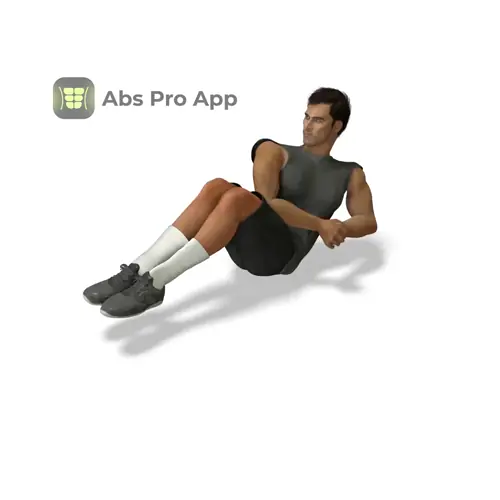
Form Cues
- Balance tall on your sit-bones
- Chest open, spine long
- Rotate shoulders, not arms
- Hips and legs stay still
- Slow and controlled tempo
- Eyes follow your hands
Breathing & Bracing
Proper breathing helps you stay stable and protect your lower back during Russian twists. Before you start rotating, take a calm inhale through your nose and lightly brace your core. This means tightening your abs as if zipping up snug pants, without sucking in or holding your breath.
As you rotate to one side, slowly exhale through your mouth. The exhale helps deepen core engagement, especially in the obliques. When you return through the center, begin your next inhale, then exhale again as you rotate to the opposite side.
A simple rhythm you can repeat is inhale in the center, exhale on the twist. Keep breathing smooth and steady, and avoid breath holding, which can cause tension in the neck and shoulders.
Throughout the set, keep your ribs stacked over your hips. If you feel your lower back arching or collapsing, reset your brace and reduce the range of motion.
Common Mistakes
- Swinging the arms instead of rotating the torso, fix by moving shoulders and ribs together.
- Letting the legs move side to side, fix by tightening the core and squeezing thighs together.
- Rounding the lower back, fix by sitting taller and leaning back less.
- Going too fast, fix by slowing the tempo and adding a pause.
- Holding the breath, fix by exhaling during each twist.
- Pulling on the neck, fix by keeping hands relaxed and chest open.
How It Should Feel
Quick self-check: Russian twists should create a deep, controlled burn through the sides and front of your abs.
Good signs:
- Strong tension in the obliques on each rotation
- Ability to balance without feet touching down
- Smooth, controlled movement side to side
Warning signs:
- Sharp pain in the lower back, stop immediately
- Neck strain or pulling sensation
If you feel it mostly in your lower back, lean back less and focus on bracing your abs before moving. If your neck gets tired, relax your shoulders and keep the movement coming from your torso, not your arms. Adjust range of motion until the exercise feels challenging but controlled.
Alternative Names
Seated Russian twist
Variations
Easier
- Russian twist with feet down: Keep heels lightly on the floor while rotating.
- Partial range Russian twist: Rotate only a small distance side to side.
Harder
- Slow tempo Russian twist: Add a 2 to 3 second pause at each side.
- Extended leg Russian twist: Straighten legs while keeping them still.
Sample Workout
Core Stability Workout
- Dead bug, 3 x 10 reps per side
- Russian twists, 3 x 20 total reps
- High plank, 3 x 30 to 45 seconds
- Bicycle crunches, 2 x 20 reps
Rest 30 to 45 seconds between exercises. Focus on slow, controlled reps rather than rushing.
Progression Plan
Week 1: Practice control and balance. Perform 2 to 3 sets of 12 to 16 total reps with feet lifted or lightly touching down if needed. Focus on slow rotation and perfect form. Rest 45 seconds between sets.
Week 2: Increase volume to 3 sets of 20 total reps. Add a brief pause at each side to improve control. Keep legs completely still.
Week 3: Slow the tempo further, taking 3 seconds to rotate each way. Maintain the same reps but shorten rest to 30 seconds.
Week 4: Move to an advanced variation such as extended leg Russian twists if balance and posture stay solid.
If form breaks down or balance is lost, repeat the current week until you can complete all reps with control.
FAQ
FAQ
How to do Russian twists correctly?
Balance on your sit-bones, keep legs still, brace your core, and rotate from the upper body with control.
Are Russian twists bad for your back?
When done with good posture and control, they are safe for most people. Avoid excessive speed and range.
Should my feet touch the floor?
In the standard version described here, feet are lifted. Beginners may keep toes down for support.
How many reps should I do?
Start with 10 to 20 total reps and increase as control improves.
Summary
Russian twists are a powerful way to train your core to rotate and stabilize at the same time. When done slowly and with good balance, they build strong, functional abs without any equipment.
Focus on posture, breathing, and control rather than speed. Keep your hips and legs quiet, and let your upper body do the work. With consistent practice and smart progressions, Russian twists can become a reliable staple in your abs workouts at home or in the gym.
Get Defined Abs in 30 Days
This exercise is part of our complete 30-day ab program. Download the app for structured daily workouts and track your progress.