
Runners Sit-ups Tutorial
Runners sit-ups are a dynamic core exercise that blends a traditional sit-up with a running-style arm and leg drive at the top.
This move trains your abs while also improving coordination and cross-body control, making it useful for general fitness and sports prep.
It is a beginner-level bodyweight exercise that requires no equipment and very little space. Focus on smooth control, alternating sides with each rep, and keeping your core engaged rather than rushing the movement.
Benefits
- Builds core strength with movement
- Improves coordination and balance
- Trains cross-body control
- Raises heart rate slightly for conditioning
- Reinforces good sit-up technique
- Requires no equipment
- Easy to scale and include in circuits
Setup & Starting Position
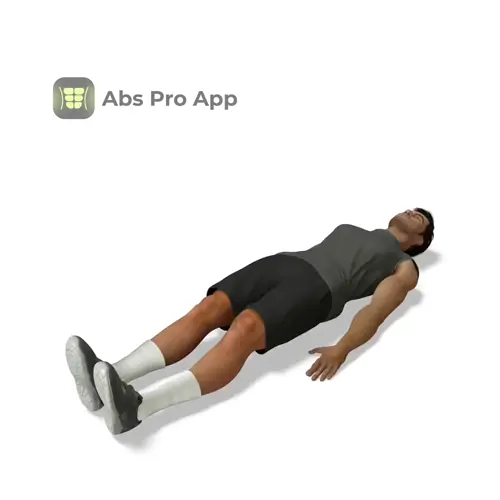
Start by lying flat on your back on a mat or comfortable surface. Bend your knees and place your feet flat on the floor, about hip-width apart. Your heels should be close enough to your hips that you can keep your feet grounded during the sit-up.
Extend your arms long on the floor next to your body or place your hands lightly on your thighs. Keep your head relaxed, eyes facing up, and neck in a neutral position. Your lower back should rest naturally against the floor without forcing it down.
Before starting the first rep, lightly brace your core as if preparing for a cough. This helps protect your lower back and sets the tone for controlled movement.
Quick setup tip: Think about moving smoothly from the floor to the top, not yanking yourself up with momentum.
How To Do Runners sit-ups (Step-by-step)
- Lie on your back with knees bent and feet planted firmly on the floor.
- Brace your core and begin a controlled sit-up.
- As you rise, lift one knee toward your chest.
- At the same time, bring the opposite arm forward, like a running motion.
- Pause briefly at the top with chest tall and core tight.
- Lower your upper body back to the floor with control.
- Place the lifted foot back on the floor.
- Repeat the sit-up, switching to the other knee and arm.
- Continue alternating sides, one side equals one rep.
Form Cues
- Move smooth and controlled
- Alternate opposite arm and leg
- Keep feet grounded on the floor
- Chest tall at the top
- Core tight, not rushed
- Neck relaxed
Breathing & Bracing
Proper breathing helps keep runners sit-ups smooth and controlled. Start each rep by inhaling gently while lying on the floor. As you sit up and drive the arm and knee, exhale through your mouth. This exhale helps your abs contract and supports your spine.
Focus on bracing your core without holding your breath. Imagine tightening your midsection as if zipping up snug pants. Your ribs should stay stacked over your hips, especially at the top of the sit-up.
A simple rhythm you can repeat is inhale at the bottom, exhale as you sit up, inhale briefly at the top, and exhale again as you lower down. Keep breathing steady and calm throughout the set.
Common Mistakes
- Pulling on the neck, fix by keeping hands off the head.
- Using momentum, fix by slowing down the sit-up.
- Lifting both legs, fix by keeping one foot planted.
- Same arm and leg lifting, fix by focusing on opposite sides.
- Feet coming off the floor, fix by setting heels closer to hips.
- Rushing reps, fix by controlling each phase.
How It Should Feel
Quick Self-Check
You should feel your abs working from the start of the sit-up through the top position. There may also be light effort in your hips and shoulders due to the running-style motion.
Good signs:
- Abs feel engaged and slightly fatigued
- Movement feels coordinated and balanced
- No strain in the neck
Warning signs:
- Sharp pain in the lower back or neck, stop immediately
- Hip discomfort that does not ease with control
If you feel it mostly in your neck, slow down and keep your gaze forward instead of tucking the chin. If your lower back feels strained, reduce range of motion and focus on bracing before lifting.
Alternative Names
Runner sit-ups, Running sit-ups
Variations
Easier
- Alternating Knee Sit-Ups: Perform a sit-up and lift one knee without adding the arm drive.
- Partial Runner Sit-Ups: Sit up halfway and perform the running motion before lowering.
Harder
- Slow Tempo Runners Sit-Ups: Take 3 seconds up and 3 seconds down to increase core tension.
- Extended-Leg Runners Sit-Ups: Keep the non-lifting leg straight to increase difficulty.
Sample Workout
Core and Conditioning Circuit
- Runners sit-ups, 10 to 12 reps total
- Bodyweight squats, 15 reps
- High plank, 30 seconds
- Glute bridges, 15 reps
Rest 60 seconds and repeat for 2 to 3 rounds. Perform runners sit-ups early in the workout when your core is fresh to maintain good technique.
Progression Plan
Week 1: Perform runners sit-ups 2 to 3 times per week. Aim for 2 sets of 8 to 10 reps total. Rest 45 to 60 seconds between sets. Focus on clean alternation and smooth control.
Week 2: Increase to 2 to 3 sets of 12 to 14 reps total. Reduce rest slightly if form stays solid. Concentrate on a taller posture at the top.
Week 3: Begin using a slower tempo, especially on the way down. Try 3 sets of 12 reps with a 3-second lowering phase.
Once you can complete all reps without rushing or losing balance, you can move to an advanced variation like extended-leg runners sit-ups. If form breaks down, repeat the previous week until control improves.
FAQ
How many reps should I do?
Start with 8 to 12 total reps, remembering one side equals one rep.
Is one rep both sides?
No, one rep is one arm and opposite leg drive. Left and right are counted separately.
Can I keep my hands behind my head?
It is better to keep arms free so you can perform the running motion without pulling the neck.
Are runners sit-ups good for cardio?
They raise the heart rate slightly but are mainly a core and coordination exercise.
What surface is best?
A mat or carpeted floor helps protect your spine and tailbone.
Summary
Runners sit-ups are a simple yet effective way to make classic sit-ups more engaging. By adding an alternating arm and leg drive, you train your abs while improving coordination and body awareness.
Keep your movements controlled, alternate sides consistently, and focus on quality reps. When done with good form, this exercise fits easily into core workouts, warm-ups, or conditioning circuits.
Progress gradually and enjoy building a stronger, more coordinated core.
Get Defined Abs in 30 Days
This exercise is part of our complete 30-day ab program. Download the app for structured daily workouts and track your progress.