
Runners On Hold Tutorial
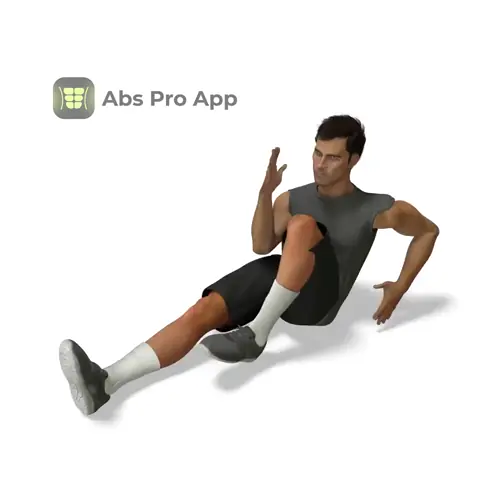
Runners on Hold is a seated core exercise performed in a sit-up or V-sit position while mimicking a running motion with opposite arms and legs.
It challenges your abs to hold your body stable while your limbs move quickly, making it a great how to improve core control, coordination, and endurance drill. This exercise suits beginners who already know basic ab holds and want a more dynamic option. Focus on staying tall through the chest, keeping your abs tight, and moving smoothly rather than rushing.
Benefits
- Builds core endurance
- Improves coordination between upper and lower body
- Strengthens hip flexors safely
- Trains balance in a seated position
- Raises heart rate without equipment
- Teaches core control during movement
Setup & Starting Position
Sit on the floor with your knees bent and feet flat. Lean your upper body back slightly until you feel your abs engage, similar to the top position of a sit-up. Your spine should stay long, not rounded.
Lift both feet a few inches off the floor so you are balancing on your sit bones. Bend your knees so your shins are roughly parallel to the ground. Bring your arms up with elbows bent at about 90 degrees, just like a running posture.
Your chest stays open, shoulders relaxed, and eyes looking forward. Brace your core gently as if preparing to cough.
Setup tip: If balance is difficult, lightly tap your heels down between reps to reset before lifting again.
How To Do Runners on hold (Step-by-step)
- Sit down and lean back into a stable sit-up hold.
- Lift both feet off the floor with knees bent.
- Raise your arms into a running position.
- Extend your right arm forward as your left knee lifts.
- Switch sides, moving like a running motion.
- Keep your torso still and abs tight.
- Move at a controlled but rhythmic pace.
- Continue for the desired time or reps.
- Slow the movement before stopping.
- Place feet down and sit upright to finish.
Form Cues
- Chest tall, not slouched
- Move arms and legs together
- Abs tight the whole time
- No rocking side to side
- Control before speed
Breathing & Bracing
Breathing steadily is key for maintaining control during Runners on Hold. Begin by taking a deep breath in through your nose before you start the movement. As you begin the running motion, breathe normally and avoid holding your breath.
A simple rhythm is to exhale lightly every two to three switches of the arms and legs. This helps keep your ribs down and your core engaged without excessive tension.
To brace your core, imagine gently tightening a belt around your waist. Your stomach should feel firm but you should still be able to breathe and talk in short sentences.
If you feel your lower back arching or your chest collapsing, slow the movement and reset your breath. Good breathing keeps your hips and ribs stacked and protects your spine throughout the exercise.
Common Mistakes
- Leaning too far back, fix by sitting slightly more upright.
- Rounding the lower back, fix by lifting the chest.
- Moving too fast, fix by slowing the tempo.
- Holding the breath, fix by breathing out regularly.
- Letting feet drop, fix by lifting knees higher.
- Shrugging shoulders, fix by relaxing the neck.
How It Should Feel
Quick Self-Check:
You should feel steady tension in your abs and hip flexors, with your core working to keep you balanced. Your arms and legs should move smoothly without throwing your torso around.
Good signs:
- Burning or fatigue in the abs
- Stable upper body
- Smooth, controlled breathing
Warning signs:
- Sharp pain in the lower back or hips, stop immediately
- Neck strain, reset posture and relax shoulders
If you feel this mostly in your lower back, sit taller and reduce the lean. If your neck feels tense, lower the arms briefly and restart with better posture.
Alternative Names
Seated runner hold, V-sit runners
Variations
Easier
- Heel-supported runners: Keep heels lightly touching the floor while moving arms and legs.
- Slow runners on hold: Pause one second between each switch.
Harder
- Straight-leg runners on hold: Extend legs longer while keeping balance.
- Fast tempo runners: Increase speed without losing form.
Sample Workout
- Runners on Hold, 3 sets of 30 to 40 seconds
- Dead Bug, 3 sets of 10 reps per side
- High Plank, 3 sets of 20 to 30 seconds
- Rest 45 seconds between sets
Use Runners on Hold early in the workout when your core is fresh so you can focus on technique.
Progression Plan
Week 1: Perform Runners on Hold for 3 sets of 20 to 30 seconds. Focus on posture, slow movement, and steady breathing. Rest 45 to 60 seconds between sets.
Week 2: Increase to 30 to 40 seconds per set. Keep the same tempo but aim for less torso movement and better balance.
Week 3: Reduce rest time to 30 seconds or slightly increase speed while maintaining control.
Week 4: Try a straight-leg or faster tempo variation for short intervals of 15 to 20 seconds.
Repeat a week if form breaks down or balance is lost. Progress only when you can complete all sets with good control and breathing.
FAQ
How long should I do Runners on Hold?
Start with 20 to 30 seconds and build up as control improves.
Is this a cardio or ab exercise?
It is primarily a core exercise, but it can raise your heart rate.
Can beginners do this exercise?
Yes, especially with heel support or slower movement.
How to do runners on hold without back pain?
Sit taller, brace your abs, and avoid leaning too far back.
Summary
Runners on Hold is a simple yet effective way to train your abs through stability and movement at the same time. By staying controlled and breathing well, you build strength that transfers to running, sports, and everyday activities.
Focus on quality over speed, progress gradually, and use the variations to match your current level. With consistency, this exercise becomes a powerful tool in any no-equipment core routine.
Get Defined Abs in 30 Days
This exercise is part of our complete 30-day ab program. Download the app for structured daily workouts and track your progress.