
Rolling High Plank Tutorial
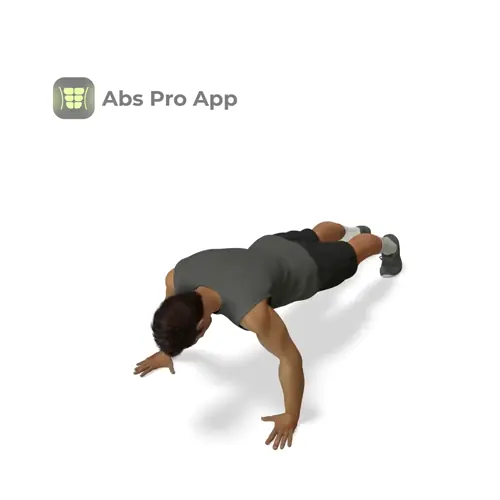
Rolling High Plank is a dynamic core exercise that blends a traditional high plank with a controlled rotation into a side plank. You start on your hands, roll onto one hand and the outer edge of one foot, lift the opposite arm, then return to center and switch sides.
This move challenges the abs, obliques, shoulders, and hips while improving body control and anti-rotation strength. It is best suited for intermediate to advanced trainees who already have solid plank technique. Focus on slow, smooth rolling, stacked shoulders, and keeping your hips level.
Benefits
- Builds rotational and anti-rotation core strength
- Improves shoulder stability on one arm
- Trains full core control, front and sides
- Enhances body awareness and balance
- Strengthens hips and glutes for better alignment
- Challenges coordination under tension
- No equipment needed, bodyweight only
Setup & Starting Position
Begin on the floor in a high plank position. Place your hands flat on the ground directly under your shoulders, fingers spread for better grip. Your arms should be straight but not locked, with the elbows gently rotated inward to create shoulder stability.
Extend both legs straight behind you with your feet about hip-width apart. Your weight should be balanced between your hands and the balls of your feet. Squeeze your glutes lightly and brace your abs so your body forms a straight line from head to heels.
Keep your neck neutral by looking down at the floor slightly ahead of your hands. Before starting the first rep, take a controlled breath, tighten your core, and feel steady in the high plank.
Setup tip: If you feel pressure in your wrists, press evenly through your palms and fingertips instead of dumping weight into the heel of the hand.
How To Do Rolling high plank (Step-by-step)
- Start in a strong high plank on your hands.
- Shift your weight slightly into your right hand.
- Begin rotating your torso to the left.
- Pivot onto the outer edge of your left foot.
- Stack your feet or lightly stagger them for balance.
- Lift your left arm straight up toward the ceiling.
- Pause briefly in the side plank with hips lifted.
- Roll back under control to the high plank.
- Stabilize your body in the center.
- Repeat the rotation to the opposite side.
- Continue alternating sides with slow, steady tempo.
- One full rep equals a roll to both left and right sides.
Form Cues
- Hands under shoulders at all times
- Body stays in one straight line
- Move slowly, no swinging
- Hips stay lifted during the roll
- Stack shoulders in the side plank
- Eyes follow the top hand
- Brace abs before each rotation
Breathing & Bracing
Proper breathing and bracing are key to controlling the Rolling High Plank. Before you move, take a calm breath in through your nose while tightening your abs as if preparing for a cough. This creates core tension without holding your breath.
As you rotate into the side plank, slowly exhale through your mouth. This helps keep your ribs down and prevents your lower back from arching. Maintain gentle abdominal tension the entire time, especially when balancing on one arm.
When you roll back to the high plank, inhale again to reset. Use a steady rhythm such as inhale in center, exhale during the roll, inhale back in center. Avoid breath holding, which can reduce control and increase pressure.
Think of bracing as tightening a wide belt around your waist, not sucking your stomach in.
Common Mistakes
- Letting hips sag, fix by squeezing glutes and bracing harder.
- Rushing the rotation, fix by slowing the tempo.
- Bending the support arm, fix by keeping the elbow straight but soft.
- Collapsing the shoulder, fix by pressing the floor away.
- Over-rotating past side plank, fix by stacking shoulders only.
- Feet slipping apart, fix by adjusting foot placement.
- Neck strain from looking up too hard, fix by keeping a neutral neck.
How It Should Feel
Quick Self-Check:
Good signs: You feel strong tension across the abs and obliques, the support shoulder feels stable, and your body moves as one solid unit. You should also feel glute engagement helping to keep the hips lifted.
Warning signs: Sharp pain in the shoulder, wrist, or lower back means you should stop. Excessive shaking or losing balance early may mean the exercise is too advanced right now.
If you feel it mostly in your neck, relax your head and keep your gaze neutral instead of forcing it upward. If you feel it in your lower back, slow down, squeeze your glutes more, and shorten the range of motion until control improves.
Alternative Names
Plank to side plank roll, Rolling plank
Variations
Easier
- Knee Rolling High Plank: Perform the same movement but keep both knees on the floor for reduced load.
- Partial Range Roll: Rotate only halfway toward the side plank, then return to center.
- Slow High Plank Hold: Hold a standard high plank to build base strength first.
Harder
- Rolling High Plank with Pause: Pause for 3 to 5 seconds in each side plank to increase time under tension.
- Feet Stacked Rolling High Plank: Stack the feet fully instead of staggering to increase balance demand.
- Slow Tempo Rolling Plank: Take 5 seconds to roll to each side and 5 seconds back.
Sample Workout
Core Stability Workout
- High Plank: 30 to 45 seconds
- Rolling High Plank: 6 to 10 reps total, each rep includes both sides
- Dead Bug: 8 to 12 reps per side
- Side Plank Hold: 20 to 30 seconds per side
Rest 60 to 90 seconds between rounds. Complete 2 to 4 rounds depending on your level. Place the Rolling High Plank early in the workout when your core and shoulders are fresh.
Progression Plan
Week 1: Practice 2 to 3 sets of 6 reps total, focusing on slow and controlled movement. Rest as needed between reps and prioritize perfect alignment.
Week 2: Increase to 8 to 10 reps total. Begin adding a brief 1 second pause in each side plank while maintaining steady breathing.
Week 3: Slow the tempo further by taking 3 to 4 seconds to roll into each side plank. Reduce rest time slightly to improve endurance.
Week 4: Progress to an advanced variation such as the Rolling High Plank with longer pauses or stacked feet. If form breaks down, repeat the previous week.
Always progress by improving control and quality first, not just adding reps.
FAQ
FAQ
Should my feet be stacked or staggered?
Both are acceptable. Staggered feet are more stable, stacked feet make the exercise harder.
How many reps should I do?
Start with 6 to 8 controlled reps, counting one rep as both left and right sides.
Can I do this exercise every day?
It can be done frequently, but allow rest if your shoulders or core feel overly fatigued.
Why do I lose balance during the roll?
This usually comes from moving too fast or not bracing the core before rotating.
Summary
The Rolling High Plank is a powerful way to upgrade your core training by combining strength, balance, and rotation in one move. When done with control, it builds resilience through the abs and shoulders while teaching your body to stay stable under shifting loads.
Take your time mastering the roll, breathe with intention, and choose a variation that matches your current strength. With consistent practice, this exercise can greatly improve your plank performance and overall core control.
Get Defined Abs in 30 Days
This exercise is part of our complete 30-day ab program. Download the app for structured daily workouts and track your progress.