
Reverse Low Plank Knee Drive Tutorial
Reverse low plank knee drive is a challenging bodyweight core exercise performed facing up, supported on your forearms and heels. From a reverse low plank, you drive one knee toward your chest and alternate sides while keeping your hips lifted.
This move strengthens the deep abs, hip flexors, glutes, and shoulders while also improving body control and coordination. It is best suited for intermediate trainees who already have basic plank strength. Focus on keeping your torso stable, ribs down, and hips high as you move.
Benefits
- Builds strong and defined lower abs
- Improves hip flexor strength and control
- Challenges core stability from a reverse position
- Strengthens glutes to support hip extension
- Enhances shoulder and arm endurance
- Improves coordination between core and legs
- Teaches anti-extension core control
Setup & Starting Position
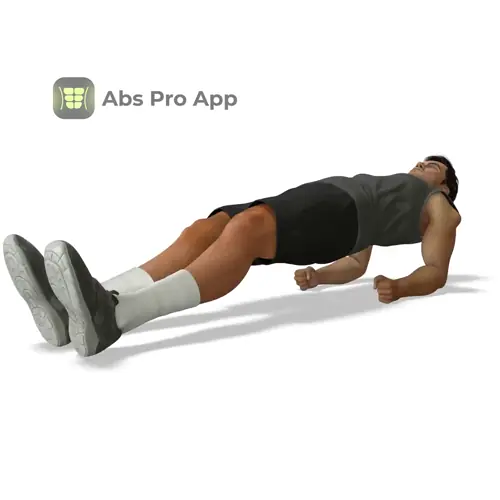
Start seated on the floor with your legs extended straight in front of you. Place your forearms on the ground slightly behind your hips, elbows under your shoulders or a few inches behind them. Your palms face down, and your fingers point toward your feet.
Press your heels into the floor and squeeze your glutes to lift your hips until your body forms a straight line from shoulders to heels. Your chest stays open, shoulders pulled down away from your ears, and neck neutral with eyes looking up.
Before starting the first rep, gently brace your abs by pulling your ribs down toward your hips. This is your reverse low plank position.
Setup tip: If your forearms slide, slightly bend your elbows outward and actively press them into the floor for stability.
How To Do Reverse low plank knee drive (Step-by-step)
- Begin in a stable reverse low plank on your forearms and heels.
- Inhale and prepare, keeping hips lifted and core tight.
- Exhale as you bend one knee and drive it toward your chest.
- Keep your hips as level and high as possible.
- Pause briefly when the knee is closest to your chest.
- Lower the foot back to the floor with control.
- Switch legs and drive the opposite knee in.
- Continue alternating sides at a steady tempo.
- Finish by lowering your hips to the floor with control.
Form Cues
- Press forearms firmly into the floor
- Keep hips lifted the whole time
- Ribs down, core tight
- Move one leg at a time
- Control the return, do not drop the foot
- Neck long and relaxed
Breathing & Bracing
Proper breathing makes a big difference in this exercise. Start each set by taking a calm inhale through your nose while bracing your core. Think of gently tightening your abs as if preparing for a cough, without holding your breath.
As you drive a knee toward your chest, exhale slowly through your mouth. This helps your abs engage more deeply and prevents your ribs from flaring upward. Inhale again as the foot returns to the floor.
Maintain a steady rhythm such as exhale on the drive, inhale on the return. Your hips and ribs should move together as one unit. If you feel your lower back arching, reset your breath, squeeze your glutes, and lightly tuck your pelvis.
Avoid breath holding, especially as fatigue sets in. Smooth breathing supports better control and longer sets.
Common Mistakes
- Letting hips drop, fix by squeezing glutes and shortening the set.
- Rushing the knee drive, fix by slowing down the movement.
- Arching the lower back, fix by pulling ribs down.
- Pushing into the neck, fix by relaxing shoulders away from ears.
- Using momentum, fix by pausing briefly at the top.
- Feet sliding around, fix by pressing heels firmly into the floor.
How It Should Feel
Quick self-check: You should feel strong tension through your abs, especially the lower portion, along with active glutes and hip flexors. Your shoulders and arms will feel engaged but stable.
Good signs:
- Hips stay lifted throughout the set
- Core feels tight and controlled
- Movement feels smooth and deliberate
Warning signs:
- Sharp pain in the lower back, stop immediately
- Pinching in the shoulders or elbows
If you feel it mostly in your neck or lower back, reset your position, lower your hips briefly, then restart with better bracing. Shorter sets with perfect form are more effective.
Alternative Names
Reverse plank knee drive, Reverse forearm plank knee drive
Variations
Easier
- Reverse low plank hold, hold the position without knee movement.
- Reverse low plank march, lift one foot slightly instead of driving the knee fully in.
Harder
- Reverse low plank slow knee drive, use a 3 second drive and 3 second return.
- Reverse low plank double knee tuck, bring both knees toward chest at the same time.
Sample Workout
Core and glutes bodyweight workout:
- Reverse low plank knee drive, 3 sets of 10 to 16 total reps
- Glute bridge, 3 sets of 15 reps
- Dead bug, 3 sets of 10 reps per side
- Side plank, 2 sets of 30 seconds per side
Rest 45 to 60 seconds between sets. Focus on control rather than speed.
Progression Plan
Week 1: Perform 3 sets of 8 to 10 total reps. Focus on perfect setup, stable hips, and controlled breathing. Rest up to 60 seconds between sets. If form breaks, reduce reps.
Week 2: Increase to 3 sets of 12 to 16 total reps. Slow the tempo slightly and add a brief pause at the top of each knee drive.
Week 3: Reduce rest to 30 to 45 seconds and aim for smoother transitions between legs.
When you can complete all sets with hips high and no lower back strain, progress to a slow knee drive or double knee tuck. If you lose form, repeat the previous week until control improves.
FAQ
How to do reverse low plank knee drives correctly?
Keep your forearms and heels planted, hips lifted, and drive one knee toward your chest while bracing your core.
Is this exercise good for abs?
Yes, it strongly targets the lower abs and deep core stabilizers.
Can I do this every day?
You can include it frequently, but allow rest if your hips or shoulders feel overly sore.
Why do my hips drop?
This usually means fatigue or weak glutes, shorten the set and focus on squeezing.
Summary
The reverse low plank knee drive is a powerful way to challenge your abs from a different angle. By combining a reverse plank with controlled leg movement, you train strength, stability, and coordination at the same time.
Stay patient, focus on clean reps, and keep your hips high. Used consistently, this exercise can significantly improve core control and glute strength without any equipment.
Get Defined Abs in 30 Days
This exercise is part of our complete 30-day ab program. Download the app for structured daily workouts and track your progress.