
Plank Twist Step Tutorial
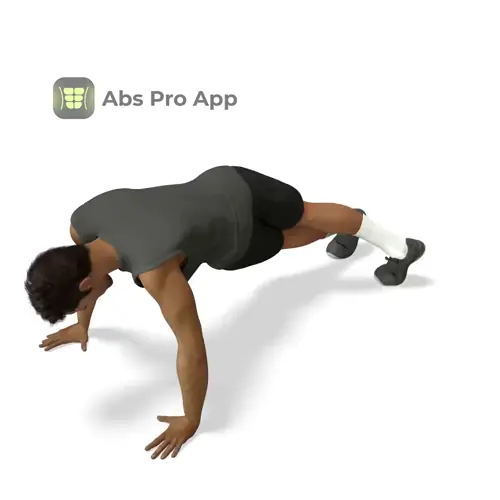
Plank Twist Step is a dynamic core exercise performed in a high plank on hands with continuous cross steps of the feet. You stay facing the floor, hands under shoulders, and step one foot across your body at a time while keeping the legs mostly straight.
This move builds strong abs, especially the obliques, while also challenging shoulders and hips. It suits intermediate trainees who already know how to hold a solid plank and want a twisting, cardio-style upgrade. Focus on steady steps and keeping your chest square to the floor.
Benefits
- Builds rotational core strength
- Improves plank stability on hands
- Trains obliques without equipment
- Challenges coordination and rhythm
- Raises heart rate for core cardio
- Strengthens shoulders isometrically
- Improves hip control and balance
Setup & Starting Position
Begin on the floor in a high plank position. Place your hands flat on the ground directly below your shoulders, fingers spread for stability. Your arms are straight but not locked, and your shoulders are stacked over your wrists.
Extend both legs straight behind you with your toes on the floor. Feet start about hip-width apart to allow room for the cross step. Your body should form a straight line from head to heels. Gently tuck your pelvis so your lower back is neutral, not arched.
Set your head in line with your spine and look down between your hands. Before moving, lightly brace your abs as if preparing for a cough. This brace keeps your hips steady once the stepping begins.
Setup tip: Press the floor away with your hands to activate your shoulders before starting the first step.
How To Do Plank twist step (Step-by-step)
- Start in a strong high plank on your hands.
- Brace your core and keep your legs straight.
- Step one foot across and under the body, placing it past the opposite foot.
- Immediately step the other foot across, passing the first foot
- Continue alternating feet in a smooth, continuous rhythm.
- Keep shoulders stacked over hands the entire time.
- Move at a controlled, steady tempo.
Form Cues
- Hands under shoulders
- Legs long and active
- Ribs pulled down
- Step, do not jump
- Press the floor away
Breathing & Bracing
Proper breathing makes the Plank Twist Step feel controlled instead of chaotic. Start by taking a calm breath in through your nose before the first step. As you begin stepping, aim to exhale gently during each cross step, then inhale as the foot returns.
Your core brace should stay at about 30 to 40 percent effort. Think of tightening a wide belt around your waist rather than sucking in your stomach. This keeps your ribs stacked over your hips and prevents lower back strain.
A simple rhythm you can repeat is exhale on the cross, inhale on the reset. If the pace increases, switch to shorter nasal breaths while maintaining the brace. Never hold your breath, as this will spike tension in your shoulders and neck.
If you feel your hips starting to sway, slow your breathing and steps until control returns.
Common Mistakes
- Letting hips swing side to side, slow the steps and brace harder.
- Bending the arms, lock in straight arms without elbow lockout.
- Rushing the movement, use controlled cross steps.
- Hands too far forward, reset wrists under shoulders.
- Lower back sagging, tuck pelvis and tighten abs.
- Holding breath, return to steady exhale patterns.
How It Should Feel
Quick Self-Check:
You should feel steady tension across the abs and obliques, with your shoulders working to support your body weight. The movement should feel rhythmic and controlled, not sloppy or rushed.
Good signs:
- Burn in the sides of the waist
- Shoulders feel stable, not painful
Warning signs:
- Sharp pain in shoulders or wrists, stop and reset
- Lower back discomfort, reduce range or slow down
If you feel it mainly in your neck, press the floor away and relax your head. If your lower back takes over, widen your stance slightly and re-brace your abs.
Alternative Names
Plank cross step, Plank step twist
Variations
Easier
- Slow plank cross step, pause after each step to regain balance.
- Wide-stance plank step, start with feet wider to reduce hip rotation.
Harder
- Fast plank twist step, increase step speed while keeping hips controlled.
- Plank twist step hold, pause for two seconds on each cross step.
Sample Workout
Core Stability Circuit
- High Plank Hold, 30 seconds
- Plank Twist Step, 30 to 40 seconds
- Dead Bug, 10 reps per side
- Side Plank on Hand, 20 seconds per side
Rest 60 seconds and repeat for 3 rounds. Focus on clean technique rather than speed.
Progression Plan
Week 1: Perform Plank Twist Step for 20 to 25 seconds per set. Focus on slow, clean cross steps and perfect plank alignment. Rest 60 to 90 seconds between sets and complete 2 to 3 sets.
Week 2: Increase work time to 30 to 40 seconds per set. Keep the same controlled tempo and aim for less hip movement. Reduce rest slightly if form stays strong.
Week 3: Add a brief pause after each cross step or slightly increase speed while staying in control. Perform 3 to 4 sets.
If form breaks down, repeat the previous week instead of progressing. Move to advanced variations once you can maintain a stable plank for the full set without shoulder or lower back discomfort.
FAQ
How to do plank twist step correctly?
Follow a high plank setup on hands, keep legs straight, and step each foot across the body while keeping hips stable.
Is plank twist step good for abs?
Yes, it strongly targets the abs and obliques while also training shoulder stability.
How long should I do plank twist steps?
Most people start with 20 to 40 seconds per set and build up gradually.
Can I do this exercise every day?
It can be done often, but allow rest if your shoulders or core feel overly fatigued.
Summary
The Plank Twist Step is a powerful way to upgrade your core training using only bodyweight. By combining a strong high plank with controlled cross steps, you train strength, stability, and coordination at the same time.
Stay patient with the movement, keep your hands planted under your shoulders, and let your abs control the twist instead of your hips. With consistent practice, this exercise can become a reliable staple in your abs workout or full-body routine.
Get Defined Abs in 30 Days
This exercise is part of our complete 30-day ab program. Download the app for structured daily workouts and track your progress.