
Plank To Down Dog Tutorial
Plank to Down Dog is a dynamic core and shoulder exercise that flows between a high plank and a downward dog position. It builds core strength, shoulder stability, and hip mobility while also stretching the back of the legs.
This move is ideal for intermediate exercisers who already have basic plank control and want a more challenging abs-focused movement. Focus on pressing through your hands, keeping your legs mostly straight, and lifting the hips smoothly without collapsing the lower back.
Benefits
- Strengthens the entire core
- Improves shoulder stability
- Builds control through the hips
- Stretches hamstrings and calves
- Enhances body awareness and coordination
- Combines strength and mobility
Setup & Starting Position
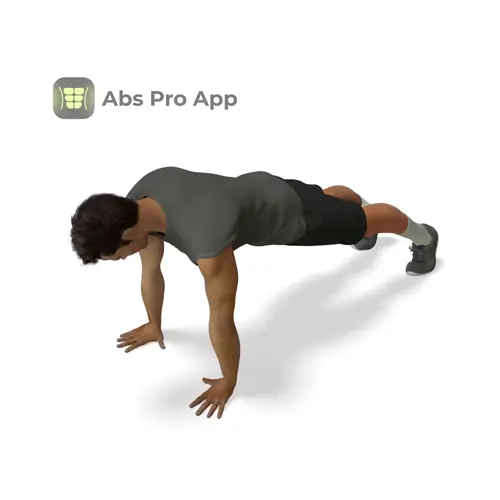
Begin on the floor in a high plank position. Place your hands flat on the ground directly under your shoulders, fingers spread wide for better support. Your arms should be straight but not locked.
Extend your legs back with your toes tucked under and feet about hip width apart. Your body should form a straight line from head to heels. Engage your abs by gently pulling your ribs down and tightening your midsection.
Keep your neck neutral by looking slightly ahead of your hands, not craning upward. Before starting the first rep, press firmly through your palms and set your shoulders by pushing the floor away.
Quick setup tip: Think about actively pushing the ground away with your hands to create a strong base.
How To Do Plank to down dog (Step-by-step)
- Start in a strong high plank on your hands.
- Engage your core and press firmly through your palms.
- Slowly lift your hips up and back.
- Straighten your legs as much as comfortable.
- Form an inverted V shape with your body.
- Let your head fall naturally between your arms.
- Pause briefly while keeping tension in your core.
- Shift your weight forward with control.
- Lower your hips back to plank.
- Reset your alignment before the next rep.
Form Cues
- Hands push the floor away
- Core tight the whole time
- Hips move first, not shoulders
- Spine stays long
- Heels reach toward the floor
- Neck stays relaxed
Breathing & Bracing
Breathing correctly during Plank to Down Dog helps you stay stable and avoid unnecessary tension. Start by taking a calm breath in through your nose while holding the plank position.
As you lift your hips up and back into down dog, slowly exhale through your mouth. This exhale helps your ribs move down and keeps your core engaged without holding your breath.
In the down dog position, take a small controlled inhale, then exhale again as you shift forward and return to plank. Your abs should stay gently tightened, like bracing for a cough, but you should still be able to breathe.
A simple rhythm is inhale in plank, exhale as hips lift, inhale briefly, exhale as you return.
Common Mistakes
- Bending the arms too much, keep arms straight and push the floor away.
- Letting the lower back sag, tighten the core before moving.
- Rushing the transition, slow down and control the hips.
- Overarching in plank, keep ribs pulled down.
- Locking the knees hard, keep legs long but relaxed.
- Shrugging shoulders toward ears, press shoulders down and away.
How It Should Feel
Quick Self-Check:
Good signs: You feel steady tension in your abs, strong engagement in the shoulders, and a stretch through the back of the legs when in down dog. Your movement feels smooth and controlled rather than jerky.
Warning signs: Sharp pain in the shoulders, wrists, or lower back is a signal to stop. Excessive strain in the neck or collapsing into the lower back means your form needs adjustment.
If you feel it mostly in your neck, relax your head and focus on pushing the floor away. If your lower back feels compressed, slow down and tighten your core before lifting the hips. You should feel challenged but stable throughout.
Alternative Names
Plank to Downward Dog
Variations
Easier
- Plank to Down Dog with bent knees, bend knees slightly to reduce hamstring and back strain.
- Elevated hands Plank to Down Dog, place hands on a sturdy surface to decrease load.
Harder
- Plank to Down Dog with shoulder taps, add a tap in plank before lifting hips.
- Plank to Down Dog slow tempo, use a 3 to 5 second transition each way.
Sample Workout
Core and Stability Flow
- High Plank, 30 seconds
- Plank to Down Dog, 8 to 12 reps
- Dead Bug, 10 reps per side
- Side Plank, 20 seconds per side
Rest 45 to 60 seconds and repeat the circuit 2 to 3 times. Focus on control and breathing rather than speed.
Progression Plan
Week 1: Perform 2 to 3 sets of 6 to 8 reps. Move slowly and focus on clean transitions. Rest 60 seconds between sets.
Week 2: Increase to 8 to 12 reps per set. Pause for 1 to 2 seconds in the down dog position to improve control.
Week 3: Slow the tempo, taking 3 seconds to lift the hips and 3 seconds to return to plank. Reduce rest to 45 seconds.
Week 4: Add an advanced variation like shoulder taps or longer pauses if form stays solid.
If you lose core control or feel joint discomfort, repeat the previous week until movement quality improves.
FAQ
How many reps should I do?
Most people do well with 8 to 12 controlled reps per set.
Is this an ab exercise or a stretch?
It is both, it strengthens the abs while stretching the hamstrings and calves.
Can I bend my knees?
Yes, bending the knees slightly helps if flexibility is limited.
Is this good for wrists?
It loads the wrists, so stop if you feel pain and build tolerance gradually.
Summary
Plank to Down Dog is a powerful bodyweight move that blends core strength with mobility and control. When done with intention, it challenges your abs, shoulders, and hips while improving how your body moves as one unit.
Stay patient with the transitions, keep pressing through your hands, and let your breathing guide the movement. Use the variations and progression plan to match your current level, and this exercise can remain a valuable part of your abs and full body routine.
Get Defined Abs in 30 Days
This exercise is part of our complete 30-day ab program. Download the app for structured daily workouts and track your progress.