
Open Leg Crunch Hold Tutorial
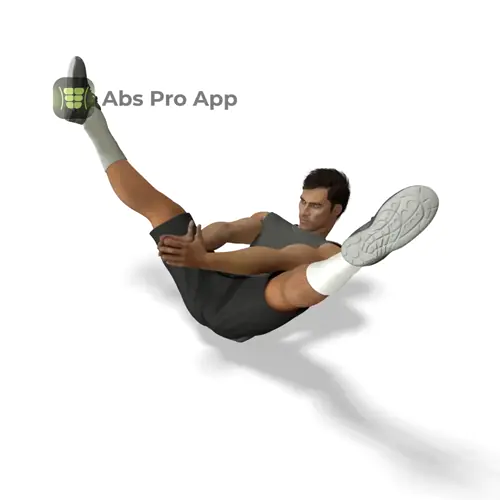
The open leg crunch hold is an isometric abs exercise where you balance in a V-position with your legs raised and split, shoulders lifted, and arms reaching forward between the legs. This bodyweight move builds deep core strength, control, and endurance without any equipment. It is a great choice if you are looking for a how to core hold that challenges your abs while also improving posture and body awareness.
With a difficulty of 2 out of 5, this exercise is well suited for beginners who already have some basic core control. Focus on steady breathing, a long spine, and keeping tension in your abs rather than holding the position as long as possible.
Benefits
- Builds isometric core strength
- Improves balance and body control
- Trains deep abdominal engagement
- Enhances posture awareness
- No equipment needed
- Easy to scale up or down
Setup & Starting Position
Start by sitting on the floor with your knees bent and feet flat. Place your hands lightly on the floor beside your hips for balance as you prepare. Sit tall and lengthen your spine, then lean your torso back slightly while keeping your chest open.
From here, lift both feet off the floor and straighten your legs. Open the legs into a comfortable V shape, keeping them straight and active. Point your toes or keep them relaxed, but avoid letting the legs go loose.
Lift your shoulders off the floor so your upper back is engaged, similar to the top position of a crunch. Extend both arms forward with your hands together, reaching them between your legs and centered. Your weight should be balanced on your sitting bones, not your lower back.
Setup tip: If you feel unstable, start with a smaller leg opening and gradually widen it as you gain control.
How To Do Open leg crunch hold (Step-by-step)
- Sit on the floor with knees bent and spine tall.
- Lean back slightly while keeping your chest lifted.
- Lift both feet off the floor.
- Straighten your legs and open them into a V position.
- Engage your abs and lift shoulders off the floor.
- Extend both arms forward, hands together between the legs.
- Find balance on your sitting bones.
- Hold the position for the planned time.
- Breathe steadily without losing tension.
- To finish, bend knees and place feet back on the floor.
Form Cues
- Chest open, shoulders relaxed
- Abs tight, belly pulled in
- Long spine, no slouching
- Legs straight and active
- Eyes forward, neck neutral
- Balance on sitting bones
Breathing & Bracing
Breathing correctly during the open leg crunch hold is key to maintaining good form and avoiding neck or lower back strain. Before lifting into the hold, take a slow breath in through your nose. As you raise your legs and shoulders, gently tighten your abs as if you are preparing for a light cough.
Once in position, continue breathing in a controlled rhythm. Aim to inhale through your nose for about three seconds, feeling your rib cage expand slightly, then exhale through your mouth for three to four seconds while keeping your abs engaged. Do not let your belly push outward as you breathe.
Think about drawing your ribs down toward your hips on every exhale. This keeps your core braced without holding your breath. If you notice yourself holding air or shaking excessively, slightly reduce the leg height or leg opening and refocus on slow, steady breaths.
Common Mistakes
- Rounding the lower back, fix by sitting taller and reducing lean.
- Pulling on the neck, fix by relaxing shoulders and looking forward.
- Holding the breath, fix by counting breaths during the hold.
- Legs dropping too low, fix by lifting them higher or bending knees.
- Shaking out of control, fix by shortening the hold time.
- Overopening the legs, fix by narrowing the V slightly.
How It Should Feel
Quick Self-Check:
You should feel a strong, steady contraction in your abs, especially the front of your core. Your hip flexors will assist, but they should not dominate the movement. There should be light work in the obliques as they help stabilize the open leg position.
Good signs: your torso feels controlled, breathing stays smooth, and you can hold the position without neck tension. Your lower back should feel supported, not pressed painfully into the floor.
Warning signs: sharp pain in the lower back, pinching in the hips, or neck strain. Stop immediately if you feel sharp pain.
If you feel it mostly in your neck, lower your shoulders slightly and refocus on abs. If your lower back feels strained, bring the legs closer together or bend the knees slightly.
Alternative Names
Open V-sit hold, Straddle V hold
Variations
Easier
- Bent-knee open crunch hold: Keep knees bent while holding the V position.
- Heels down open crunch: Lightly touch heels to the floor for extra support.
- Narrow leg crunch hold: Keep legs closer together to reduce difficulty.
Harder
- Arms overhead open leg hold: Reach arms overhead instead of forward to increase leverage.
- Longer time hold: Gradually increase hold duration while maintaining perfect form.
- Pulsed open leg hold: Add tiny crunch pulses without losing balance.
Sample Workout
Core Stability Workout
- Open leg crunch hold
3 sets of 20 to 40 second holds - Dead bug
3 sets of 8 reps per side, one rep equals left and right - Glute bridge
3 sets of 12 reps - Front plank
3 sets of 20 to 30 seconds
Rest 45 to 60 seconds between sets. Focus on control and breathing rather than speed.
Progression Plan
Week 1: Practice holding the open leg crunch hold for 15 to 20 seconds. Perform 2 to 3 sets with full control. Rest about 60 seconds between sets. Focus on clean setup, steady breathing, and keeping shoulders relaxed.
Week 2: Increase hold time to 25 to 30 seconds per set. Keep the same number of sets, but aim to reduce shaking and improve balance. If needed, repeat Week 1 until you can hold with good form.
Week 3: Progress to 35 to 45 second holds or add an advanced variation like arms overhead. You can also shorten rest to 45 seconds. Only progress if you can maintain a neutral spine and smooth breathing.
If form breaks down or you feel strain in the lower back or neck, repeat the previous week. Quality always comes before longer time.
FAQ
How long should I hold the open leg crunch hold?
Start with 15 to 20 seconds and build up to 40 seconds as your core gets stronger.
Should my legs be very wide?
No, open them only as wide as you can control without losing balance or rounding your back.
Why do my hip flexors feel tired?
They assist in holding the legs up, which is normal, but focus on pulling your ribs down to engage abs more.
Can I do this exercise every day?
Yes, if volume is moderate and you are not feeling excessive soreness.
Is this safe for lower back issues?
If you have lower back problems, start with bent knees and stop if discomfort appears.
Summary
The open leg crunch hold is a simple but effective way to strengthen your core using just your bodyweight. By holding a controlled V position, you train your abs to stay engaged and stable, which carries over to many other exercises and daily movements.
Keep your focus on posture, breathing, and balance rather than chasing long hold times too quickly. Start with manageable variations, progress gradually, and listen to your body. With consistency and good technique, this exercise can become a reliable part of your abs training routine.
Get Defined Abs in 30 Days
This exercise is part of our complete 30-day ab program. Download the app for structured daily workouts and track your progress.