
Mountain Runners Tutorial
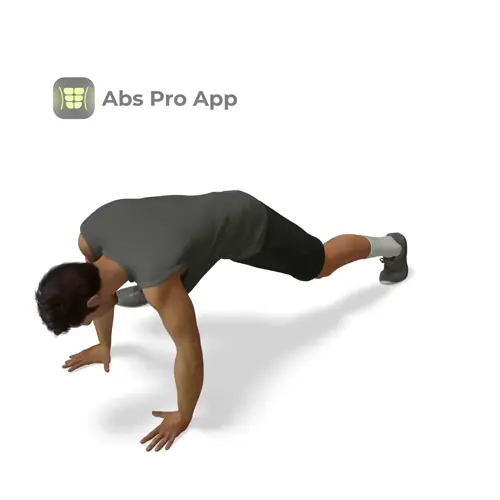
Mountain runners are a fast, no-equipment core and cardio move done from a high plank on the hands. You jump your feet outside your hands one at a time, driving each knee slightly outward while keeping your torso strong and stable.
This exercise helps build core strength, shoulder stability, hip mobility, and conditioning at the same time. It is best suited for intermediate level trainees who already feel comfortable holding a solid plank and moving dynamically without losing form.
Focus on a straight back, active shoulders, and quick but controlled foot switches. This guide and tutorial explains exactly how to do mountain runners with clean technique.
Benefits
- Builds dynamic core strength
- Improves plank stability under movement
- Raises heart rate quickly
- Trains hip mobility and coordination
- Strengthens shoulders and arms
- Enhances athletic foot speed
- Works multiple muscle groups at once
Setup & Starting Position
Begin on the floor in a high plank position. Place your hands flat on the ground directly under your shoulders, fingers spread wide for better grip and balance. Your arms should be straight but not locked, with your shoulders slightly pushing away from the floor.
Extend both legs straight behind you, balancing on the balls of your feet. Your feet start close together, hips level, and glutes lightly engaged. Create a straight line from your head to your heels, keeping your neck neutral and eyes looking slightly ahead of your hands.
Before starting the movement, brace your core as if preparing for a light cough. This tension helps protect your lower back when your legs begin to move.
Setup tip: If your hips feel unstable, widen your foot stance slightly before the first jump to find balance.
How To Do Mountain runners (Step-by-step)
- Set up in a strong high plank with hands under shoulders.
- Brace your core and keep your back flat.
- Jump your right foot forward and outside your right hand, knee pointing slightly out.
- Immediately switch, jumping the right foot back and the left foot outside the left hand.
- Continue alternating sides in a smooth, quick rhythm.
- Keep your hands fixed and shoulders steady.
- Maintain level hips and a straight spine.
- Finish by stepping or jumping both feet back into plank.
Form Cues
- Hands stay planted
- Back flat, no sagging
- Drive knees slightly outward
- Land softly on the feet
- Shoulders stacked over hands
- Move fast but stay controlled
Breathing & Bracing
Mountain runners are fast, so breathing should stay rhythmic and relaxed, not forced. Avoid holding your breath, even when the pace increases.
As you begin, lightly brace your core by tightening your abs and glutes. Imagine pulling your ribcage down toward your hips. This keeps your spine stable while your legs move explosively.
A simple breathing pattern is to exhale every time your feet switch, or exhale every two switches if that feels more natural. Short, sharp exhales through the mouth often work best during this exercise.
Keep breathing into your chest and sides, not your belly pushing downward. If your breathing becomes chaotic and your hips start bouncing, slow the tempo slightly until control returns.
Common Mistakes
- Letting hips sag, fix by tightening the core before each switch.
- Hands shifting on the floor, fix by spreading fingers and gripping the ground.
- Jumping too wide with the feet, fix by aiming just outside the hands.
- Rounding the upper back, fix by pushing the floor away with the shoulders.
- Holding the breath, fix by using short steady exhales.
- Moving faster than control allows, fix by slowing down slightly.
How It Should Feel
Quick Self-Check:
Good signs: You should feel your abs working to stabilize your body, your shoulders supporting your weight, and your legs moving quickly without throwing off balance. Your heart rate will rise, and the movement should feel athletic and coordinated.
Warning signs: Sharp pain in the wrists, shoulders, or lower back is a signal to stop. Excessive lower back arching or shoulder collapse means form has broken down.
If you feel the movement mostly in your neck, relax your head and look slightly forward instead of tucking your chin. If your lower back feels strained, slow the pace and focus on bracing harder before each leg switch.
Alternative Names
Plank runners
Variations
Easier
- Step-back mountain runners: Step one foot outside the hand at a time instead of jumping.
- Slow mountain runners: Perform the same movement but at half speed to build control.
- Elevated hands version: Place hands on a low box or bench to reduce load.
Harder
- Explosive mountain runners: Jump faster and aim to switch legs with more height.
- Pause-under-tension runners: Briefly pause with the foot outside the hand before switching.
Sample Workout
Core and Conditioning Circuit
- Mountain runners, 30 seconds
- Bodyweight squats, 15 reps
- Push-ups, 10 to 15 reps
- Forearm plank, 30 seconds
Rest 60 seconds and repeat for 3 to 4 rounds. For mountain runners, one rep equals one foot switch. Adjust the time if form starts to break down.
Progression Plan
Week 1: Perform mountain runners for 20 to 30 seconds per set, 3 to 4 sets total. Focus on clean technique and steady breathing. Rest 60 to 90 seconds between sets. If needed, use a slower tempo version.
Week 2: Increase to 30 to 40 seconds per set. Try to keep the same pace from start to finish without letting the hips rise or drop. Reduce rest to 60 seconds.
Week 3: Push to 40 to 45 seconds per set or add an extra set. Begin increasing speed slightly while maintaining control.
Week 4: Introduce an advanced variation like brief pauses with the foot outside the hand or faster switches. If form degrades, repeat the previous week until stability improves.
Progress when you can maintain a flat back and smooth rhythm for the full time.
FAQ
Should my foot land flat or on the toes?
Landing on the ball of the foot is ideal, it keeps the movement quick and reduces joint stress.
How far outside the hands should my feet go?
Aim just outside the hands, close enough to keep control while still opening the hips.
Can I do mountain runners if my wrists get tired?
Yes, but reduce time or try an elevated hands version to lower wrist load.
How fast should I move?
Move as fast as you can while keeping your back flat and hips steady.
Summary
Mountain runners are a powerful way to challenge your abs while also improving coordination and conditioning. Because they are done from a high plank, they demand full-body control, not just fast legs.
Stay consistent with your setup, keep your hands planted, and move only as fast as your form allows. Use the beginner variations to build confidence and the advanced options to keep progressing.
When performed with intention, mountain runners become more than cardio, they are a true core strength and stability exercise.
Get Defined Abs in 30 Days
This exercise is part of our complete 30-day ab program. Download the app for structured daily workouts and track your progress.