
Low Plank Knee Cross Tutorial
Low plank knee cross is a core-focused bodyweight exercise performed from a forearm plank. You bring one knee across the body toward the opposite elbow while keeping the torso steady.
This move trains deep abs, obliques, and hip flexors while improving anti-rotation strength and total core control. It is great for people who want a how to core challenge beyond static planks.
Focus on slow, controlled movement, strong bracing, and keeping your hips level. This exercise fits well into abs workouts, warm-ups, or athletic core training routines.
Benefits
- Builds strong abs and obliques
- Improves anti-rotation core control
- Challenges stability in the plank position
- Strengthens hip flexors with control
- Improves body awareness and coordination
- No equipment needed, train anywhere
- Great progression from basic planks
Setup & Starting Position
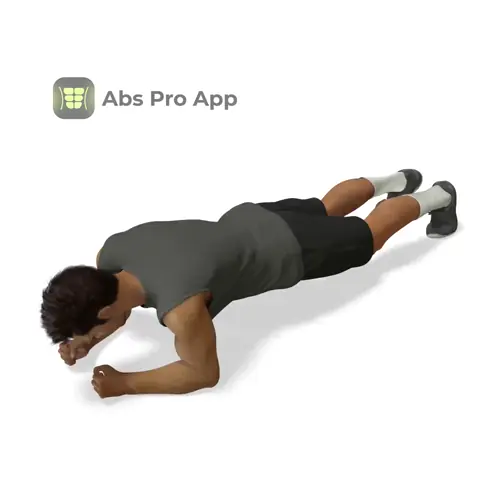
Begin by positioning yourself on the floor in a low plank. Place your elbows directly under your shoulders, forearms resting flat on the ground and pointing forward. Your hands should be relaxed, either palms down or lightly clasped.
Extend both legs straight behind you, feet about hip-width apart. Balance on your toes, keeping your heels pressing back. Your body should form a straight line from the back of your head through your shoulders, hips, and heels.
Engage your core by gently pulling your ribs down and tightening your abs as if preparing to be tapped in the stomach. Squeeze your glutes lightly to help keep your hips level.
Before starting the first rep, shift your weight slightly forward so your shoulders feel stacked over your elbows.
Quick setup tip: If your lower back feels tight, reset and brace harder before moving your legs.
How To Do Low plank knee cross (Step-by-step)
- Set up in a low plank with elbows under shoulders
- Brace your abs and keep your hips square to the floor
- Lift your right knee and slowly drive it toward your left elbow
- Pause briefly near the elbow without collapsing your hips
- Return the right leg back to the plank position
- Stabilize your body before switching sides
- Lift your left knee toward your right elbow
- Move slowly and with control throughout
- Continue alternating sides for reps or time
- Finish by lowering knees to the floor with control
Form Cues
- Elbows under shoulders
- Hips stay level
- Slow knee drive
- Ribs down, core tight
- Neck long and neutral
- Exhale as knee moves
Breathing & Bracing
Proper breathing is key for getting the most out of the low plank knee cross. Start by taking a calm inhale through your nose while holding the plank position. As you prepare to move your knee, gently tighten your abs and glutes.
Exhale slowly as you bring your knee toward the opposite elbow. This helps activate the deep core muscles and prevents your lower back from arching. Think about pulling your belly button slightly inward without sucking in.
Inhale again as you return the leg to the starting plank position. Reset your brace before switching sides.
A simple rhythm to repeat is inhale in plank, exhale during the knee cross. Keep breathing steady and avoid holding your breath. Your ribs should stay stacked over your hips, and your torso should remain quiet throughout the movement.
Common Mistakes
- Hips twisting too much, slow down and brace harder
- Lower back sagging, squeeze glutes and reset plank
- Rushing the movement, move slower with control
- Elbows too far forward, stack them under shoulders
- Neck craning up, keep gaze down
- Holding breath, focus on steady exhales
How It Should Feel
Quick Self-Check:
You should feel strong tension through your abs and obliques, especially on the side of the moving knee. Your shoulders and hips should feel stable, not shaky in an uncontrolled way.
Good signs:
- Burn in the core without back pain
- Ability to move knee smoothly
- Hips stay mostly level
Warning signs:
- Sharp pain in shoulders, hips, or back, stop immediately
- Lower back discomfort that increases each rep
If you feel it mostly in your neck or lower back, reset your plank, brace your abs harder, and shorten the knee drive until control improves.
Alternative Names
forearm plank knee to opposite elbow, cross-body plank knee drive
Variations
Easier
- Low plank knee lift: Bring knee forward without crossing to build control
- Low plank hold: Hold a steady forearm plank to master bracing
- Slow single-side reps: Complete all reps on one side before switching
Harder
- Slow tempo knee cross: Use a 3 second knee drive and 3 second return
- Low plank knee cross hold: Pause 2 to 3 seconds near the elbow
- Feet closer stance: Narrow feet to increase instability
Sample Workout
Core Stability Workout
- Low plank knee cross
3 sets of 20 to 30 seconds - Dead bug
3 sets of 8 reps per side - Side plank
2 sets of 20 seconds per side - Glute bridge
3 sets of 12 reps
Rest 30 to 45 seconds between exercises. Focus on control, not speed.
Progression Plan
Week 1: Focus on learning the technique. Perform 3 sets of 15 to 20 seconds. Move slowly and pause briefly before switching sides. Rest 45 seconds between sets.
Week 2: Increase time to 25 to 30 seconds per set. Reduce rest to 30 seconds. Aim for smoother transitions and less hip movement.
Week 3: Add a slow tempo. Take 3 seconds to bring the knee across and 3 seconds to return. Keep total time similar to Week 2.
Week 4: Try an advanced variation such as a pause near the elbow. If form breaks down, repeat the previous week.
Progress by improving control first, then increasing time or difficulty. Repeat a week anytime form quality drops.
FAQ
FAQ
How to do low plank knee cross correctly?
Stay on your forearms, brace your core, and slowly bring one knee toward the opposite elbow without twisting your hips.
Is this exercise good for beginners?
It is best for intermediate levels, but beginners can use easier plank variations first.
Should my knee touch the elbow?
Touching is not required. Focus on controlled movement and stability.
How many reps should I do?
Start with 6 to 10 controlled reps per side or short timed sets.
Can I do this every day?
Yes, if volume is moderate and form stays clean.
Summary
The low plank knee cross is a powerful way to build real core strength using only your bodyweight. By combining a stable forearm plank with controlled cross-body movement, you train your abs to resist motion, not just create it.
Take your time with each rep, breathe steadily, and focus on keeping your hips quiet. Whether used in an abs workout or as part of full-body training, this exercise rewards patience and precision.
Master the basics, progress gradually, and your core strength will carry over to many other movements.
Get Defined Abs in 30 Days
This exercise is part of our complete 30-day ab program. Download the app for structured daily workouts and track your progress.