
Low Plank Jacks Tutorial
Low plank jacks are a dynamic core exercise done from a forearm plank while you jump your feet apart and together. This move blends core stability with cardio, making it great for building abs strength, improving endurance, and raising your heart rate without equipment.
This exercise suits people who already know how to hold a basic low plank and want a harder challenge. Focus on keeping your hips steady, your core tight, and your shoulders strong. If you are looking for a how to do low plank jacks tutorial or a clear abs exercise guide, this movement is a smart addition to your routine.
Benefits
- Builds strong and stable abs.
- Improves core endurance.
- Raises heart rate for fat burning.
- Trains hip and shoulder stability.
- Enhances coordination and control.
- Fits well into HIIT or core workouts.
Setup & Starting Position
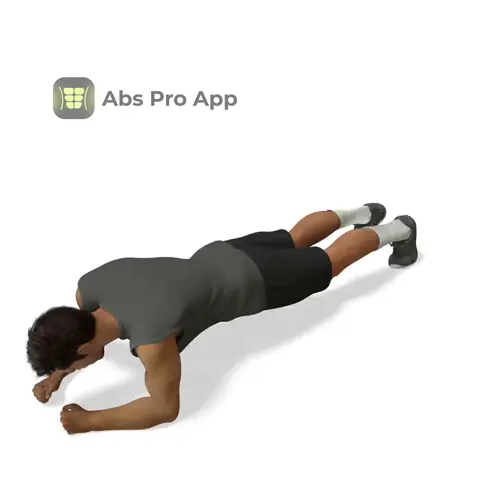
Begin by placing your forearms on the floor, elbows directly under your shoulders. Your forearms should be parallel, with palms resting flat or hands lightly clasped. Extend your legs straight back so you are balanced on the balls of your feet.
Your body should form a straight line from your head to your heels. Gently tuck your pelvis so your lower back stays neutral, not arched and not rounded. Draw your ribs down and tighten your abs as if preparing for a light punch.
Set your gaze on the floor slightly in front of your hands to keep your neck relaxed. Before starting the first rep, shift your weight evenly through both forearms and shoulders. Quick tip: If your elbows slide, place a mat or towel under them for better grip.
How To Do Low plank jacks (Step-by-step)
- Lower into a stable forearm plank position.
- Engage your abs, glutes, and thighs.
- Inhale and prepare, keeping hips level.
- Jump both feet out to just outside hip width at the same time.
- Land softly on the balls of your feet.
- Exhale and jump your feet back together.
- Keep shoulders stacked over elbows.
- Continue jumping in a steady rhythm.
- Maintain a straight body line throughout.
- Finish by lowering knees to the floor with control.
Form Cues
- Elbows under shoulders.
- Abs tight, ribs down.
- Hips level and steady.
- Soft, quiet landings.
- Neck long and relaxed.
- Move from the hips, not the lower back.
Breathing & Bracing
Proper breathing makes low plank jacks safer and more effective. Before you start, take a calm breath in through your nose and gently brace your core. Think about tightening your abs as if you are zipping up snug pants.
As you jump your feet apart and together, avoid holding your breath. A simple rhythm works well, inhale as the feet jump out, exhale as they come back together. The exhale helps you maintain tension in your abs and keeps your hips from bouncing.
Focus on keeping your ribs stacked over your hips. If your lower back starts to arch, slow down and reset your brace. You should feel your abs working continuously, not just during the jumps. Smooth breathing plus steady tension is the key technique for mastering this exercise.
Common Mistakes
- Letting hips sag, fix by tightening your abs and glutes.
- Piking hips up, fix by shifting shoulders slightly forward.
- Holding your breath, fix by using a steady inhale and exhale.
- Jumping too wide, fix by keeping feet just outside hip width.
- Elbows too far forward, fix by stacking them under shoulders.
- Loud landings, fix by bending ankles and landing softly.
How It Should Feel
Quick Self-Check: When done correctly, low plank jacks should create a strong, burning sensation across your abs and obliques. Your shoulders will feel engaged, and your heart rate will rise within seconds.
Good signs: steady hips, controlled breathing, and even pressure through both forearms. You should feel challenged but still able to maintain form.
Warning signs: sharp pain in the lower back, shoulders, or elbows means you should stop immediately. If you feel it mostly in your neck, lower your gaze and relax your jaw. If your lower back takes over, slow the pace or switch to a step-out version.
Make small adjustments until the tension stays in your core, not your joints.
Alternative Names
Forearm plank jacks, plank jacks on elbows
Variations
Easier
- Low plank step-outs: From a forearm plank, step one foot out at a time instead of jumping.
- Knees-down plank jacks: Perform the movement with knees lightly on the floor.
Harder
- Fast low plank jacks: Increase the speed while keeping perfect control.
- Low plank jacks with shoulder taps: Add a shoulder tap between each jack.
Sample Workout
Core and Cardio Circuit
- Low plank jacks, 30 seconds
- Bodyweight squats, 15 reps
- Mountain climbers, 30 seconds
- Glute bridges, 15 reps
Rest 60 seconds and repeat the circuit 3 times. Use low plank jacks as the main core and conditioning move.
Progression Plan
Week 1: Start with 3 sets of 20 seconds. Rest 40 to 60 seconds between sets. Focus on learning proper technique, steady breathing, and quiet landings. If form breaks down, switch to step-outs.
Week 2: Increase to 3 to 4 sets of 30 seconds. Keep the same rest or shorten it slightly. Aim for smoother rhythm and less hip movement.
Week 3: Progress to 40 seconds per set or add a fourth set. You can also slow the tempo slightly to increase time under tension.
Move to advanced variations once you can hold perfect form for 40 seconds. If your lower back feels strained, repeat the previous week and focus on bracing.
FAQ
How to do low plank jacks correctly?
Stay on your forearms, keep your body straight, and jump your feet apart and together without letting your hips move.
Are low plank jacks good for abs?
Yes, they strongly target the abs and obliques while also training stability.
Can beginners do low plank jacks?
Beginners should start with step-outs or knees-down versions before jumping.
How long should I do low plank jacks?
Most people work in 20 to 40 second sets with good form.
Summary
Low plank jacks are a powerful way to level up your core training using only your bodyweight. They challenge your abs, test your stability, and add a cardio element that basic planks lack.
By following the proper instructions, breathing well, and progressing gradually, you can safely build strength and endurance. Keep your focus on control rather than speed, and this exercise will become a reliable tool in your abs workout guide.
Get Defined Abs in 30 Days
This exercise is part of our complete 30-day ab program. Download the app for structured daily workouts and track your progress.