
Low Plank Crawl Tutorial
Low plank crawl is a challenging core exercise performed from a forearm plank position while moving forward and backward. It combines the stability of a low plank with controlled crawling steps, making it a powerful abs and full core builder.
This exercise is best suited for intermediate to advanced trainees who already have good plank strength. It helps improve anti-extension strength, shoulder stability, and total body tension. Focus on keeping your body in one straight line, moving slowly, and staying low through the elbows and forearms.
Benefits
- Builds deep core strength and control
- Improves plank endurance
- Challenges shoulder and arm stability
- Trains coordination between upper and lower body
- Enhances full body tension
- Helps protect the lower back when done correctly
Setup & Starting Position
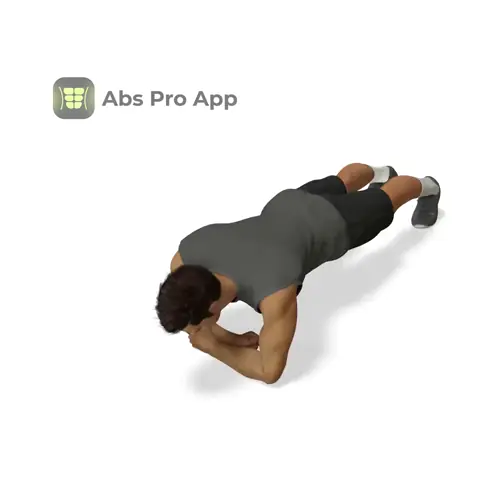
Begin by getting into a low plank position on the floor. Place your forearms flat on the ground, elbows directly under your shoulders. Your forearms should be parallel, not crossing or angled inward.
Extend both legs straight behind you and tuck your toes under so the balls of your feet are on the floor. Your feet should be about hip-width apart to help with balance during the crawl.
Form a straight line from your head through your shoulders, hips, and heels. Gently tuck your pelvis so your lower back is not arched, and draw your ribs down toward your hips. Keep your neck neutral and eyes looking slightly ahead of your hands.
Quick setup tip: Before moving, squeeze your glutes and brace your abs like you are about to cough. This sets your core and helps keep your hips steady once you start crawling.
How To Do Low plank crawl (Step-by-step)
- Set up in a strong low plank on your forearms and toes
- Brace your core and squeeze your glutes
- Move one forearm forward a small step
- Move the opposite foot forward to match
- Continue crawling forward for four controlled steps
- Keep hips low and body in one straight line
- Pause briefly after the fourth step
- Crawl backward by reversing the same pattern
- Return to the starting spot under control
- Finish the rep without dropping knees or hips
Form Cues
- Elbows under shoulders
- Hips level and low
- Squeeze glutes
- Brace abs hard
- Move slow and controlled
- Neck long and neutral
Breathing & Bracing
Breathing correctly during the low plank crawl is key to maintaining control and protecting your lower back. Start by taking a calm breath in through your nose before you begin moving. As you crawl, use short, controlled exhales through your mouth.
Think about gently tightening your abs as if you are preparing for someone to tap your stomach. This is bracing, not sucking in. Your rib cage should stay stacked over your hips, and your lower back should remain neutral.
A simple rhythm you can repeat is to exhale with each step forward or backward. For example, breathe out as you move one arm and foot, then take a small inhale before the next step. Avoid holding your breath, as this often causes tension in the neck and shoulders.
If you feel your hips starting to sway, slow your breathing and movement. Controlled breathing supports better core engagement and helps you stay stable throughout the crawl.
Common Mistakes
- Hips lifting too high, fix it by tightening your glutes and slowing down
- Lower back sagging, fix it by bracing your abs before each step
- Taking steps that are too big, fix it by using small controlled movements
- Elbows flaring out, fix it by keeping forearms parallel
- Rushing the crawl, fix it by moving with steady tempo
- Neck craning up, fix it by keeping eyes slightly forward and down
How It Should Feel
Quick Self-Check: When done correctly, the low plank crawl should create strong tension through your abs, shoulders, and glutes. You should feel your core working hard to resist movement, not pain in your joints.
Good signs: A deep burn in the abs, steady shoulders, and the ability to move without your hips rocking side to side. Your breathing should stay controlled even though the exercise feels demanding.
Warning signs: Sharp pain in the shoulders, elbows, or lower back means you should stop. If your hips drop or your back arches, the core is losing control.
Adjustments: If you feel it mostly in your neck, relax your shoulders and lengthen your spine. If you feel pressure in your lower back, slow down, shorten your steps, and brace harder through the abs and glutes.
Alternative Names
forearm plank crawl, low plank walk
Variations
Easier
- Low Plank Hold: Hold a static forearm plank without crawling to build base strength
- Short Range Low Plank Crawl: Crawl one to two steps forward and back instead of four
Harder
- Extended Low Plank Crawl: Increase the number of forward and backward steps
- Slow Tempo Low Plank Crawl: Add a three second pause on each step
Sample Workout
Core Strength Workout Example:
- Low plank crawl, 3 sets of forward and back crawls
- Dead bug, 3 sets of 10 controlled reps
- Hollow body hold, 3 sets of 20 to 30 seconds
- Side plank, 2 sets per side
Rest 45 to 75 seconds between sets. Focus on quality movement and strong bracing rather than speed.
Progression Plan
Week 1: Practice form and control. Perform 2 to 3 sets of low plank crawl with four steps forward and back. Rest as needed and stop sets when form breaks.
Week 2: Increase volume by adding one extra set or adding one additional step in each direction. Focus on slower, quieter movement and smoother breathing.
Week 3: Reduce rest time slightly and aim for better stability with less hip movement. If form stays solid, try slowing each step to three seconds.
Progressing further: Move to advanced variations like extended distance or slow tempo crawls once you can maintain perfect alignment. Repeat a week if you lose control or feel lower back strain.
FAQ
How many steps should I crawl?
Start with four steps forward and four back as described. Adjust based on space and strength.
Is low plank crawl good for abs?
Yes, it strongly targets the abs by resisting movement while crawling.
Can I do this exercise every day?
It is demanding, so allow recovery and avoid daily use if soreness or fatigue is high.
How is this different from a high plank crawl?
The low plank version is done on forearms, increasing core and shoulder demand.
Summary
The low plank crawl is a demanding but highly effective abs exercise that builds real world core strength. By combining plank stability with controlled movement, it challenges your body to stay strong under shifting load.
Take your time, focus on bracing and breathing, and prioritize form over speed. When performed with control, this exercise can greatly improve your core endurance and overall stability. Stay patient with progress and enjoy the strength gains that come with consistent practice.
Get Defined Abs in 30 Days
This exercise is part of our complete 30-day ab program. Download the app for structured daily workouts and track your progress.