
Jump Planks Tutorial
Jump planks are a dynamic core exercise performed from a high plank on your hands. From this strong plank position, you jump your feet to one side, back to center, then to the other side. This creates a powerful anti-rotation challenge that trains your abs to stabilize while your lower body moves.
This move is ideal for intermediate exercisers who want to build core strength, coordination, and conditioning using no equipment. Focus on keeping your shoulders steady, arms straight, and hips controlled as your feet jump side to side. When done with good technique, jump planks light up your abs while also raising your heart rate.
Benefits
- Builds strong, stable abs
- Trains obliques through side movement
- Improves plank endurance
- Boosts heart rate and conditioning
- Enhances coordination and control
- Challenges shoulder stability
- Uses only bodyweight
Setup & Starting Position
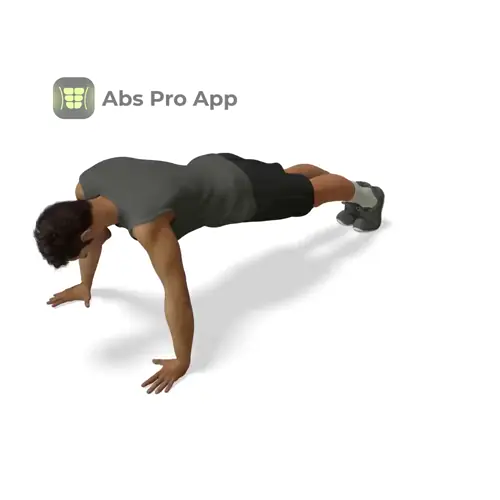
Begin on the floor in a high plank position. Place your hands flat on the ground directly under your shoulders, fingers spread for better grip and balance. Your arms should be straight but not locked, with your shoulders pushed slightly away from your ears.
Extend both legs straight behind you with your feet together. Tuck your toes under so the balls of your feet are on the floor. Your body should form a straight line from head to heels. Gently squeeze your glutes and tighten your abs to prevent your hips from sagging or lifting.
Set your gaze slightly ahead of your hands to keep your neck neutral. Take a steady breath in and brace your core before starting the first jump.
Quick setup tip: If your hands feel unstable, press firmly through your palms and knuckles to create a solid base.
How To Do Jump planks (Step-by-step)
- Start in a strong high plank on your hands.
- Brace your abs and keep your shoulders steady.
- Jump both feet together to the right side of your body.
- Land softly on the balls of your feet.
- Jump both feet back to the center plank.
- Immediately jump both feet to the left side.
- Return to the center plank position.
- That left and right sequence counts as one rep.
- Continue for the desired number of reps or time.
- Finish by stepping your knees down with control.
Form Cues
- Hands under shoulders
- Arms straight and strong
- Feet jump together
- Hips level, no sway
- Soft, quiet landings
- Core tight the whole time
Breathing & Bracing
Proper breathing helps you stay controlled during jump planks. Before you begin, take a calm inhale through your nose and gently brace your core, as if preparing for a light cough. This creates tension around your abs without holding your breath.
As you jump your feet to one side and back to center, exhale slowly through your mouth. You can take another small inhale as you move to the opposite side. A simple rhythm is one breath per full rep, meaning right and left together.
Focus on keeping your ribs pulled down and your hips slightly tucked. Avoid letting your belly drop toward the floor. If your breathing becomes rushed, slow the movement slightly so you can maintain control. You should feel your abs working while still being able to breathe steadily.
Common Mistakes
- Dropping hips, fix by tightening your abs and glutes.
- Bending arms, fix by pushing the floor away.
- Jumping feet too wide, fix by keeping jumps compact.
- Letting shoulders rock, fix by slowing the movement.
- Holding breath, fix by exhaling during jumps.
- Landing loudly, fix by aiming for soft, controlled landings.
How It Should Feel
Quick Self-Check:
Good signs: You feel strong tension in your abs and obliques, your shoulders feel stable, your hips stay mostly level, and your breathing stays controlled even as your heart rate rises.
Warning signs: Sharp pain in the shoulders, wrists, or lower back means you should stop. Excessive hip swinging or lower back strain is a sign you need to reset or slow down.
If you feel it mostly in your neck, relax your shoulders and look slightly ahead instead of down. If you feel it in your lower back, squeeze your glutes and shorten the range of your jumps. Adjust until the work shifts back into your core.
Alternative Names
Plank side jumps, Plank jumps
Variations
Easier
- Step-Out Plank: From high plank, step one foot to the side at a time instead of jumping.
- Slow Jump Plank: Perform the same movement but pause briefly in the center to regain balance.
Harder
- Wide Jump Planks: Jump feet farther to each side while keeping hips level.
- Fast Tempo Jump Planks: Increase speed while maintaining perfect form.
- Jump Plank with Shoulder Tap: Add a shoulder tap in the center before switching sides.
Sample Workout
Core and Conditioning Circuit
- Jump Planks, 10 to 12 reps
- Bodyweight Squats, 15 reps
- Push-Ups, 8 to 12 reps
- Dead Bug, 10 reps per side
Rest 60 seconds and repeat for 3 to 4 rounds. Focus on quality movement and steady breathing throughout.
Progression Plan
Week 1: Practice control. Perform 3 sets of 6 to 8 reps. Rest 60 to 90 seconds between sets. Focus on keeping hips level and landing softly. If form breaks down, repeat this week.
Week 2: Increase volume. Perform 3 to 4 sets of 10 to 12 reps. Shorten rest to about 60 seconds. Aim for smoother transitions between sides.
Week 3: Increase intensity. Add a slightly faster tempo while maintaining control, or try wider jumps. Perform 4 sets of 12 to 14 reps.
Move to advanced variations once you can complete all reps with steady shoulders and no lower back strain. Repeat a week if you feel unstable or rushed.
FAQ
How many reps should I do?
Start with 8 to 12 reps, where one rep includes both right and left side jumps.
Can I do jump planks every day?
They can be done often, but allow rest if your shoulders or core feel overly fatigued.
Why do my hips swing side to side?
This usually means the jumps are too fast or wide. Slow down and tighten your core.
Are jump planks good for abs?
Yes, they strongly target the abs and obliques while also training stability.
Summary
Jump planks are a powerful way to challenge your core beyond static holds. By forcing your abs to stabilize while your legs move side to side, this exercise builds real-world strength and control.
Keep your hands planted, your body aligned, and your jumps sharp but controlled. Start with manageable reps, focus on quality, and progress gradually. When done with good technique, jump planks can become a go-to move for stronger abs and better total-body stability.
Get Defined Abs in 30 Days
This exercise is part of our complete 30-day ab program. Download the app for structured daily workouts and track your progress.