
Jack To Bear Tutorial
Jack to Bear is a dynamic core exercise that blends a bear plank with fast jumping jack style foot movements.
It challenges your abs, shoulders, and legs while pushing coordination and cardiovascular demand. This move is best suited for advanced trainees who already have good plank strength and hip control.
Focus on keeping your hands planted, knees hovering just off the floor, and your core tight as your feet jump wide, together, wide again, then return to the bear position. Control matters more than speed.
Benefits
- Builds strong and reactive core muscles
- Improves shoulder stability under load
- Raises heart rate quickly
- Trains coordination and agility
- Strengthens hip flexors and inner thighs
- Enhances full body bodyweight control
Setup & Starting Position
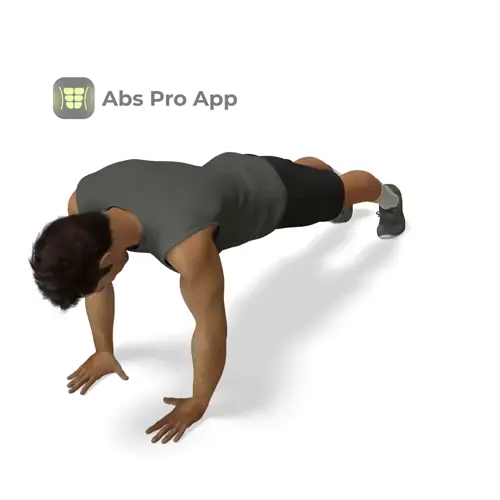
Begin on the floor in a bear plank. Place your hands directly under your shoulders with fingers spread wide for stability. Your knees should be bent and hovering a few inches off the ground, not touching the floor.
Your feet start about hip width apart, toes tucked under, and heels lifted. Keep your spine neutral from head to tailbone, avoiding any rounding or sagging.
Brace your abs as if preparing for a punch and gently push the floor away with your hands. Your neck stays long with eyes looking slightly ahead of your hands.
Setup tip: If your knees touch the floor before the first jump, reset and lift them slightly, this tension is essential for the exercise.
How To Do Jack to bear (Step-by-step)
- Start in a stable bear plank with knees hovering.
- Jump both feet out wide, keeping hands fixed.
- Immediately jump feet back together under your hips.
- Jump feet wide again, maintaining core tension.
- Jump feet back to the original bear plank position.
- Land softly each time with bent knees.
- Move rhythmically while keeping your torso steady.
- Complete all reps, then rest.
Form Cues
- Hands press firmly into the floor
- Knees stay off the ground
- Core tight the entire set
- Quiet, controlled landings
- Hips level and steady
- Neck long, eyes down
Breathing & Bracing
Before starting, take a deep inhale through your nose and lightly brace your core, tightening your abs without squeezing your breath.
As you begin the jumping sequence, use short, controlled exhales through the mouth during the foot movements. A simple rhythm is to exhale as the feet move and lightly inhale as you return to the bear position.
Your goal is to keep the ribs down and hips stable while breathing continuously. Avoid holding your breath, as this often leads to loss of control or excessive tension in the shoulders.
Think about drawing your belly button slightly inward on every exhale to maintain abdominal engagement while still allowing airflow.
Common Mistakes
- Letting knees touch the floor, fix by slowing down and lifting them slightly.
- Shoulders drifting past wrists, fix by stacking shoulders directly over hands.
- Hips bouncing up and down, fix by tightening the abs before each jump.
- Landing loudly on the feet, fix by bending knees and controlling the landing.
- Holding breath during reps, fix by using short exhales.
How It Should Feel
Quick Self-Check:
Good signs: You feel strong tension across your abs, your shoulders feel active but stable, and your breathing stays controlled even as your heart rate rises.
Your legs should feel challenged during the repeated jumps, especially the inner thighs and hip flexors.
Warning signs: Sharp pain in the wrists, shoulders, or lower back means you should stop immediately. Excessive lower back arching is another sign to reset or rest.
If you feel strain in the neck, lower your gaze and relax your shoulders. If the lower back takes over, slow the tempo and re brace your core before continuing.
Alternative Names
Bear plank jacks
Variations
Easier
- Bear plank step outs, from bear plank step one foot out at a time instead of jumping.
- Elevated bear plank jacks, place hands on a low box to reduce load.
Harder
- Jack to bear with push-up, add a push-up after returning to bear plank.
- Slow tempo jack to bear, pause briefly in the wide foot position to increase core tension.
Sample Workout
Core and Conditioning Circuit
- Jack to Bear, 20 to 30 seconds
- Bodyweight squats, 15 reps
- High plank shoulder taps, 20 taps
- Reverse lunges, 10 reps per side
Rest 60 seconds and repeat for 3 to 4 rounds. Use Jack to Bear as the main intensity driver.
Progression Plan
Week 1: Perform Jack to Bear for 3 sets of 20 seconds with 60 to 90 seconds rest. Focus on clean form and quiet landings. If form breaks, stop early.
Week 2: Increase to 25 to 30 seconds per set or add 2 to 3 reps per set. Keep the same rest but aim for smoother transitions.
Week 3: Shorten rest to 45 seconds or add a slow pause in the wide foot position to increase difficulty.
Progress to advanced variations once you can maintain steady hips and breathing for all sets. If control drops, repeat the previous week before advancing.
FAQ
How many reps should I do?
Count one rep as the full sequence wide, together, wide, back to bear. Aim for 6 to 12 reps per set.
Can I do this on a mat?
Yes, a thin mat can improve comfort, but make sure it does not slide during jumps.
Why do my wrists get tired?
This is normal at first. Focus on spreading your fingers and pressing evenly through the palms.
Is this more cardio or strength?
It is a mix of both, but core strength and stability are the primary focus.
Summary
Jack to Bear is a powerful bodyweight core move that builds strength, coordination, and conditioning all at once.
By staying consistent with form, breathing, and progression, this exercise can become a standout part of your abs and full body workouts.
Move with control, respect your limits, and use the variations to keep challenging yourself over time.
Get Defined Abs in 30 Days
This exercise is part of our complete 30-day ab program. Download the app for structured daily workouts and track your progress.