
Hollow To V-sit Tuck Tutorial
The Hollow to V-Sit Tuck is an advanced bodyweight abs exercise that moves you from a long hollow body hold into a compact V-sit tuck balance. It challenges deep core strength, hip flexor control, and coordination while teaching you how to maintain tension through a full range of motion. This move is ideal for experienced trainees looking for a demanding abs tutorial or progression beyond basic hollow holds. Focus on slow control, strong bracing, and keeping your lower back lightly pressed into the floor during the hollow phase, then balancing smoothly in the tucked V-sit.
Benefits
- Builds strong deep core control
- Improves body tension awareness
- Trains balance on the sit bones
- Strengthens hip flexors without equipment
- Enhances coordination and control
- Great progression toward V-sits and L-sits
Setup & Starting Position
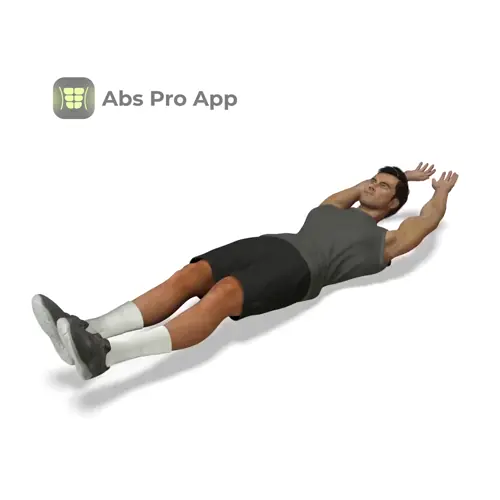
Start by lying flat on your back on the floor. Extend your legs straight and keep them together, toes pointed slightly forward. Reach your arms straight overhead so your biceps are close to your ears. Before moving, gently tuck your pelvis so your lower back presses lightly into the floor. This is your hollow body position. Lift your arms and legs a few inches off the ground while keeping that lower back contact. Your head and shoulders should also be slightly off the floor, with your gaze neutral toward the ceiling. There should be no support from the hands or feet, only your core holding you in position.
A quick setup tip is to think about shortening the distance between your ribs and hips before the first rep. This makes it much easier to maintain control as you move into the tuck.
A quick setup tip is to think about shortening the distance between your ribs and hips before the first rep. This makes it much easier to maintain control as you move into the tuck.
How To Do Hollow to v-sit tuck (Step-by-step)
- Lie on your back with arms overhead and legs straight.
- Brace your abs and lift arms, legs, and shoulders into a hollow hold.
- Keep lower back lightly pressed into the floor.
- Slowly bend your knees toward your chest.
- Swing your arms forward as your torso curls up.
- Shift balance onto your sit bones.
- Hold a tucked V-sit with knees close to chest.
- Stay tall through the spine without collapsing.
- Reverse the motion with control.
- Extend arms overhead and legs straight.
- Return fully to hollow position.
- Repeat for controlled reps.
Form Cues
- Press lower back into the floor in hollow
- Move slow and controlled
- Balance on sit bones, not tailbone
- Keep chest open in the tuck
- Arms stay active and straight
- No momentum or swinging
Breathing & Bracing
Proper breathing makes this exercise much more stable. Begin by taking a calm inhale before you lift into the hollow position. As you raise your arms and legs, gently exhale and tighten your abs as if preparing for a cough. This helps lock in the hollow shape.
During the transition from hollow to V-sit tuck, continue a slow exhale while drawing the knees in and curling the torso up. This is the hardest part of the movement, so focus on keeping the ribs pulled down and the hips tucked. Avoid holding your breath.
Once balanced in the tuck, take a short, controlled inhale through the nose, keeping tension in your core. As you extend back to hollow, exhale again and re-establish lower back contact with the floor. A simple rhythm is inhale to prepare, exhale to move, inhale briefly to stabilize, exhale to return.
During the transition from hollow to V-sit tuck, continue a slow exhale while drawing the knees in and curling the torso up. This is the hardest part of the movement, so focus on keeping the ribs pulled down and the hips tucked. Avoid holding your breath.
Once balanced in the tuck, take a short, controlled inhale through the nose, keeping tension in your core. As you extend back to hollow, exhale again and re-establish lower back contact with the floor. A simple rhythm is inhale to prepare, exhale to move, inhale briefly to stabilize, exhale to return.
Common Mistakes
- Arching the lower back, fix by tucking the pelvis harder.
- Using momentum to sit up, slow the tempo.
- Feet touching the floor, lift legs slightly higher.
- Collapsing chest in V-sit, sit taller on the hips.
- Pulling on the neck, keep arms long and active.
- Rushing reps, aim for control over speed.
How It Should Feel
This exercise should feel challenging but controlled.
Good signs:
Good signs:
- Strong tension across the abs from ribs to hips
- Light shaking in the core during slow reps
- Stable balance on the sit bones in the tuck
- Sharp pain in the lower back or hips, stop immediately
- Neck strain or pulling sensation
- Inability to control the return to hollow
Alternative Names
Hollow Body to V-Sit Tuck
Variations
Easier
- Bent-Knee Hollow to Tuck, keep knees bent during hollow to reduce leverage.
- Hollow Hold Only, practice holding hollow position without transitioning.
Harder
- Hollow to Straight-Leg V-Sit, extend legs instead of tucking at the top.
- Slow Tempo Hollow to V-Sit Tuck, add a 3 second pause during the tuck.
Sample Workout
Core Control Workout
- Hollow to V-Sit Tuck, 4 sets of 6 reps
- Dead Bug, 3 sets of 10 reps per side
- Side Plank, 3 sets of 30 seconds per side
- Glute Bridge Hold, 3 sets of 40 seconds
Progression Plan
Week 1: Practice control. Perform 3 to 4 sets of 4 to 6 reps with full focus on slow transitions. Rest up to 90 seconds. If you lose lower back contact in hollow, reduce range.
Week 2: Increase volume to 5 to 8 reps per set. Add a 1 second hold in the tucked V-sit. Keep rest times similar but aim for cleaner reps.
Week 3: Slow the tempo. Take 3 seconds to move from hollow to tuck and 3 seconds to return. Maintain perfect form before increasing reps.
Move to advanced variations once you can complete all sets without momentum or balance loss. Repeat a week if control or breathing breaks down.
FAQ
How many reps should I do per set?
Most advanced users do 5 to 8 controlled reps per set.
Most advanced users do 5 to 8 controlled reps per set.
Is one rep hollow to tuck and back?
Yes, one full rep includes the hollow, tuck, and return.
Yes, one full rep includes the hollow, tuck, and return.
Can I pause at the top?
Yes, pausing in the tucked V-sit makes it harder and improves balance.
Yes, pausing in the tucked V-sit makes it harder and improves balance.
Why do I fall back when tucking?
You may be rushing the movement or not engaging the hip flexors enough.
You may be rushing the movement or not engaging the hip flexors enough.
Consult a professional before trying this exercise if you have back, hip, or abdominal injuries.
Summary
The Hollow to V-Sit Tuck is a powerful abs exercise that rewards patience and precision. When performed with control, it builds deep core strength, balance, and body awareness that carries over to many advanced movements. Take your time mastering the hollow position, then transition smoothly into the tuck without rushing. With consistent practice and smart progressions, this exercise can become a cornerstone of your advanced core training routine.
Get Defined Abs in 30 Days
This exercise is part of our complete 30-day ab program. Download the app for structured daily workouts and track your progress.