
High Plank Jacks Tutorial
High plank jacks are a dynamic core and conditioning exercise performed from a high plank on your hands while jumping the feet wide and back together. This move challenges your abs to resist movement as your legs create speed and impact.
It is ideal for intermediate trainees who want to build core stability, shoulder strength, and cardiovascular fitness at the same time. Focus on keeping your hips level, arms straight, and torso steady while the legs move quickly. Think control first, then speed.
Benefits
- Builds strong anti-rotation core control
- Improves shoulder and arm endurance
- Raises heart rate quickly
- Trains coordination and rhythm
- Strengthens hips and glutes
- Improves plank stability under movement
- Works well in fat loss circuits
Setup & Starting Position
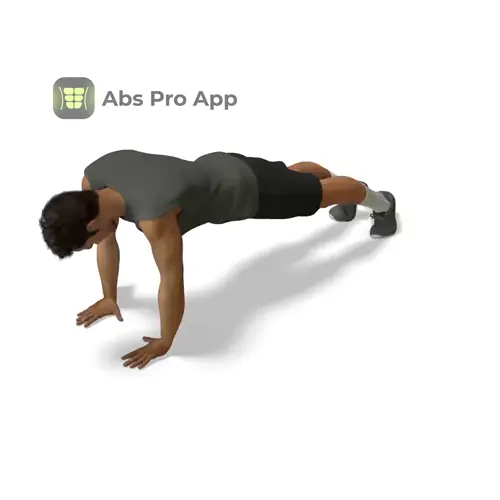
Begin on the floor in a high plank position. Place your hands flat on the ground directly under your shoulders, fingers spread for stability. Your arms should be straight but not locked, with the elbows facing slightly back.
Extend both legs straight behind you so your body forms a long line from head to heels. Feet start together, resting on the balls of your feet. Engage your abs by gently pulling your ribs toward your hips and squeezing your glutes.
Your head stays neutral, eyes looking slightly ahead of your hands. Before starting the first rep, check that your hips are level and not sagging or piking up.
Setup tip: Press the floor away with your hands to activate your shoulders before you begin jumping.
How To Do High plank jacks (Step-by-step)
- Set up in a stable high plank on your hands with feet together
- Brace your core and keep your arms straight
- Jump both feet out wide at the same time
- Land softly on the balls of your feet
- Immediately jump your feet back together
- Keep hips level and chest steady
- Continue jumping in a smooth rhythm
- Move at a controlled but athletic pace
- Finish the set by stepping or jumping back to plank
Form Cues
- Hands under shoulders
- Arms straight, elbows soft
- Brace abs before each jump
- Hips stay level
- Quiet, soft landings
- Neck long and relaxed
- Feet move, torso stays still
Breathing & Bracing
High plank jacks require steady breathing while keeping your core braced. Before starting, take a calm inhale through your nose and lightly tighten your abs as if preparing for a cough.
As you begin jumping the feet, exhale gently through the mouth during the effort. Many people find it helpful to exhale as the feet jump out and inhale as they come back together. The key is to avoid holding your breath.
Keep your rib cage stacked over your hips and maintain tension in your abs without squeezing excessively. Think of your core as a firm cylinder that stays stable while the legs move around it.
A simple rhythm to repeat is: inhale to prepare, then short exhales every one or two jumps while maintaining control.
Common Mistakes
- Letting hips bounce side to side, fix by slowing the tempo and bracing harder
- Bending the arms too much, fix by pressing the floor away
- Feet landing too wide, fix by keeping jumps just wider than hip width
- Sagging lower back, fix by squeezing glutes and tightening abs
- Looking straight down, fix by keeping the neck neutral
- Landing loudly, fix by aiming for soft and controlled foot contacts
How It Should Feel
Quick Self-Check:
You should feel your abs working hard to keep your torso steady while your legs move. The shoulders and arms will fatigue as they support your body weight, and your breathing rate should increase quickly.
Good signs:
- Strong tension across the front of your core
- Stable shoulders with no collapsing
- Even rhythm in your jumps
Warning signs:
- Sharp pain in the shoulders, wrists, or lower back, stop immediately
- Lower back discomfort from sagging hips
If you feel it mostly in your neck, relax your head and look slightly forward. If you feel it in your lower back, slow down and focus on bracing your abs and glutes.
Alternative Names
plank jumping jacks, plank jacks
Variations
Easier
- Step-out plank jacks, from high plank step one foot out at a time instead of jumping
- Elevated plank jacks, place hands on a bench or box to reduce load
Harder
- Fast tempo plank jacks, increase speed while keeping hips steady
- Pause plank jacks, pause briefly with feet wide while maintaining full core tension
Sample Workout
Core and Conditioning Circuit
- High plank jacks, 30 to 40 seconds
- Bodyweight squats, 15 reps
- Push-ups, 8 to 12 reps
- Dead bug, 10 reps per side
Rest 60 seconds and repeat for 3 to 4 rounds. Focus on clean form during plank jacks and reduce speed if your hips start to move.
Progression Plan
Week 1: Perform 3 sets of 20 to 25 seconds. Focus on perfect plank alignment and quiet landings. Rest 60 to 90 seconds between sets.
Week 2: Increase to 30 to 40 seconds per set. Maintain the same number of sets but aim for smoother rhythm and less hip movement.
Week 3: Shorten rest periods to 45 to 60 seconds or add a fourth set. Only progress if form stays clean.
Week 4: Try advanced variations such as faster tempo or brief pauses with feet wide. If your hips lose control, return to the previous week.
Progress by increasing time, improving control, or reducing rest. Repeat a week if you feel shoulder or lower back fatigue building up.
FAQ
How many reps should I do?
Plank jacks are usually done for time. Aim for 20 to 40 seconds per set with consistent control.
Do plank jacks work abs or cardio more?
They work both. Your abs stabilize the body while the jumping motion raises your heart rate.
Should my feet touch together each rep?
Yes, one rep is jumping feet wide and then back together.
Can I do this every day?
Yes, if volume is moderate and your shoulders recover well.
Why do my wrists get tired?
High plank loads the wrists. Spread fingers wide and press evenly through the hands.
Summary
High plank jacks are a powerful way to train your core under movement while boosting conditioning. They demand focus, control, and steady breathing, making them more than just a plank variation.
Prioritize quality reps, keep your hips steady, and choose the right variation for your level. With consistent practice, this exercise can improve core strength, shoulder stability, and overall athletic endurance.
Get Defined Abs in 30 Days
This exercise is part of our complete 30-day ab program. Download the app for structured daily workouts and track your progress.