
High Plank Down Dog Toe Tap Tutorial
The high plank down dog toe tap is a dynamic bodyweight core exercise that blends plank stability with hip mobility and shoulder strength. You move from a strong high plank on your hands into a down dog position, then reach across to tap the opposite toe before returning.
This exercise helps build core control, shoulder stability, and coordination while also stretching the hamstrings and calves. It is best suited for intermediate level exercisers who already feel comfortable holding a high plank and controlling their hips. Focus on slow, intentional movement, steady breathing, and keeping your weight balanced through your hands.
Benefits
- Builds deep core stability under movement
- Improves shoulder strength and control
- Trains coordination and cross body movement
- Stretches hamstrings and calves dynamically
- Enhances hip hinge awareness
- Challenges balance and weight shifting
- Raises heart rate without jumping
Setup & Starting Position
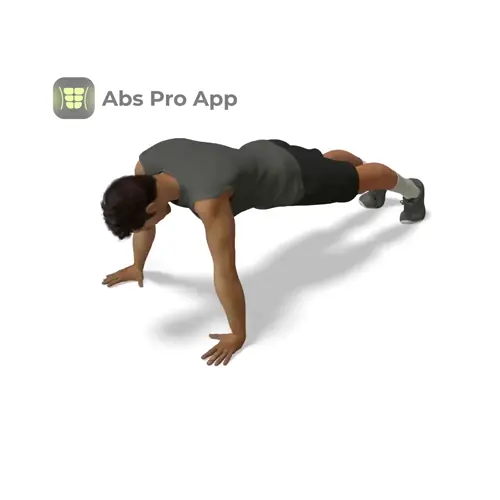
Begin on the floor in a high plank position. Place your hands flat on the ground directly under your shoulders, fingers spread wide to create a stable base. Your arms should be straight but not locked, and your shoulders slightly pushed away from your ears.
Extend your legs straight behind you with toes tucked under and feet about hip width apart. Your body should form a straight line from the back of your head to your heels. Gently tuck your pelvis so your lower back stays neutral, not arched.
Before starting the first rep, brace your core as if preparing for a light cough. Shift a little weight into your hands so your shoulders feel stable. Setup tip: press the floor away with your palms to activate your shoulders before you move.
How To Do High plank down dog toe tap (Step-by-step)
- Start in a strong high plank with arms straight and core braced.
- Exhale and push your hips back and up into a down dog position.
- Keep legs mostly straight as your heels reach toward the floor.
- Lift your right hand and tap your left toe.
- Place the hand back down with control.
- Shift forward and return to a high plank.
- Repeat the movement, tapping left hand to right toe.
- Continue alternating sides for the set.
Form Cues
- Press the floor away through your hands
- Hips move back, not straight up
- Keep ribs pulled in
- Move slow and controlled
- Balance weight evenly
- Neck stays long and relaxed
Breathing & Bracing
Proper breathing makes this exercise feel smoother and more controlled. Start each rep with a gentle brace of your core, tightening your abs as if you were zipping up snug jeans, without holding your breath.
Inhale as you prepare in the high plank. As you push back into down dog and reach for the toe, exhale slowly. This helps your ribs stay down and your core engaged. When you return to plank, take a small inhale to reset before the next side.
A simple rhythm to repeat is inhale in plank, exhale during the reach and tap. Keep breathing steady and avoid breath holding. If your breathing becomes rushed, slow the movement down and focus on control rather than speed.
Common Mistakes
- Letting the lower back sag, fix by bracing abs before moving.
- Bending the arms too much, fix by keeping elbows straight but soft.
- Rushing the toe tap, fix by slowing the reach and return.
- Shifting weight unevenly, fix by pressing evenly through both hands.
- Over rotating the hips, fix by keeping hips mostly square.
- Dropping the head, fix by looking between your feet or knees.
How It Should Feel
Quick Self Check: During the exercise, you should feel your abs working to stabilize your body, especially as you shift weight and reach across. Your shoulders should feel active and strong, not jammed or painful. A gentle stretch in the hamstrings and calves when you hit down dog is also a good sign.
Good signs: steady balance, controlled breathing, and smooth transitions between plank and down dog. Light muscle shaking is normal as your core works.
Warning signs: sharp pain in the shoulders, wrists, or lower back. If you feel pinching or sharp discomfort, stop the set.
If you feel it mostly in your neck, relax your shoulders and lengthen the back of your neck. If you feel it in your lower back, shorten the range of motion and brace your abs more firmly.
Alternative Names
Plank to Down Dog Toe Touch
Variations
Easier
- Plank to Down Dog Hold: Move from plank to down dog and hold without the toe tap.
- Elevated Down Dog Tap: Perform the toe tap with knees slightly bent to reduce load.
Harder
- Slow Tempo Down Dog Toe Tap: Take 3 to 4 seconds to reach and return for more core tension.
- Down Dog Toe Tap with Push Up: Add a push up each time you return to plank.
Sample Workout
Core and Shoulder Stability Workout
- High plank down dog toe tap, 8 reps per side
- Bear plank hold, 30 seconds
- Dead bug, 10 reps per side
- Side plank, 20 seconds per side
Rest 60 seconds and repeat for 3 rounds. Focus on control rather than speed.
Progression Plan
Week 1: Perform 2 to 3 sets of 6 to 8 reps per side. Focus on learning the movement, keeping hips controlled, and maintaining steady breathing. Rest 60 to 90 seconds between sets.
Week 2: Increase to 8 to 10 reps per side and reduce rest to about 45 to 60 seconds. Begin slowing the reach and return slightly to improve control.
Week 3: Add a slow tempo, taking 3 seconds to tap the toe and 3 seconds to return. Keep reps the same and focus on perfect form.
When you can complete all reps without losing balance or rushing, move to an advanced variation. If form breaks down, repeat the previous week.
FAQ
How many reps should I do per side?
Start with 6 to 10 reps per side, where one rep equals a tap on one side.
Should my legs be straight or bent?
Legs should be mostly straight, but a slight bend is fine if your hamstrings are tight.
Is this more of a core or shoulder exercise?
It trains both, but core stability is the main challenge due to weight shifting.
Can I do this if my wrists get sore?
If wrist discomfort appears, reduce range of motion or take longer rest. Stop if pain persists.
Summary
The high plank down dog toe tap is a powerful way to train your abs while also improving shoulder strength and mobility. By moving slowly and with intention, you teach your core to stay engaged through changing positions.
Use this exercise as part of a core circuit, warm up, or full body routine. Stay patient with the movement, focus on quality reps, and let control guide your progress. Over time, this exercise can help you feel stronger, more stable, and more coordinated.
Get Defined Abs in 30 Days
This exercise is part of our complete 30-day ab program. Download the app for structured daily workouts and track your progress.