
Dead Bug Tutorial
The dead bug is a classic bodyweight core exercise done lying on your back with arms and legs raised. It is popular in rehab, sports training, and home workouts because it teaches core control without stressing the spine. This move helps you learn how to brace your abs while moving your arms and legs, which carries over to lifting, running, and daily activities.
It is great for beginners learning core technique and for advanced athletes refining control. Focus on slow, controlled movement, a strong brace, and keeping your lower back gently pressed into the floor.
Benefits
- Builds strong core control
- Protects the lower back
- Improves coordination
- Teaches proper bracing technique
- Low impact and joint friendly
- Great for warm-ups or rehab
- Supports better posture
Setup & Starting Position
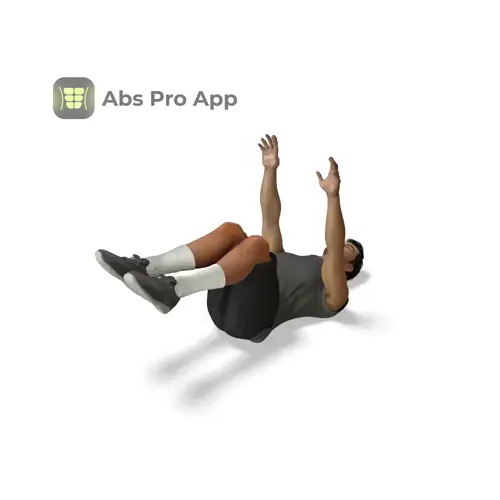
Start by lying flat on your back on the floor or a mat. Bend your hips and knees to about 90 degrees so your thighs point straight up and your shins are parallel to the floor. Extend your arms straight toward the ceiling so your hands are above your shoulders.
Before moving, gently press your lower back into the floor by tightening your abs. Imagine pulling your rib cage down toward your hips. Your head, shoulders, and hips should stay relaxed on the floor, with your neck long and neutral.
Your feet should be relaxed, toes pointing naturally upward. Keep your arms straight but not locked. This is your starting position. Take a calm breath and prepare to move slowly with control.
Quick setup tip: If your lower back arches off the floor before you start, bend your knees slightly closer to your chest and re-brace.
How To Do Dead bug (Step-by-step)
- Lie on your back with arms up and knees bent at 90 degrees
- Brace your core and gently press your lower back into the floor
- Slowly extend your right arm overhead while extending your left leg toward the floor
- Keep both hovering above the ground without touching
- Maintain a strong brace and steady breathing
- Pause briefly at full extension
- Return arm and leg to the starting position
- Switch sides and repeat with control
- Continue alternating for the desired reps
Form Cues
- Lower back stays down
- Move slow and controlled
- Opposite arm and leg only
- Ribs down, abs tight
- Neck relaxed
- No rushing reps
Breathing & Bracing
Breathing correctly during the dead bug helps you stay stable and avoid arching your lower back. Start by taking a calm inhale through your nose in the starting position. As you prepare to move, gently tighten your abs as if you are about to cough, but keep breathing.
As you extend your opposite arm and leg, slowly exhale through your mouth. Think about pulling your ribs down and keeping your belly firm, not sucked in. The exhale should be controlled and steady.
When you return to the starting position, take another small inhale and reset your brace before switching sides. Avoid holding your breath. A simple rhythm is inhale at the top, exhale as you extend, inhale as you return.
This breathing pattern helps keep your hips and ribs stacked, protects your spine, and trains your deep core muscles to work the way they should.
Common Mistakes
- Arching the lower back, reduce range of motion and brace harder
- Moving too fast, slow down and control each rep
- Letting arms or legs touch the floor, keep them hovering
- Holding the breath, focus on slow exhales
- Neck tensing up, relax shoulders and jaw
- Extending same-side arm and leg, switch to opposite sides
How It Should Feel
Quick self-check: The dead bug should feel controlled and challenging in your abs, not painful. You should feel steady tension across the front and deep inside your core.
Good signs:
- Abs feel warm and engaged
- Lower back stays gently pressed down
- Movement feels smooth and balanced
Warning signs:
- Sharp pain in the lower back, stop immediately
- Neck strain or head lifting off the floor
- Loss of control or shaking from rushing
If you feel it mostly in your lower back, shorten the leg extension and re-focus on bracing. If your neck feels tense, relax your shoulders and keep your head heavy on the floor.
Alternative Names
dead bug exercise, deadbug
Variations
Easier
- Bent-knee dead bug, keep the moving leg more bent to reduce leverage
- Arms-only dead bug, move arms while keeping both legs still
- Legs-only dead bug, move legs while arms stay up
Harder
- Straight-leg dead bug, extend the leg fully for more challenge
- Paused dead bug, hold the extended position for 3 to 5 seconds
- Slow tempo dead bug, take 5 seconds to extend and return
Sample Workout
Core Stability Workout
- Dead bug, 3 sets of 8 to 12 reps per side
- Glute bridge, 3 sets of 12 reps
- Bird dog, 3 sets of 8 reps per side
- Bodyweight squat, 3 sets of 10 to 15 reps
Use the dead bug early in the workout as a warm-up or activation drill. Rest 30 to 45 seconds between sets and focus on perfect form.
Progression Plan
Week 1: Practice the basic dead bug with bent knees. Perform 3 sets of 6 to 8 reps per side. Focus on slow movement, steady breathing, and keeping your lower back down. Rest 45 seconds between sets.
Week 2: Increase to 3 sets of 8 to 10 reps per side. Begin extending the leg a little lower toward the floor if you can keep perfect control. Slightly slow down the tempo.
Week 3: Move to straight-leg dead bugs or add a 2 to 3 second pause at full extension. Perform 3 to 4 sets of 8 to 10 reps per side.
If you lose form or feel your back arching, repeat the previous week. Progress only when every rep feels controlled and stable.
FAQ
How to do dead bugs correctly?
Move slowly, brace your core, and keep your lower back pressed into the floor the entire time.
Is the dead bug safe for lower back pain?
For many people, yes, because it trains core stability with low spinal stress, but always move pain-free.
How many reps should I do?
Start with 6 to 8 reps per side and build up to 10 to 12 with good control.
Should my arms and legs touch the floor?
No, keep them hovering to maintain tension in your core.
Summary
The dead bug is a simple but powerful core exercise that teaches control, coordination, and proper bracing. By moving opposite arms and legs while keeping your spine stable, you train your abs to do their real job, protecting your body during movement.
Take your time with each rep, breathe steadily, and focus on quality over quantity. Whether you are just starting out or refining advanced technique, the dead bug deserves a regular place in your core routine.
Get Defined Abs in 30 Days
This exercise is part of our complete 30-day ab program. Download the app for structured daily workouts and track your progress.