
Crossover Crunch Tutorial
Crossover crunch both sides is a no-equipment abs exercise performed lying on your back with arms overhead and legs straight. You crunch diagonally, lifting one leg and the opposite arm toward each other, then alternate sides. This movement challenges the rectus abdominis and obliques while also demanding coordination and core control.
It suits intermediate trainees who want more than basic crunches without adding equipment. Focus on slow, controlled lifts, keeping your lower back gently pressed into the floor and avoiding momentum. This guide shows how to do crossover crunches correctly, explains the technique, and helps you progress safely.
Benefits
- Builds stronger upper and lower abs
- Trains diagonal core control and rotation
- Improves coordination between upper and lower body
- Increases time under tension without equipment
- Encourages proper bracing and spinal control
- Challenges core stability with long levers
Setup & Starting Position
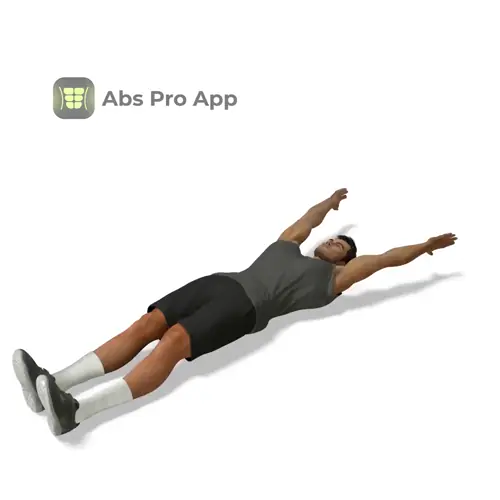
Lie flat on your back on a mat or comfortable floor. Extend both legs straight along the ground with your heels lightly touching the floor. Reach your arms fully overhead, elbows straight, hands hovering just above the floor.
Set your body by gently drawing your ribs down and tightening your abs so your lower back is lightly pressed into the floor. Your head and shoulders should be relaxed on the ground, with your chin neutral, not tucked or lifted.
Before starting the first rep, decide your tempo and range of motion. This is a controlled crunch, not a fast swing.
Setup tip: If your lower back arches, slightly tighten your abs more before lifting any limb.
How To Do Crossover crunch (Step-by-step)
- Lie on your back with arms overhead and legs straight.
- Brace your core and press your lower back gently into the floor.
- Lift your right leg straight up while lifting your left arm.
- Crunch diagonally, raising shoulders until arm and leg move toward each other.
- Pause briefly at the top under control.
- Lower the arm, leg, and shoulders slowly back to the floor.
- Repeat on the opposite side.
- Continue alternating sides for the set.
- One rep equals one side. Count both sides separately.
Form Cues
- Arms stay straight overhead
- Legs stay straight, no bending
- Crunch up, do not just lift the leg
- Lower back stays gently down
- Slow and controlled tempo
- Neck stays relaxed
Breathing & Bracing
Start each rep by lightly bracing your core, as if preparing to cough. This keeps your ribs and hips stacked and protects your lower back.
Exhale as you crunch diagonally and lift the arm and opposite leg. The exhale helps your abs shorten and improves control at the top of the movement.
Inhale slowly as you lower back to the floor, keeping tension in your abs instead of fully relaxing.
A simple rhythm to repeat is: inhale at the bottom, exhale as you crunch up, short pause, inhale on the way down. Avoid holding your breath, and keep your belly firm rather than pushing it out.
Common Mistakes
- Pulling the neck forward, fix by keeping eyes up and neck relaxed.
- Bending the lifted leg, fix by reaching long through the heel.
- Using momentum, fix by slowing the lift and lower.
- Letting the lower back arch, fix by tightening abs before lifting.
- Rushing through reps, fix by counting a slow tempo.
- Only lifting the arm and leg without crunching, fix by lifting shoulders slightly.
How It Should Feel
Quick self-check:
Good signs:
You feel strong tension in the abs and obliques. The movement feels slow and controlled. Your lower back stays in contact with the floor. You can alternate sides evenly.
Warning signs:
Sharp pain anywhere means stop immediately. Neck strain suggests you are pulling with your head. Lower back discomfort suggests loss of core tension.
Quick fixes:
If you feel it in your neck, reduce how high you crunch and keep arms lighter. If you feel it in your lower back, shorten the leg lift or slow the movement and brace harder before lifting.
Alternative Names
Alternating crossover crunch
Variations
Easier
- Bent-Knee Crossover Crunch: Keep knees bent instead of straight to reduce lever length.
- Arms Forward Crossover Crunch: Reach arms forward instead of overhead for easier control.
- Short Range Crossover Crunch: Lift arm and leg only partway up.
Harder
- Slow Tempo Crossover Crunch: Use a 3 to 4 second lift and lower for more tension.
- Paused Top Crossover Crunch: Hold the top crunch for 2 to 3 seconds.
- Hollow Body Crossover Crunch: Keep both legs slightly off the floor between reps.
Sample Workout
Core Focus Workout
- Crossover Crunch Both Sides, 10 to 14 reps per side
- High Plank Hold, 30 to 45 seconds
- Dead Bug, 8 to 10 reps per side
- Glute Bridge Hold, 30 seconds
Rest 45 to 60 seconds between exercises. Complete 2 to 3 rounds. Focus on slow reps and clean technique.
Progression Plan
Week 1: Perform 2 to 3 sets of 8 to 10 reps per side. Focus on learning the diagonal crunch pattern, keeping arms and legs straight, and maintaining lower back contact.
Week 2: Increase to 10 to 12 reps per side. Slow the lowering phase to 3 seconds while keeping the lift controlled.
Week 3: Add a 1 to 2 second pause at the top of each rep. Reduce rest time slightly.
Week 4: Progress to 12 to 14 reps per side or move to an advanced variation like paused or hollow body crossover crunches.
If form breaks or lower back lifts, repeat the previous week until control improves.
FAQ
How many reps should I do?
Most people do well with 8 to 14 reps per side, depending on control.
Should my shoulders fully lift off the floor?
They should lift slightly as you crunch, but not turn into a full sit-up.
Is it normal to feel hip flexors?
Some involvement is normal, but abs should feel like the main driver.
Can I keep my arms bent?
Straight arms are part of this variation. Bending them changes the exercise.
Can I do this every day?
Yes, if volume is controlled and your core recovers well.
Summary
Crossover crunch both sides is a powerful way to train your abs with control and precision using only your bodyweight. By keeping arms overhead and legs straight, you create long levers that demand real core strength.
Stay patient with the movement, prioritize quality over speed, and progress gradually. When done with proper technique and breathing, this exercise can become a staple in any effective core training routine.
Get Defined Abs in 30 Days
This exercise is part of our complete 30-day ab program. Download the app for structured daily workouts and track your progress.