
Butterfly Sit-ups Tutorial
Butterfly sit-ups are a bodyweight core exercise performed on the floor with the soles of your feet together and knees opened wide. This position reduces hip flexor involvement and helps you focus on your abs while moving through a comfortable range of motion.
This guide explains how to do butterfly sit-ups with clear instructions, technique tips, and progressions. They are well suited for beginners who want to build abdominal strength and control while practicing smooth, coordinated movement. Focus on slow control, relaxed hips, and leading the movement with your torso instead of yanking with the arms.
Benefits
- Builds abdominal strength with less hip flexor strain
- Improves core control through a full sit-up range
- Encourages smooth, coordinated movement
- Easy on the lower back when done with control
- Requires no equipment and little space
- Great foundation for harder core exercises
- Helps improve posture awareness
Setup & Starting Position
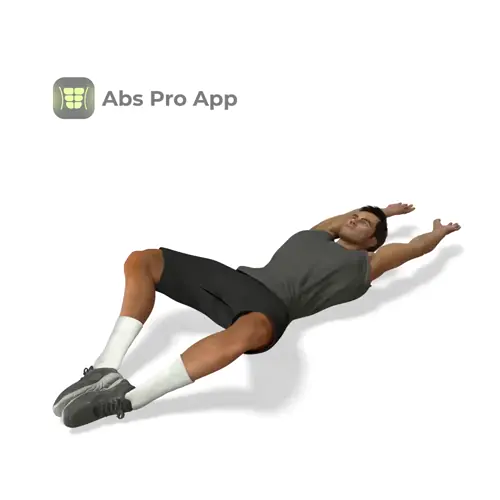
Start by sitting on the floor and bringing the soles of your feet together so your knees fall open to the sides. Scoot your heels comfortably close to your body, allowing your hips to relax. Sit tall for a moment and gently lengthen your spine.
From here, roll down onto your back one vertebra at a time. Your knees stay open and relaxed, and your feet remain together on the floor. Extend your arms straight overhead so your biceps are near your ears, palms facing up or toward each other.
Let your lower back rest naturally on the floor without forcing it flat. Your head should be supported by the floor, chin neutral, eyes looking up. Take a slow breath in to prepare.
Setup tip: If your knees feel tight, place a folded towel or yoga block under each knee for light support.
How To Do Butterfly sit-ups (Step-by-step)
- Sit with soles of feet together and knees open wide.
- Lower your torso to the floor with control.
- Extend arms overhead, elbows straight but relaxed.
- Inhale to prepare and brace your abs gently.
- Exhale and swing your arms forward.
- Curl your torso up, ribs moving toward hips.
- Reach hands toward your feet at the top.
- Pause briefly while staying tall.
- Inhale and slowly lower back down.
- Return arms overhead and reset before the next rep.
Form Cues
- Keep knees relaxed and heavy toward the floor
- Lead with your chest, not your chin
- Use arms for rhythm, not momentum
- Control the way down
- Ribs down, abs engaged
- Smooth and steady tempo
Breathing & Bracing
Proper breathing helps you get the most out of butterfly sit-ups while protecting your spine. Before each rep, take a calm breath in through your nose as your arms rest overhead. As you begin to curl up, exhale slowly through your mouth and gently tighten your abs as if you were narrowing your waist.
Avoid holding your breath or bearing down hard. The brace should feel supportive, not rigid. Think of your ribs moving down toward your hips as you exhale, keeping your torso connected instead of flaring open.
At the top position, take a small pause while maintaining light tension. As you lower back down, inhale under control, keeping your abs engaged so your spine rolls down smoothly.
Simple rhythm: inhale at the bottom, exhale up, inhale down. Repeat this pattern for every rep to stay relaxed and consistent.
Common Mistakes
- Pulling on the neck, fix by keeping eyes up and chin neutral.
- Using momentum from the arms, fix by slowing the start.
- Knees lifting off the floor, fix by relaxing the hips.
- Arching the lower back, fix by bracing abs before moving.
- Dropping too fast on the way down, fix by counting to three.
- Holding the breath, fix by exhaling as you sit up.
How It Should Feel
Quick self-check: Butterfly sit-ups should feel controlled and focused in the front of your core. You should notice your abs working from the start of the curl all the way to the top.
Good signs:
- Warm, steady tension in the abs
- Smooth movement without jerking
- Relaxed hips and inner thighs
Warning signs:
- Sharp pain in the lower back, stop immediately
- Neck strain or headache sensations
- Pinching in the hips
If you feel it mostly in your neck, slow the movement and focus on lifting the chest instead of the head. If your lower back feels strained, reduce the range of motion and brace your abs more gently before each rep.
Alternative Names
Butterfly sit-up, soles together sit-up
Variations
Easier
- Half butterfly sit-up, curl up only halfway, then lower back down.
- Assisted butterfly sit-up, lightly hold thighs to help guide the movement.
- Paused bottom butterfly sit-up, rest briefly on the floor between reps.
Harder
- Slow tempo butterfly sit-up, take 3 to 5 seconds to lift and lower.
- Butterfly sit-up with top hold, pause 2 to 3 seconds at the top.
- Butterfly sit-up plus reach, reach past the feet to increase core demand.
Sample Workout
Beginner Core Workout
- Butterfly sit-ups, 3 sets of 10 to 12 reps
- Dead bug, 3 sets of 8 reps per side
- Glute bridge, 3 sets of 12 reps
- Front plank, 3 sets of 20 to 30 seconds
Rest 45 to 60 seconds between sets. Focus on slow, clean reps and controlled breathing throughout.
Progression Plan
Week 1: Perform butterfly sit-ups 2 to 3 times per week. Do 2 to 3 sets of 8 to 10 reps. Focus on smooth technique, relaxed hips, and consistent breathing. Rest about 60 seconds between sets.
Week 2: Increase to 10 to 12 reps per set. Start slowing the lowering phase to about 3 seconds. Keep the same number of sets.
Week 3: Add a 1 to 2 second pause at the top of each rep. If form stays clean, increase to 3 sets consistently.
Week 4: Progress to slow tempo butterfly sit-ups or longer top holds. If you lose control or feel strain, repeat the previous week instead of pushing forward.
Only move to advanced variations when you can complete all reps with steady breathing and no momentum.
FAQ
Should my knees touch the floor?
No, they should relax toward the floor naturally. Do not force them down.
Can I use momentum with my arms?
The arms help with rhythm, but the abs should initiate the movement.
How many reps should I do?
Most beginners start with 8 to 12 controlled reps per set.
Is it okay if my feet move slightly?
Small movement is fine, but try to keep the soles together.
Can I do this every day?
Yes, if volume is moderate and there is no soreness or pain.
Summary
Butterfly sit-ups are a simple yet effective way to strengthen your abs while keeping the hips relaxed and comfortable. By focusing on control, breathing, and smooth movement, you can build a strong foundation for more advanced core work.
Use this tutorial and progression guide to practice with confidence, adjust the difficulty as needed, and stay consistent. Quality reps always matter more than speed or volume.
Get Defined Abs in 30 Days
This exercise is part of our complete 30-day ab program. Download the app for structured daily workouts and track your progress.