
Boat Hold Arm Pulses Tutorial
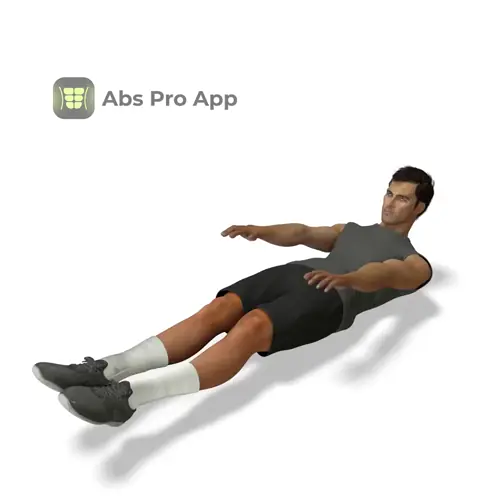
Boat Hold Arm Pulses is a challenging core exercise performed lying on your back in a hollow body position while pulsing the arms up and down by your sides. It builds deep abdominal strength, improves core endurance, and teaches you how to keep your lower back controlled against the floor. This move is best for intermediate to advanced trainees who want to level up their abs workouts without equipment. Focus on keeping your ribs down, abs tight, and movements small and controlled. If you are looking for a guide on how to do hollow body style core holds with added intensity, this tutorial fits perfectly.
Benefits
- Builds strong, defined abdominal muscles
- Improves core endurance and control
- Teaches proper hollow body positioning
- Enhances mind to muscle connection in the abs
- Supports better posture during workouts
- Transfers well to gymnastics and calisthenics skills
Setup & Starting Position
Start by lying flat on your back on a mat or the floor. Extend your legs straight and keep them together, with toes pointed slightly away from you. Place your arms straight by your sides, palms facing down.
Before lifting, gently draw your ribs down and tighten your abs so your lower back presses close to the floor. This pelvic position is critical for protecting your spine and making the exercise effective.
Lift your head, shoulders, and upper back a few inches off the ground, keeping your chin slightly tucked. At the same time, raise your straight legs off the floor so they hover low, without letting your lower back arch.
Setup tip: If your lower back lifts off the floor during setup, bend your knees slightly until you can maintain control.
How To Do Boat hold arm pulses (Step-by-step)
- Lie on your back with arms long by your sides and legs straight.
- Brace your core and press your lower back close to the floor.
- Lift your shoulders and head slightly, eyes looking upward.
- Raise both legs together so they hover off the ground.
- Hold this hollow position with full body tension.
- Begin pulsing your arms up and down next to your hips.
- Keep the pulses small and controlled.
- Maintain steady breathing and core tension.
- Continue for the prescribed time or pulses.
- Lower arms, legs, and shoulders with control to finish.
Form Cues
- Lower back stays close to the floor
- Ribs down, abs tight
- Small, quick arm pulses
- Neck relaxed, chin slightly tucked
- Legs together and steady
- No arching or flaring
Breathing & Bracing
Proper breathing is essential to maintain tension during Boat Hold Arm Pulses. Start by taking a calm inhale through your nose before lifting into the hollow position. Once set, lightly brace your core as if preparing for a cough, without holding your breath.
Use short, controlled exhales through the mouth as you pulse your arms. A simple rhythm is to inhale for two arm pulses and exhale for two pulses. This helps prevent breath holding and keeps your abs engaged.
Focus on keeping your ribs stacked over your hips while breathing. If you feel your lower back lifting as you inhale, reduce the depth of the breath and tighten your brace. The goal is steady airflow with constant abdominal tension.
Common Mistakes
- Lower back arching off the floor, fix by bending knees slightly.
- Arm pulses too big, keep them short and controlled.
- Pulling on the neck, relax shoulders and tuck chin gently.
- Holding breath, use a steady inhale and exhale rhythm.
- Legs lifting too high, lower them until abs engage fully.
How It Should Feel
Quick Self-Check: You should feel strong tension across the entire abdominal wall, especially in the lower abs. The effort should be steady, not shaky or jerky. Your arms should feel lightly fatigued from the pulses, but the core should clearly be doing most of the work.
Good signs: abs burning evenly, lower back staying close to the floor, smooth arm pulses, controlled breathing.
Warning signs: sharp pain in the lower back, neck strain, or hip flexor pain dominating the movement. Stop immediately if you feel sharp pain.
If you feel it mostly in your neck, lower your head slightly or support it briefly between sets. If your lower back feels strained, bend your knees or raise your legs higher until you regain control.
Alternative Names
Hollow body arm pulses, Hollow hold arm pulses
Variations
Easier
- Bent-Knee Boat Hold Arm Pulses, keep knees bent and closer to the chest while pulsing arms.
- Single-Leg Boat Hold Pulses, keep one foot on the floor and switch sides each set.
- Static Hollow Hold, remove arm pulses and focus on holding position.
Harder
- Low Leg Boat Hold Arm Pulses, lower straight legs closer to the floor for more tension.
- Paused Arm Pulses, pause briefly at the top of each pulse while holding core tight.
- Extended Time Hold, increase total hold time without losing form.
Sample Workout
Core Focus Workout
- Dead Bug, 10 reps per side
- Boat Hold Arm Pulses, 30 to 45 seconds
- Side Plank, 20 to 30 seconds per side
- Glute Bridge, 15 reps
Rest 45 to 60 seconds between rounds and repeat for 3 rounds. Use Boat Hold Arm Pulses as the main core endurance challenge in the workout.
Progression Plan
Week 1: Perform 3 sets of 20 to 30 seconds with bent knees if needed. Focus on maintaining lower back contact and smooth arm pulses. Rest 45 seconds between sets.
Week 2: Progress to straight legs and increase hold time to 30 to 40 seconds. Keep arm pulses consistent and breathing controlled.
Week 3: Lower legs closer to the floor and extend holds to 40 to 50 seconds. Reduce rest to 30 seconds if form stays solid.
Only move to advanced variations once you can complete all sets without lower back arching. If form breaks, repeat the previous week until control improves.
FAQ
Should my legs be straight during Boat Hold Arm Pulses?
Yes, the standard version uses straight legs, but you can bend them if needed to maintain proper form.
How fast should I pulse my arms?
The pulses should be small and controlled, not fast or jerky.
Why does my lower back lift off the floor?
This usually means the exercise is too hard, raise your legs or bend your knees to regain control.
Can I do this exercise every day?
Yes, as long as volume is managed and your core recovers well.
Summary
Boat Hold Arm Pulses are a powerful way to challenge your abs using only your bodyweight. By combining a hollow body hold with controlled arm movement, you train both strength and endurance in the core. Stay focused on quality over duration, and do not rush the progression. With consistent practice and attention to form, this exercise can significantly improve your core control and overall athletic performance.
Get Defined Abs in 30 Days
This exercise is part of our complete 30-day ab program. Download the app for structured daily workouts and track your progress.