
Bird-dog Tutorial
The Bird-dog is a classic bodyweight core stability exercise performed on all fours, extending the opposite arm and leg while bracing the core. It is a popular choice in abs workouts, rehab programs, and warm-ups because it trains control, balance, and coordination rather than just muscle burn.
This move is best for intermediate trainees who want to improve spinal stability, core endurance, and posture. The main focus is keeping the hips and ribs steady while the limbs move. If you are looking for a clear how to, tutorial, or guide for proper Bird-dog technique, this exercise rewards slow, controlled reps and strong bracing.
Benefits
- Builds deep core stability.
- Improves balance and coordination.
- Supports healthy posture.
- Strengthens lower back safely.
- Reinforces proper bracing technique.
- Low joint stress, spine-friendly.
- Useful for warm-ups and main workouts.
Setup & Starting Position
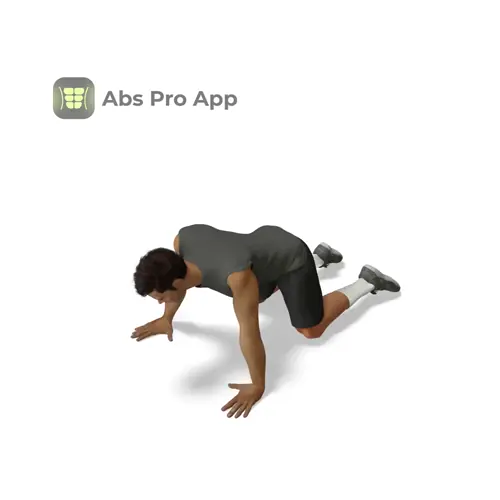
Begin on the floor in a quadruped position, also known as all fours. Place your hands flat on the ground directly under your shoulders, fingers spread to create a stable base. Your knees should be on the floor under your hips, with the tops of your feet resting lightly on the ground.
Set your spine in a neutral position. This means your head, upper back, and lower back form a natural line, not rounded and not arched. Gaze down at the floor a few inches in front of your hands to keep your neck relaxed.
Before starting the first rep, gently brace your core as if preparing for a light cough. Your ribs should stay stacked over your hips. Avoid shifting weight side to side.
Quick setup tip: Imagine balancing a glass of water on your lower back and do not let it spill during the movement.
How To Do Bird-dog (Step-by-step)
- Start on all fours with hands under shoulders and knees under hips.
- Brace your core and keep a neutral spine.
- Slowly extend your right arm straight forward.
- At the same time, extend your left leg straight back.
- Keep hips and shoulders square to the floor.
- Pause briefly with arm and leg fully extended.
- Lower hand and knee back to the floor with control.
- Repeat on the opposite side.
- One rep consists of both sides completed.
- Continue for the planned number of reps.
Form Cues
- Brace before you move.
- Long spine, no arching.
- Hips level with the floor.
- Reach long, not high.
- Slow and controlled tempo.
- Neck relaxed, eyes down.
Breathing & Bracing
Proper breathing is essential for getting the most out of the Bird-dog. Before lifting your arm and leg, take a calm breath in through your nose. As you begin to move, gently brace your core, tightening the muscles around your waist without holding your breath.
Exhale slowly through your mouth as you extend the arm and leg. Think about drawing your ribs down toward your hips to prevent overextension of the lower back. The brace should feel firm but controlled, not rigid.
During the brief hold, continue breathing lightly. Avoid breath holding, as this can reduce stability and increase tension in the neck. As you return to the starting position, inhale again and reset your brace before switching sides.
A simple rhythm is inhale to prepare, exhale during the extension, breathe normally during the hold, then inhale as you reset.
Common Mistakes
- Arching the lower back, fix by bracing harder and lowering the lift height.
- Rotating the hips, fix by moving slower and keeping knees grounded.
- Lifting arm and leg too high, fix by reaching long instead of up.
- Rushing reps, fix by adding a brief pause.
- Looking forward, fix by keeping eyes down.
- Shifting weight side to side, fix by pressing evenly through both hands.
How It Should Feel
Quick Self-Check: During the Bird-dog, you should feel steady tension through your abs and core, with light activation in the glutes and shoulders. The movement should feel controlled and balanced.
Good signs:
- Core feels engaged without shaking.
- Lower back feels supported, not strained.
- You can pause without losing balance.
Warning signs:
- Sharp pain in the lower back, stop immediately.
- Pinching in the spine, reduce range of motion.
- Neck tension, reset head position.
If you feel it mostly in your lower back, slow down and focus on bracing. If your neck gets tense, lower your gaze and relax your shoulders.
Alternative Names
Quadruped opposite arm and leg raise
Variations
Easier
- Arm-only Bird-dog: Lift just one arm at a time while keeping both knees down.
- Leg-only Bird-dog: Extend one leg at a time, focusing on hip control.
- Short lever Bird-dog: Extend arm and leg but keep them closer to the floor.
Harder
- Paused Bird-dog: Hold the extended position for 5 to 10 seconds.
- Slow tempo Bird-dog: Take 5 seconds to extend and 5 seconds to return.
- Bird-dog crunch: Bring elbow and knee together under the body before extending again.
Sample Workout
Core Stability Workout Example:
- Bird-dog: 3 sets of 6 to 10 reps per set, each rep includes both sides.
- Dead bug: 3 sets of 8 reps.
- High plank: 3 sets of 30 seconds.
Rest 45 to 60 seconds between sets. Use the Bird-dog early in the workout to practice control and bracing before harder core exercises.
Progression Plan
Week 1: Perform 3 sets of 6 reps, with each rep including both sides. Focus on clean setup, slow movement, and a 2 second pause at full extension. Rest 60 seconds between sets.
Week 2: Increase to 3 sets of 8 to 10 reps. Keep the same pause but aim for smoother transitions and less weight shifting. Shorten rest to 45 seconds if control stays solid.
Week 3: Move to a paused or slow tempo Bird-dog. Extend for 4 to 5 seconds, hold for 3 seconds, then return slowly. Reduce reps to 6 per set if needed.
If form breaks down, repeat the current week until control improves. Progress only when you can keep hips level and spine neutral throughout every rep.
FAQ
How many reps should I do for Bird-dogs?
Most people do 6 to 10 reps per set, where one rep includes both sides.
Is Bird-dog good for abs?
Yes, it trains deep core muscles that support the abs and spine.
Can I do Bird-dogs every day?
Yes, as long as you keep volume moderate and focus on good technique.
Should my leg be straight or bent?
The extended leg should be straight, reaching long behind you.
What if I lose balance?
Slow down, reduce range of motion, or use a beginner variation.
Summary
The Bird-dog is a simple but powerful core stability exercise that rewards patience and precision. By focusing on bracing, balance, and controlled movement, you build a strong foundation that carries over to many other abs and full-body exercises.
Use this guide to refine your technique, follow the progression plan, and choose variations that match your current ability. When performed with intention, the Bird-dog can be a reliable tool for stronger abs, better posture, and a healthier spine.
Get Defined Abs in 30 Days
This exercise is part of our complete 30-day ab program. Download the app for structured daily workouts and track your progress.