
Bear Plank Heels To Butt Tutorial
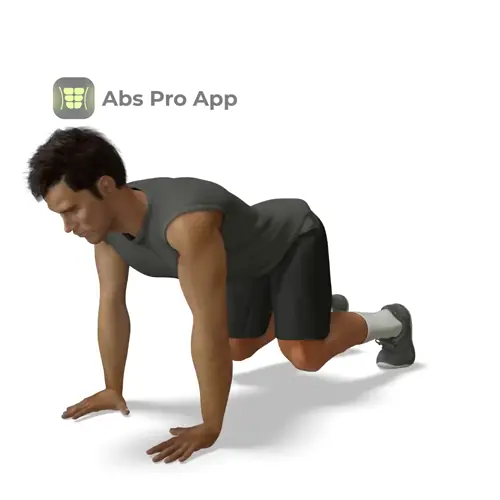
Bear plank heels to butt is a dynamic core exercise performed from a hands-supported bear plank with the knees hovering. You explosively jump both feet toward your glutes and land back under the hips, keeping the back flat and the core braced. This move trains the abs to stabilize during fast lower-body motion while also challenging shoulders and hip flexors.
It is best suited for intermediate trainees who already control a static bear plank and want to add power and coordination. Focus on strong hand pressure, quiet landings, and keeping the ribs stacked over the hips throughout each rep.
Benefits
- Builds dynamic core stability
- Improves coordination and body control
- Strengthens shoulders under load
- Trains hip flexors explosively
- Raises heart rate for conditioning
- Teaches soft, controlled landings
- Transfers well to athletic movement
Setup & Starting Position
Begin on the floor in a bear plank position. Place your hands flat on the ground directly under your shoulders, fingers spread wide for grip. Your knees are bent and positioned under the hips, hovering a few centimeters off the floor. Feet are hip-width apart with toes tucked.
Set your spine in a neutral position with a flat back from head to tailbone. Gently tuck the ribs down toward the hips so your abs are engaged, not flared. Your neck stays long and your gaze is slightly in front of your hands, not straight up or tucked excessively.
Before starting the first rep, press the floor away with your hands to activate the shoulders and lats. Shift a small amount of weight into the hands so the legs feel light and ready to move.
Setup tip: If your knees drift higher than your hips or your back rounds, reset before jumping.
How To Do Bear plank heels to butt (Step-by-step)
- Start in a stable bear plank on hands with knees hovering.
- Inhale gently to prepare, then brace your core.
- Press firmly through both palms.
- Explosively jump both feet upward.
- Bring your heels toward your glutes with knees bent.
- Keep the back flat and hips level in the air.
- Land softly on the balls of your feet.
- Return both feet under the hips.
- Abs stay tight as the knees hover again.
- Reset your balance and repeat for the next rep.
Form Cues
- Hands strong, floor pushed away
- Ribs down, core tight
- Jump both feet together
- Land quietly and controlled
- Back stays flat
- Neck long, eyes down
Breathing & Bracing
Proper breathing helps you stay powerful and controlled during bear plank heels to butt. Start each rep with a small inhale through the nose while holding the bear plank. As you prepare to jump, lightly brace your abs as if tightening a wide belt around your waist.
Exhale through the mouth as the feet leave the floor. This exhale should be short and forceful, helping the abs contract and protect the lower back. As you land, continue the exhale and absorb the impact by keeping the core engaged.
Once you are stable again in the bear plank, take a calm nasal inhale before the next rep. Avoid holding your breath or letting the ribs flare upward. A simple rhythm is inhale to prepare, exhale on the jump, reset and inhale again. This pattern keeps tension where you need it without over-bracing.
Common Mistakes
- Letting the back round, fix by lowering jump height and re-bracing.
- Landing with loud feet, fix by bending knees and absorbing the landing.
- Shifting too far back onto the feet, fix by pressing harder through the hands.
- Elbows bending excessively, fix by locking in shoulder stability.
- Rushing reps without control, fix by pausing briefly after each landing.
- Neck craned forward, fix by keeping eyes on the floor.
How It Should Feel
Quick Self-Check:
You should feel strong tension through the abs and deep core as your legs move quickly. The shoulders should feel active and stable, not collapsing. Your hips should feel light, with both feet moving together smoothly.
Good signs: your landings are quiet, your back stays flat, and you can reset balance between reps. Breathing feels controlled even as your heart rate rises.
Warning signs: sharp pain in the wrists, shoulders, or lower back means stop immediately. If you feel the movement only in the lower back, reduce speed and re-focus on bracing.
If you feel neck tension, lengthen the neck and lower your gaze. If the lower back feels strained, shorten the jump and keep the ribs down.
Alternative Names
Bear plank tuck jump, Bear plank knee tuck jump
Variations
Easier
- Bear plank step-in: From bear plank, step both feet forward toward the glutes instead of jumping.
- Static bear plank: Hold the bear plank with knees hovering to build base strength.
- Bear plank alternating foot hops: Hop one foot at a time toward the glutes with less load.
Harder
- Paused bear plank heels to butt: Add a 1 to 2 second pause with heels close to the glutes before landing.
- Explosive speed reps: Increase jump height and perform reps faster while staying controlled.
Sample Workout
Core and Conditioning Circuit
- Bear plank heels to butt, 6 to 10 reps
- Bodyweight squats, 15 reps
- Push-ups, 10 to 15 reps
- Hollow body hold, 20 to 30 seconds
Rest 60 to 90 seconds between rounds. Complete 3 to 4 total rounds. Each rep of bear plank heels to butt equals one jump with both feet.
Progression Plan
Week 1: Practice quality over speed. Perform 3 sets of 5 to 6 reps with full control. Rest 60 to 90 seconds. Focus on quiet landings and maintaining a flat back.
Week 2: Increase to 3 to 4 sets of 8 reps. Shorten rest slightly if form stays solid. Aim for smoother transitions between reps.
Week 3: Progress to 10 reps per set or add a brief pause after landing before the next jump. This improves balance and core control.
Week 4: Introduce an advanced variation like the paused version or increase jump height. If form breaks down, repeat the previous week.
Progress when you can complete all reps with consistent technique and breathing. If fatigue causes loss of form, stay at the current level longer.
FAQ
How many reps should I do?
Start with 6 to 8 controlled reps per set and build up to 10 to 12 as technique improves.
Is one rep both feet jumping together?
Yes, one rep is a single jump where both feet move together toward the glutes and return.
Can I do this if my wrists get tired?
Reduce volume, spread fingers wider, and press through the full hand. Stop if pain persists.
Should my knees touch the floor between reps?
No, the knees stay hovering off the floor the entire time.
Is this more core or cardio?
It trains both, but core stability is the main focus, with a conditioning effect.
Summary
Bear plank heels to butt is a powerful way to challenge your abs while training speed, coordination, and shoulder stability. When done with control, it teaches your core to stay strong as your legs move fast.
Keep the focus on quality reps, solid bracing, and soft landings. Use regressions to build confidence and progress gradually as your control improves. Add it to circuits or core-focused workouts to elevate both strength and conditioning.
Get Defined Abs in 30 Days
This exercise is part of our complete 30-day ab program. Download the app for structured daily workouts and track your progress.