
Bear Plank Tutorial
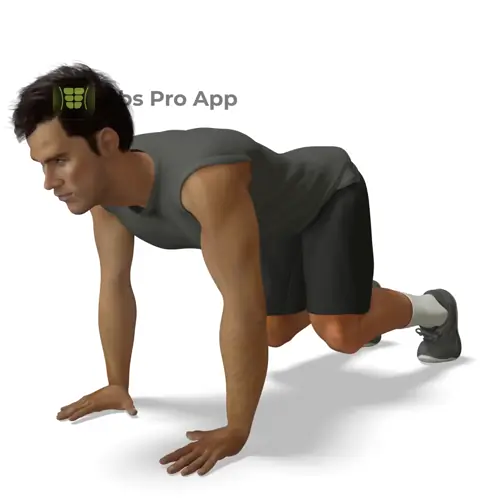
The bear plank is a powerful bodyweight core exercise that builds deep abdominal strength, shoulder stability, and total body tension. You hold a quadruped position with your hands on the floor and knees bent, hovering just off the ground, which forces your abs to work hard to keep the spine neutral.
This exercise is ideal for intermediate level trainees who want to improve core control, posture, and athletic stability. Focus on steady breathing, a flat back, and even weight through the hands. This guide explains how to do the bear plank with clean technique and how to progress it safely.
Benefits
- Builds deep core stability
- Improves shoulder and hip control
- Teaches full body bracing
- Supports better posture
- Transfers well to athletic movements
- No equipment required
- Low impact on joints
Setup & Starting Position
Start on the floor in a quadruped position. Place your hands directly under your shoulders with fingers spread wide to create a stable base. Your knees should be under your hips, bent at about 90 degrees.
Before lifting the knees, set your posture. Flatten your back by gently bracing your abs, think about pulling your ribcage slightly down toward your hips. Keep your chest open without letting the lower back sag. Your head stays in line with your spine, eyes looking slightly forward on the floor.
Flex your feet so your toes dig into the ground. Shift your weight evenly between both hands and feet. From here, hover your knees just a few inches off the floor. This is your bear plank hold position.
Setup tip: If your hips feel too high or too low, adjust until your back looks flat like a tabletop.
How To Do Bear plank (Step-by-step)
- Start on hands and knees with neutral spine
- Spread fingers and press hands firmly into the floor
- Tuck toes under and brace your core
- Lift knees 1 to 3 inches while keeping them bent
- Hold this position with steady tension
- Keep shoulders stacked over hands
- Breathe slowly without losing posture
- Maintain flat back and level hips
- Hold for the planned time
- Lower knees gently to finish
Form Cues
- Hands push the floor away
- Knees hover, do not drift up
- Back flat like a table
- Neck long, eyes forward
- Ribs down, core tight
- Even weight through hands and toes
Breathing & Bracing
Proper breathing is key to holding a strong bear plank. Before lifting your knees, take a calm breath in through your nose. As you lift the knees, gently brace your core as if preparing for a cough, tightening the abs without sucking them in.
Once holding the position, breathe slowly and rhythmically. Use short nasal breaths if possible. Aim for a pattern like inhale for 3 seconds, exhale for 3 seconds. Each exhale should reinforce the brace, helping keep the ribs down and hips level.
Avoid holding your breath, as this increases tension in the neck and reduces endurance. Your stomach should feel firm, but you should still be able to breathe. If your lower back starts to arch during exhale, slightly reduce the hold time and reset your brace.
Common Mistakes
- Hips too high, fix by lowering them until the back is flat
- Lower back sagging, fix by bracing abs harder
- Holding breath, fix by using slow nasal breathing
- Shoulders collapsing, fix by pushing the floor away
- Knees touching the floor, fix by lifting them slightly higher
- Neck craned up, fix by keeping head in line with spine
How It Should Feel
Quick Self-Check: During a proper bear plank, you should feel steady tension across your abs, especially deep in the core. Your shoulders should feel active but controlled, not jammed or painful. Hips and inner thighs will lightly engage to keep the knees hovering.
Good signs:
- Core feels tight and stable
- Breathing stays controlled
- No shaking in the lower back
Warning signs:
- Sharp pain in shoulders or back, stop immediately
- Pinching in the lower back
- Numbness in hands or wrists
If you feel it mostly in the neck, reset your head position and relax the shoulders slightly. If you feel it in the lower back, lift the knees lower and increase abdominal bracing.
Alternative Names
Bear crawl hold, Quadruped hover plank
Variations
Easier
- Knees-down bear brace, hold the setup position without lifting knees
- Short hold bear plank, lift knees and hold for 5 to 10 seconds
Harder
- Bear plank shoulder taps, alternate tapping shoulders while holding hover
- Extended bear plank, move knees slightly farther from hips
- Slow bear plank, hold for longer time with strict breathing
Sample Workout
Core Stability Circuit:
- Bear plank, 3 sets of 20 to 30 seconds
- Dead bug, 3 sets of 8 reps per side
- Glute bridge, 3 sets of 12 reps
- Side plank, 2 sets of 20 seconds per side
Rest 30 to 45 seconds between exercises. Use the bear plank early in the workout when your core is fresh.
Progression Plan
Week 1: Practice clean technique. Perform 3 to 4 sets of 15 to 20 second holds. Focus on breathing rhythm and keeping the back flat. Rest about 45 seconds between sets.
Week 2: Increase hold time to 25 to 35 seconds. Keep the same number of sets, but aim for less shaking and smoother breathing. If form breaks early, repeat Week 1.
Week 3: Move to 35 to 45 second holds or add a slower breathing tempo, such as 4 seconds in and 4 seconds out. Reduce rest slightly to 30 seconds.
Week 4: Introduce an advanced variation like bear plank shoulder taps for short sets. Start with 5 taps per side per set.
Progress only when you can maintain posture and breathing. Repeat a week if your hips rise or back arches.
FAQ
How long should I hold a bear plank?
Most people start with 15 to 30 seconds and build up to 45 to 60 seconds with clean form.
Is the bear plank harder than a regular plank?
For many people yes, because the bent knees and forward shoulders increase core and shoulder demand.
Can I do bear planks every day?
Yes, if volume is controlled and form stays solid, but rest if you feel joint fatigue.
Why do my wrists hurt?
Check hand placement, spread fingers wider, and press evenly through the palm.
Summary
The bear plank is a simple looking but demanding core exercise that rewards focus and control. By keeping your knees hovering, hands grounded, and spine neutral, you train the deep muscles that support nearly every movement.
Use this guide to refine your technique, build endurance gradually, and progress only when your form stays strong. Whether added to a warm-up or a core focused workout, the bear plank can help you move better and feel more stable.
Get Defined Abs in 30 Days
This exercise is part of our complete 30-day ab program. Download the app for structured daily workouts and track your progress.