
Bear Bird-dog Tutorial
The Bear Bird-Dog is a challenging core stability exercise that combines a bear plank with a cross-body arm and leg reach. It builds deep core strength, shoulder stability, and hip control while teaching you how to resist rotation. This guide is for advanced trainees or experienced exercisers who want to improve anti-rotation strength and coordination. Focus on slow, controlled movement, steady breathing, and keeping your torso quiet while one hand and the opposite foot leave the floor. If you are searching for a how to do bear bird-dog tutorial with clear instructions and technique cues, you are in the right place.
Benefits
- Builds deep core and anti-rotation strength
- Improves shoulder and hip stability
- Enhances coordination between upper and lower body
- Challenges balance without equipment
- Teaches full-body tension and bracing
- Supports better posture under load
Setup & Starting Position
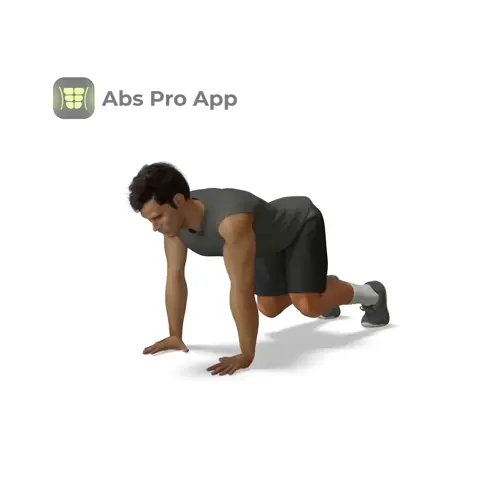
Start on the floor on your hands and toes in a quadruped position. Place your hands directly under your shoulders with fingers spread for grip. Tuck your toes under and lift your knees so they hover a few inches off the floor. Your knees stay bent, not straight. Keep your hips level and your spine neutral from head to tailbone.
Your head stays in line with your spine, eyes looking slightly ahead of your hands. Engage your core by gently pulling your ribs down and tightening your abs as if preparing for a cough. Shift your weight slightly back so your shoulders are not drifting too far past your hands. Before starting the first rep, hold this bear plank for a moment and feel steady on all four points.
Setup tip: If your knees are too high, you will lose control. Keep them low and hovering to maintain tension.
Your head stays in line with your spine, eyes looking slightly ahead of your hands. Engage your core by gently pulling your ribs down and tightening your abs as if preparing for a cough. Shift your weight slightly back so your shoulders are not drifting too far past your hands. Before starting the first rep, hold this bear plank for a moment and feel steady on all four points.
Setup tip: If your knees are too high, you will lose control. Keep them low and hovering to maintain tension.
How To Do Bear bird-dog (Step-by-step)
- Begin in a stable bear plank with knees hovering and core braced.
- Shift your weight slightly into your planted hand and foot.
- Slowly extend one arm forward while extending the opposite leg backward.
- Keep the lifted leg straight and low, matching the height of your hips.
- Pause briefly while keeping hips and shoulders square.
- Return the hand and foot to the floor with control.
- Reset your balance in the bear plank.
- Repeat on the opposite side.
- Continue alternating sides for the prescribed reps.
Form Cues
- Knees low and hovering
- Back flat, no arching
- Hips and shoulders square
- Move slow and controlled
- Press the floor away
- Reach long, not high
Breathing & Bracing
Proper breathing is key to mastering the Bear Bird-Dog. Start by taking a calm inhale through your nose in the starting bear plank. As you prepare to lift an arm and the opposite leg, gently brace your core by tightening your abs and wrapping tension around your waist. Think about keeping your ribs stacked over your hips.
As you extend the arm and leg, exhale slowly through your mouth. This helps control rotation and keeps your torso steady. Do not hold your breath. The goal is controlled breathing under tension, not max effort straining. When you return to the floor, take another small inhale before switching sides.
A simple rhythm to repeat is inhale in the plank, exhale during the reach, inhale as you reset. If you feel your lower back taking over, slow down and focus on longer exhales to regain control.
As you extend the arm and leg, exhale slowly through your mouth. This helps control rotation and keeps your torso steady. Do not hold your breath. The goal is controlled breathing under tension, not max effort straining. When you return to the floor, take another small inhale before switching sides.
A simple rhythm to repeat is inhale in the plank, exhale during the reach, inhale as you reset. If you feel your lower back taking over, slow down and focus on longer exhales to regain control.
Common Mistakes
- Lifting the knees too high, fix by keeping them just off the floor.
- Rotating the hips, fix by moving slower and shortening the reach.
- Arching the lower back, fix by bracing the abs before lifting.
- Rushing the reps, fix by adding a brief pause at full reach.
- Locking the elbows, fix by keeping a soft bend in the arms.
How It Should Feel
When done correctly, the Bear Bird-Dog should feel like a strong, controlled effort through your abs, shoulders, and hips. Good signs include a steady torso with minimal wobbling, a deep burn in the core after a few reps, and a feeling of balance even when one arm and one leg are lifted. You should also feel your glutes helping to stabilize the extended leg.
Warning signs include sharp pain, especially in the shoulders or lower back. If you feel pinching or stabbing pain, stop the exercise. Mild shaking is normal, but loss of control is not.
If you feel it mostly in your neck, relax your shoulders and push the floor away. If your lower back feels strained, lower the reach height and tighten your abs before moving.
Warning signs include sharp pain, especially in the shoulders or lower back. If you feel pinching or stabbing pain, stop the exercise. Mild shaking is normal, but loss of control is not.
If you feel it mostly in your neck, relax your shoulders and push the floor away. If your lower back feels strained, lower the reach height and tighten your abs before moving.
Alternative Names
Bear plank bird-dog, Quadruped hover bird-dog
Variations
Easier
- Bear Plank Hold: Hold the bear plank with knees hovering, no arm or leg lift.
- Bear Plank Shoulder Taps: From bear plank, tap one shoulder at a time while keeping hips steady.
Harder
- Paused Bear Bird-Dog: Add a 3 to 5 second pause at full reach while keeping hips square.
- Slow Tempo Bear Bird-Dog: Take 5 seconds to reach and 5 seconds to return.
Sample Workout
Use the Bear Bird-Dog as a core stability focus in your workout.
Core Stability Circuit
Core Stability Circuit
- Bear Bird-Dog, 6 to 10 reps per side, one rep includes left and right
- Side Plank, 20 to 30 seconds per side
- Dead Bug, 8 to 12 reps per side
Progression Plan
Progress slowly with the Bear Bird-Dog to build control and strength.
Week 1
Perform 3 sets of 6 reps per side. Focus on perfect form and minimal movement in the hips and shoulders. Rest 60 to 90 seconds between sets. If control is lost, shorten the reach.
Week 2
Increase to 3 sets of 8 to 10 reps per side. Add a 1 second pause at full extension while maintaining steady breathing. Keep the knees low and hovering.
Week 3
Slow the tempo to 3 seconds out and 3 seconds back. Keep reps at 6 to 8 per side. Reduce rest slightly to increase core demand.
Move to advanced variations once you can complete all reps with square hips and calm breathing. Repeat a week if form breaks down or fatigue causes excessive wobbling.
Week 1
Perform 3 sets of 6 reps per side. Focus on perfect form and minimal movement in the hips and shoulders. Rest 60 to 90 seconds between sets. If control is lost, shorten the reach.
Week 2
Increase to 3 sets of 8 to 10 reps per side. Add a 1 second pause at full extension while maintaining steady breathing. Keep the knees low and hovering.
Week 3
Slow the tempo to 3 seconds out and 3 seconds back. Keep reps at 6 to 8 per side. Reduce rest slightly to increase core demand.
Move to advanced variations once you can complete all reps with square hips and calm breathing. Repeat a week if form breaks down or fatigue causes excessive wobbling.
FAQ
How many reps should I do?
Most people do well with 6 to 10 controlled reps per side, where one rep includes both left and right.
Should my leg be straight or bent?
The lifted leg should be straight while the supporting knee stays bent and hovering.
Why do my hips keep twisting?
This usually means the exercise is too fast or too long. Slow down and shorten the reach.
Can I do this every day?
You can include it often, but allow rest days if your shoulders or core feel overly fatigued.
If you have shoulder, wrist, or lower back issues, consult a qualified professional before performing this exercise.
Summary
The Bear Bird-Dog is a powerful bodyweight move that rewards patience and precision. By staying slow, controlled, and focused on bracing, you build a resilient core that transfers to many other exercises and daily movements. Use this guide to refine your technique, respect the difficulty level, and progress only when your form is solid. With consistent practice, this exercise can greatly improve your stability, coordination, and confidence in advanced core training.
Get Defined Abs in 30 Days
This exercise is part of our complete 30-day ab program. Download the app for structured daily workouts and track your progress.