Quick Answer: How to Eat for Visible Abs
You don’t need a magic “ab diet” to see your abs. You need a sensible fat-loss diet that you can stick to.
To eat for six-pack abs, focus on three big rocks:
Calorie deficit:
Consistently eat a little less than you burn so body fat slowly goes down.
High protein:
Aim for roughly 1.6–2.2 g of protein per kg of body weight (0.7–1.0 g per lb) to protect muscle and keep you full.
Mostly whole foods:
Build your meals around lean proteins, fruits, veggies, whole-grain carbs, and healthy fats. Limit liquid calories and “hyper-processed” snacks.
When you combine this with a smart training plan (like your ab and full-body workouts in the app), body fat drops, your core muscles grow, and your abs start to show.
How Fat Loss and Abs Actually Work
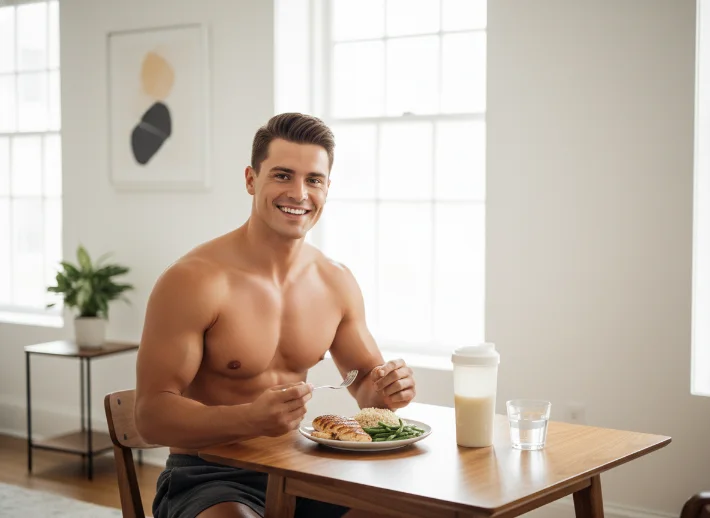
 Most people think abs are all about crunches and planks. In reality, visible abs = low enough body fat + some ab muscle underneath.
For many men, ab lines usually show somewhere around 10–15% body fat.
For many women, it’s more like 18–22%, sometimes higher or lower depending on genetics and muscle.
You cannot spot-reduce fat from your stomach by doing ab exercises. Your body loses fat overall, based on genetics and hormones.
So the job of your diet is to:
Create a moderate calorie deficit so you lose fat
Provide enough protein and nutrients so you keep (or build) muscle
Be simple and enjoyable enough that you can stick with it for months, not days
Step-by-Step Nutrition Plan for Abs
Most people think abs are all about crunches and planks. In reality, visible abs = low enough body fat + some ab muscle underneath.
For many men, ab lines usually show somewhere around 10–15% body fat.
For many women, it’s more like 18–22%, sometimes higher or lower depending on genetics and muscle.
You cannot spot-reduce fat from your stomach by doing ab exercises. Your body loses fat overall, based on genetics and hormones.
So the job of your diet is to:
Create a moderate calorie deficit so you lose fat
Provide enough protein and nutrients so you keep (or build) muscle
Be simple and enjoyable enough that you can stick with it for months, not days
Step 1: Estimate Your Daily Calories
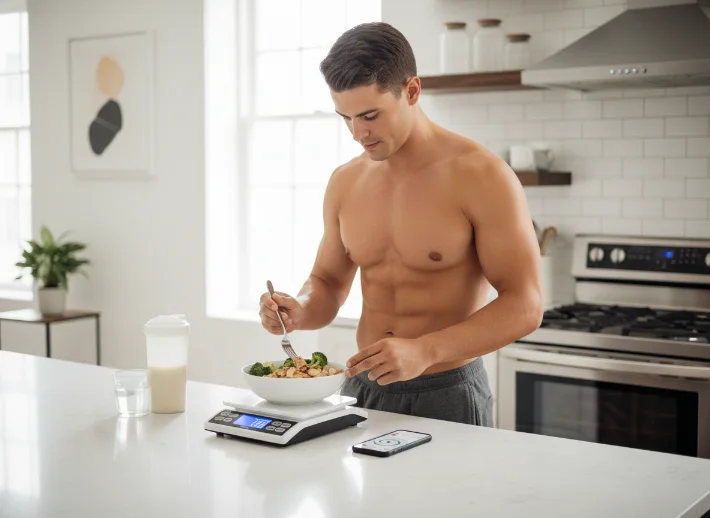
A simple starting point:
That usually puts you in a small deficit for fat loss.
Example:
– 160 lb (73 kg) woman → 160 × 11.5 ≈ 1,840 kcal/day starting point.
– 180 lb (82 kg) man → 180 × 12.5 ≈ 2,250 kcal/day starting point.
Track your weight trend over 2–3 weeks:
If you’re losing ~0.5–1.0% of bodyweight per week → good.
If nothing changes → drop 150–200 kcal/day.
If you’re dropping too fast and feel awful → add 150–200 kcal/day.
Step 2: Set Your Macros (Protein, Fats, Carbs)
Protein:
Fats:
Carbs:
You don’t need to be perfect. Use these as guidelines, not prison bars.
Step 3: Build Your Plate
Instead of obsessing over every gram, use simple plate rules:
For most meals:
½ plate: veggies & fruit
¼ plate: lean protein
¼ plate: smart carbs (rice, potatoes, oats, whole-grain bread/pasta)
Add 1–2 thumb-sizes of healthy fat (olive oil, nuts, avocado, etc.)
This automatically pushes you toward the calorie deficit & higher protein without feeling like a strict “diet”.
Step 4 – Build an “Abs-Friendly” Plate
Instead of counting every macro perfectly, use a simple plate template.
The simple plate template
Most main meals:
- ½ plate: vegetables (salad, greens, mixed veggies)
- ¼ plate: lean protein (chicken, fish, beef, tofu, etc.)
- ¼ plate: smart carbs (rice, potatoes, pasta, whole grains)
- Add: 1–2 thumbs of healthy fats (olive oil, avocado, nuts, etc.)
Sample meals
Breakfast ideas
- Greek yogurt bowl with berries, a scoop of protein powder, and a sprinkle of oats
- Omelet with vegetables, plus a slice of whole grain toast
- Protein smoothie (protein powder, banana, frozen berries, spinach, and water/milk)
Lunch ideas
- Grilled chicken, rice, and mixed vegetables with olive oil
- Tuna or salmon salad with potatoes and a side of fruit
- Tofu stir-fry with vegetables and rice
Dinner ideas
- Lean beef or turkey, roasted potatoes, and a big salad
- Baked fish, quinoa, and steamed veggies
- Chickpea and vegetable curry with rice
Snack ideas
- Protein shake
- Greek yogurt with fruit
- Handful of nuts and a piece of fruit
- Cottage cheese and cucumber/tomatoes
Step 5 – Timing, Meal Frequency, and Pre/Post-Workout
Meal timing is secondary to your total calories and macros, but a few tweaks can help.
How many meals per day?
Pick what you can stick to:
- 2–3 larger meals if you like bigger plates
- 3 meals + 1–2 snacks if that fits work and training
There’s no “perfect” pattern. The best pattern is the one that keeps you:
- Within your calories
- Energized
- Not constantly starving
Pre-workout fuel
1–3 hours before training, have:
- A protein source
- Some carbs
- Light on fat and very high fiber (to avoid stomach issues)
Example:
- Chicken and rice
- Yogurt and fruit
- Toast with egg whites and fruit
Post-workout recovery
Within a few hours after training, have:
- Protein (to support muscle)
- Carbs (to refill energy)
Example:
- Protein shake and a banana
- Salmon, potatoes, and vegetables
- Tofu, rice, and veggies
Step 7 – Weekday vs Weekend: Staying Consistent
For many people, weekends erase weekday progress.
Plan to prevent “weekend wipeout”
- Keep a similar structure on weekends (meals, snacks, training)
- Don’t “save up” calories all day and then binge at night
- Eat something before going to events so you’re not starving
Smart social eating strategies
When eating out:
- Prioritize protein + veggies
- Share dessert or skip it most of the time
- Limit high-calorie drinks
One relaxed meal is fine. An entire weekend of “whatever” usually isn’t.
What to Eat: Ab-Friendly Food Choices
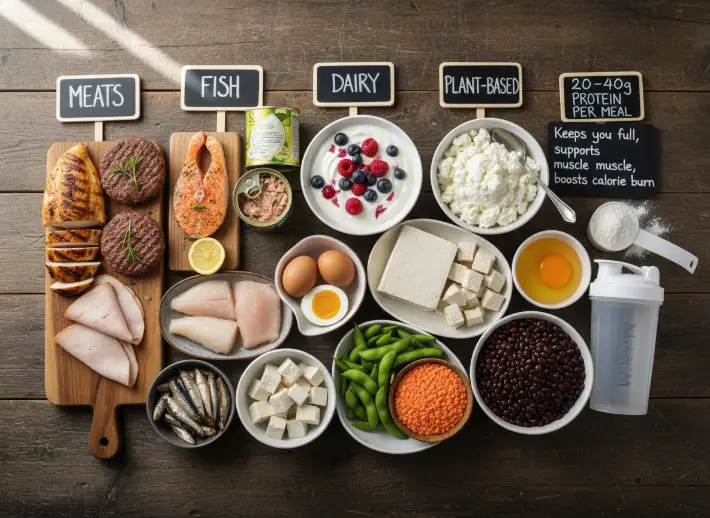
Lean Protein Sources
Try to include 20–40 g of protein per meal.
Chicken breast, turkey, lean ground beef
Fish (salmon, tuna, cod, sardines)
Eggs and egg whites
Greek yogurt, cottage cheese, skyr
Tofu, tempeh, edamame, lentils, beans
Protein powder (whey, casein, or plant-based) to “top up” if you’re short
Protein keeps you full, supports muscle, and slightly boosts calorie burn via the thermic effect of food.
Incorporating proper nutrition for abs is essential for achieving a toned midsection.
Understanding the right nutrition for abs is essential for achieving a defined six-pack.
Smart Carb Sources
Carbs aren’t the enemy. They fuel your workouts and recovery. Focus on slow-digesting, high-fiber options:
Oats, quinoa, brown rice, wild rice
Potatoes, sweet potatoes
Whole-grain bread or pasta
Fruit (berries, apples, bananas, oranges, etc.)
Beans & lentils (double up as carbs + protein)
Try to place more carbs around your workouts (before & after) to power training and replenish energy.
Healthy Fats
You need fats for hormones, brain health, and hunger control.
Avocado
Nuts and seeds (almonds, walnuts, chia, flax, pumpkin seeds)
Olive oil, avocado oil
Fatty fish (salmon, mackerel, sardines)
Use them mindfully. Fats are calorie-dense, so a small handful of nuts or a drizzle of oil goes a long way.
What to Limit (Without Being Miserable)
You don’t have to eat “perfectly”, but the more you limit these, the easier fat loss becomes:
Sugary drinks: soda, energy drinks, big fruit juices
Alcohol: especially frequent beers or sugary cocktails
Ultra-processed snacks: chips, cookies, candy bars, pastries
Takeout and fast food: especially fried foods and huge portions
Mindless nibbling: finishing the kids’ snacks, grazing while watching TV, etc.
A simple rule that works:
80–90% of your calories from whole or minimally processed foods.
10–20% left for “fun” stuff you enjoy.
That balance keeps you sane and consistent.
Sample Day of Eating for Abs (Approx. 1,900–2,000 kcal)
You can adapt portion sizes to your own calorie target.
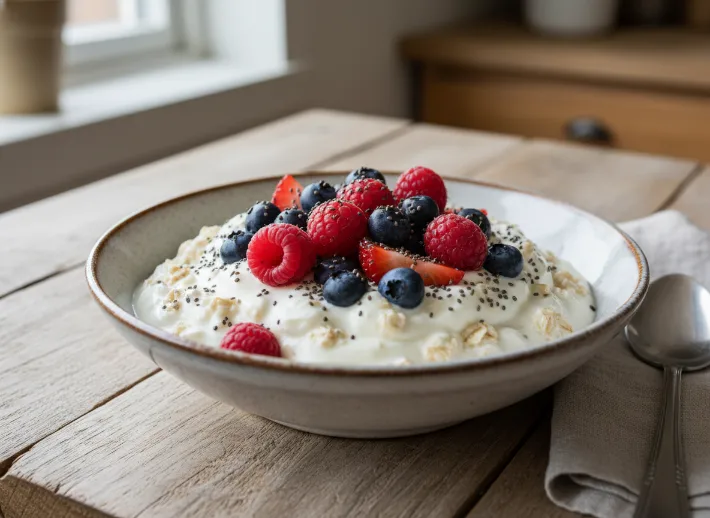
Breakfast
Greek yogurt (200 g)
40 g oats mixed in
Handful of berries
1 tbsp chia seeds
Lunch
120–150 g grilled chicken breast
1 cup cooked brown rice
Big mixed salad (lettuce, tomato, cucumber, carrots)
1–2 tsp olive oil + vinegar as dressing
Snack
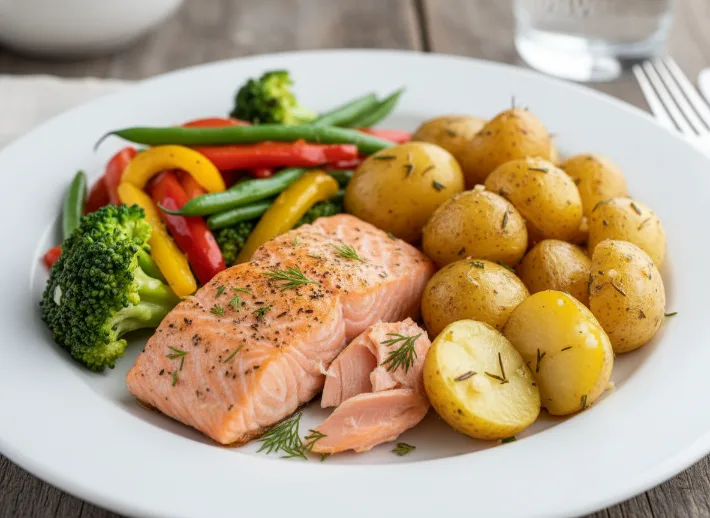
Dinner
120–150 g baked salmon or tofu
200–250 g roasted potatoes
Steamed or roasted veggies (broccoli, green beans, peppers)
Evening (if you’re hungry)
You don’t have to copy this exactly. Think of it as a template: protein at each meal + colorful plants + smart carbs + healthy fats.
Supplements: Do You Need Them
You don’t need supplements to get a six-pack, but a few can be convenient:
Protein powder: easy way to hit your target if food alone isn’t enough.
Creatine monohydrate: supports strength and muscle; take ~3–5 g/day.
Caffeine (coffee / tea): can help energy and workout performance.
Basic multivitamin or vitamin D if your diet or sun exposure is lacking.
Skip “fat burners” and miracle pills. If a supplement claims to melt belly fat without diet and exercise, it’s not worth your money.
Common Nutrition Mistakes That Hide Your Abs
Drinking your calories (coffee drinks, juices, alcohol).
Weekday dieting, weekend chaos – 5 “good” days vs. 2 giant “cheat days” = no progress.
Not tracking anything – even for a few weeks. You don’t have to track forever, but logging food briefly teaches you portion sizes.
Very low calories + extreme restriction – you burn out, binge, and regain.
Over-relying on “ab exercises” to fix a food problem.
No plan for eating out – go in starving and order everything.
Use your abs journey as a chance to learn your body and build skills you can keep for life.
FAQs

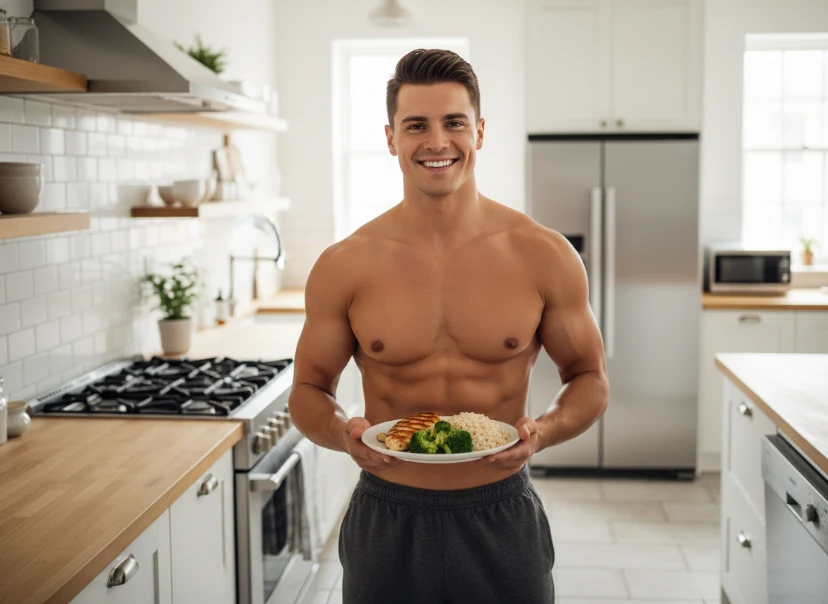
 Most people think abs are all about crunches and planks. In reality, visible abs = low enough body fat + some ab muscle underneath.
 A simple starting point:
 Try to include 20–40 g of protein per meal.
 Breakfast
 Dinner